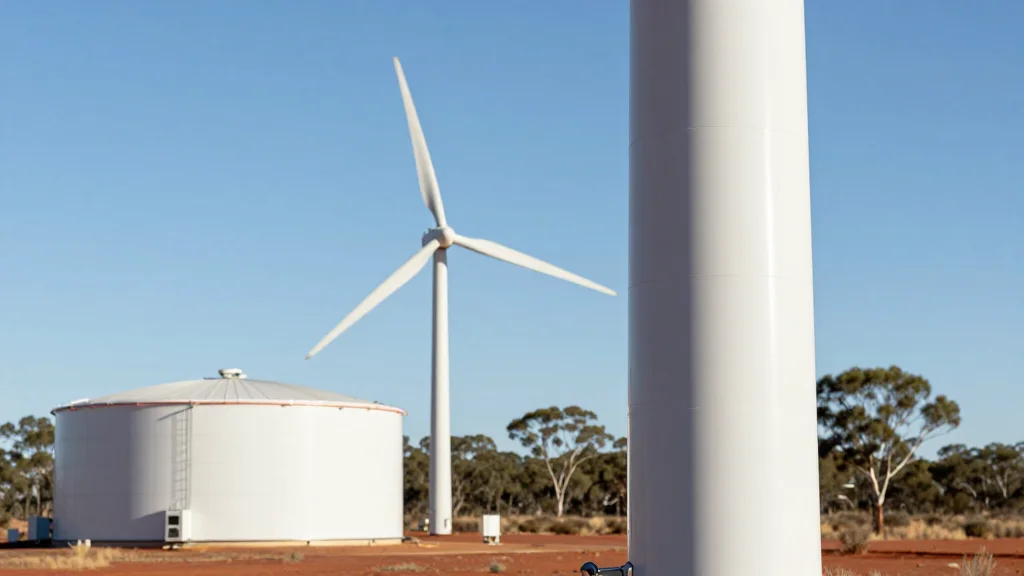
Wind Farm Customers Want “Shape”, And Investors Need Certainty – and Both Are Struggling to Get It
Why It Matters
Without longer‑term certainty and shaped power contracts, financing large wind projects becomes riskier, jeopardizing Australia’s renewable‑energy targets and grid decarbonisation goals.
Key Takeaways
- •Australian wind projects lag, only Uungula under construction in NSW.
- •Investors demand revenue certainty beyond 10‑15‑year PPAs for 35‑year assets.
- •Customers seek “shape,” pushing developers toward wind‑battery hybrid contracts.
- •Bundled and hybrid PPAs emerge to pair wind output with storage.
- •AC‑DC conversion and variable profiles make wind‑battery economics tougher than solar.
Pulse Analysis
Australia’s wind sector faces a paradox: policy incentives exist, yet project pipelines have dried up. The federal Capacity Investment Scheme was designed to de‑risk capital, but developers like Squadron Energy report that equity and debt financiers still balk at the long‑term revenue gaps inherent in 35‑year turbine lifespans. Traditional power purchase agreements lock in price but not volume, leaving investors uneasy about cash‑flow stability once contracts expire. This financing uncertainty is a key factor behind the slowdown, even as the nation pushes to replace aging coal plants with renewable capacity.
Concurrently, corporate offtakers are no longer satisfied with simple energy delivery; they want “shape,” meaning power that can be timed to match demand peaks. That demand is driving a shift toward wind‑battery hybrid solutions. Projects such as Windlab’s Gawara Baya in Queensland and Goldwind’s DC‑coupled battery at Moorabool illustrate early commercial interest. New contract structures—bundled PPAs that cover both wind and storage, and hybrid PPAs that allow developers to firm output using batteries—are being tested to provide the required firmed and time‑shifted supply. These arrangements promise to align investor returns with customer expectations, potentially unlocking the capital needed for megawatt‑scale wind builds.
However, integrating storage with wind is technically more demanding than with solar. Wind turbines generate AC power, requiring an extra conversion step to DC for battery charging, which incurs efficiency losses. Moreover, wind’s variable output across all hours complicates charge‑discharge scheduling and battery degradation modelling, making revenue forecasts messier. Developers must therefore invest in sophisticated optimisation platforms to demonstrate viable economics. Policymakers and financiers will need to recognize these nuances, perhaps by extending certainty mechanisms beyond price—such as volume guarantees or capacity payments—to ensure wind‑battery hybrids can scale and contribute meaningfully to Australia’s clean‑energy transition.
Wind farm customers want “shape”, and investors need certainty – and both are struggling to get it
Comments
Want to join the conversation?
Loading comments...