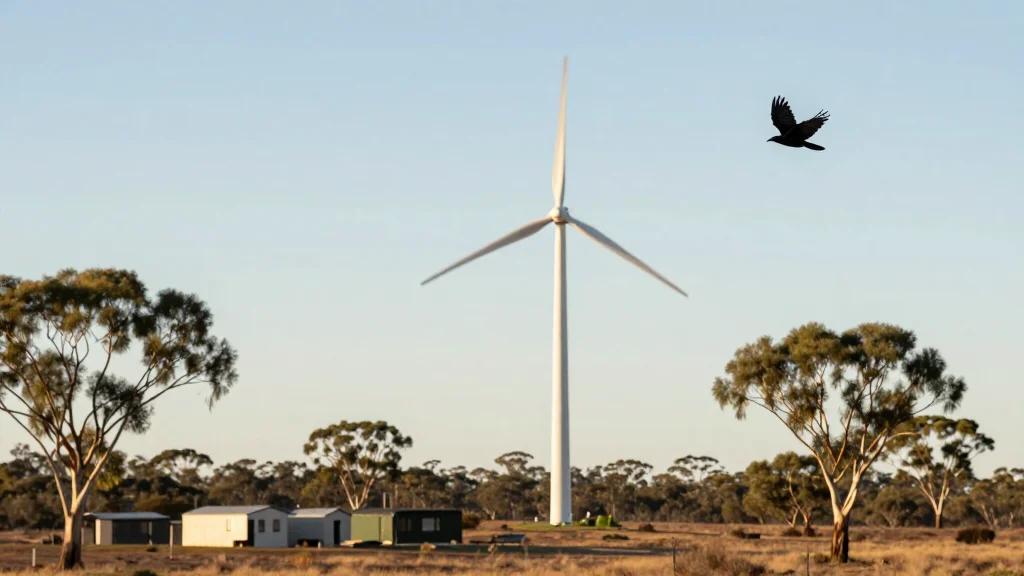
Wind Project to Hand over Worker Village to First Nations Community, and Create New Home for Black Cockatoos
Why It Matters
The deal couples large‑scale renewable generation with Indigenous economic empowerment and biodiversity offsets, offering a replicable template for responsible wind development in Australia.
Key Takeaways
- •300‑person workers village approved, to be handed to YAC after 2029
- •Village will replace 3 ha black‑cockatoo habitat with 4.3 ha restored land
- •Up to 79 Vestas turbines will generate 489 MW across 8,400 ha
- •Project offers YAC long‑term income, asset ownership, and skills development
- •Restoration aims to raise quality from 0 to 10 in ten years
Pulse Analysis
Western Australia is accelerating its renewable‑energy roadmap, and the 489 MW Parron Maam Marang wind farm is a flagship example. Developed by Atmos Renewables on 8,400 ha of former grazing land, the project will host up to 79 Vestas turbines feeding the South West Integrated System, bolstering the state’s capacity to meet its 2030 net‑zero targets. The federal environmental approval also cleared a 300‑person workers village, a critical piece of infrastructure that mitigates pressure on local housing markets during the three‑year construction phase.
What sets this project apart is the planned handover of the village to the Yued Aboriginal Corporation (YAC) after construction concludes in 2029. YAC will manage the facility for at least seven years, opening avenues for short‑stay tourism, regional events, or future renewable‑energy projects. This arrangement delivers a tangible commercial asset to the Traditional Owners, fostering skills development and long‑term income streams—an approach that mirrors emerging policies in New South Wales and Queensland, where councils are mandating post‑project community use.
Environmental stewardship is woven into the approval through a detailed offset plan for Carnaby’s black‑cockatoos, a threatened species. While the village will clear roughly 3 ha of top‑quality foraging habitat, the developer commits to restoring 4.3 ha elsewhere and placing a conservation covenant over 90 ha of existing high‑value land. The restoration aims to lift habitat quality from a zero rating to a perfect ten within ten years, targeting over 30 percent kwongan shrubland cover. This blend of renewable infrastructure, Indigenous partnership, and biodiversity compensation illustrates a growing template for sustainable energy projects worldwide.
Wind project to hand over worker village to First Nations community, and create new home for black cockatoos
Comments
Want to join the conversation?
Loading comments...