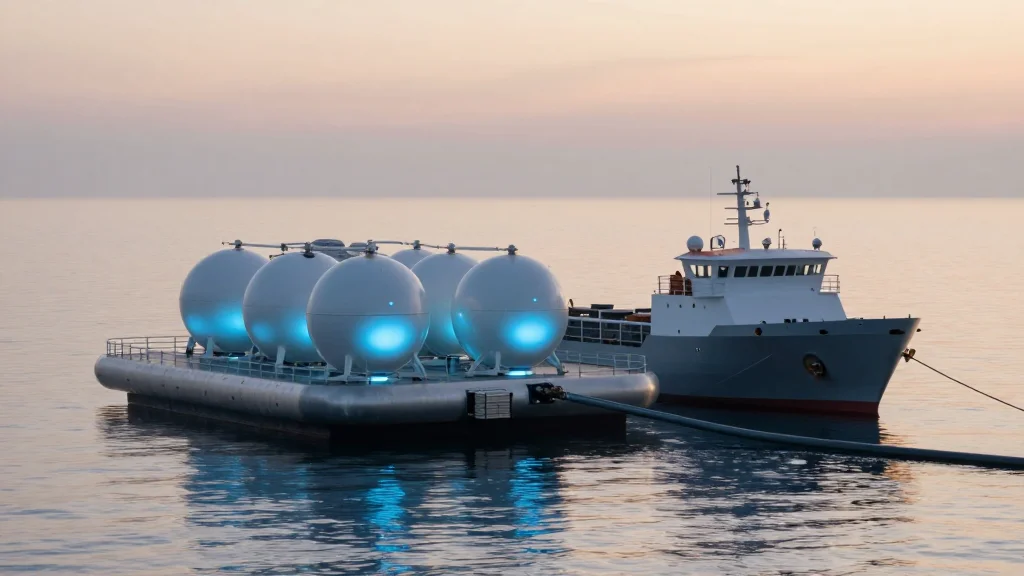
World-First Hydrogen-Powered 'Gas Station' For Ships Passes Key Trials
Why It Matters
The hub provides ports a fast‑track, off‑grid solution to meet tightening emissions regulations without the multi‑year capital outlay of traditional shore‑power infrastructure.
Key Takeaways
- •Hydrogen Power Hub delivers 5 MW continuous clean power to ships
- •Platform reduces ship emissions by 77%, saving 47 t CO₂ weekly
- •Modular design uses three 1.3‑MW fuel cells and 45 MWh battery
- •Electricity cost $0.33‑$0.67/kWh, higher than grid but offers flexibility
Pulse Analysis
Maritime decarbonisation has long been hampered by the slow rollout of shore‑power systems, which can require up to seven years of permitting, grid upgrades and construction. The Hydrogen Power Hub sidesteps these bottlenecks by floating offshore and feeding vessels directly from hydrogen fuel‑cell arrays, delivering up to 5 MW of electricity. This off‑grid approach not only accelerates the transition to cleaner port operations but also provides a flexible asset that can be repositioned as shipping lanes evolve, a capability especially valuable for congested hubs like London, Singapore and Hamburg.
Technically, the hub consists of three hexagonal modules housing 1.3‑MW fuel‑cell stacks and a 45 MWh battery bank, supplemented by a 146 kW solar array. The system consumes roughly 7,500‑8,000 kg of hydrogen weekly, stored in low‑pressure nanoporous tanks developed by Rux Energy UK, which enhance safety and reduce logistical complexity. Independent verification by Schneider Electric and Ricardo plc confirmed that the platform can operate fully off‑grid and meet stringent safety standards, while wave‑tank testing at the University of Strathclyde proved resilience under storm conditions. The resulting emissions cut—77% reduction and 47 tonnes of CO₂ saved per ship per week—addresses both regulatory pressure and community concerns about diesel‑powered auxiliary engines.
Cost remains the primary hurdle; at $0.33‑$0.67 per kWh the hub is two to three times pricier than conventional grid electricity. However, the value proposition shifts from pure cost to speed, flexibility and risk mitigation. Ports can avoid stranded infrastructure investments and rapidly meet tightening EU and global emissions mandates. Early engagements with ports across Europe, Asia and Australia suggest a growing appetite for such modular, deployable solutions, positioning the Hydrogen Power Hub as a potential cornerstone of the next wave of clean maritime energy.
World-first hydrogen-powered 'gas station' for ships passes key trials
Comments
Want to join the conversation?
Loading comments...