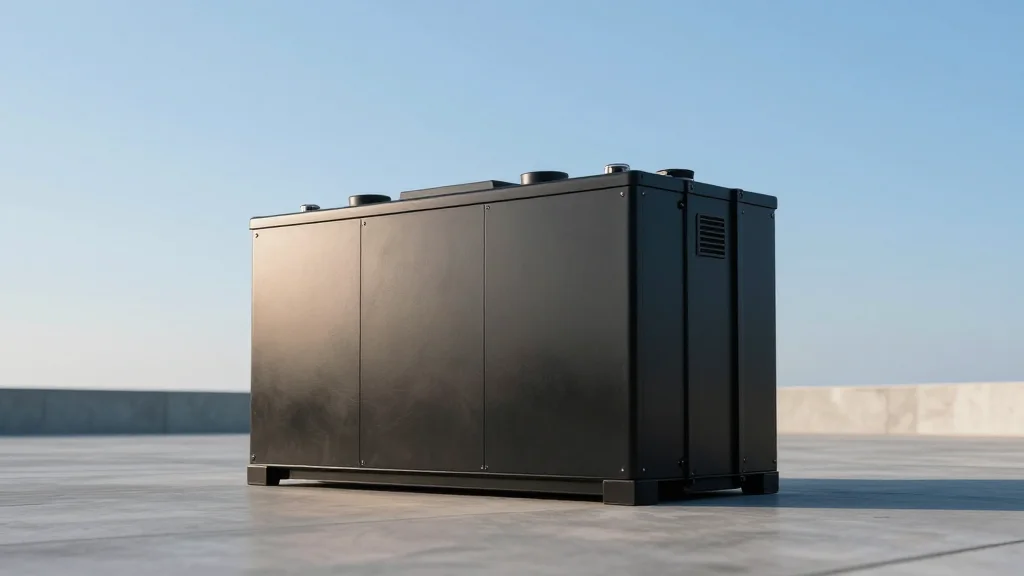
Wyandotte County Approves $250 Million Battery Storage Project to Cut Kansas City Bills

Why It Matters
Large‑scale battery storage is a critical bridge technology for the United States’ transition to a low‑carbon electricity system. By smoothing supply‑demand mismatches, storage reduces the need for costly, emissions‑intensive peaker plants and helps utilities meet renewable‑energy mandates without sacrificing reliability. Kansas City’s $250 million investment signals municipal willingness to back such infrastructure, potentially encouraging other jurisdictions to pursue similar projects. Beyond grid benefits, the financial structure of the deal—property‑tax commitments, community‑benefit payments, and scholarship funds—illustrates a model for aligning private developers with public interests. If the projected $9 million annual savings materialize, ratepayers will see tangible cost relief, reinforcing public support for future energy‑storage initiatives.
Key Takeaways
- •Wyandotte County commissioners approved a $250 M battery storage permit (8‑2 vote).
- •East Side Storage pledges $27 M in property taxes and $1‑2 M community benefits over 20 years.
- •Project forecasts $9 M annual ratepayer savings and $8 M local earnings.
- •Facility will create 65 construction jobs and seven permanent positions.
- •Battery will store excess grid power for use during peak demand, supporting renewable integration.
Pulse Analysis
The Kansas City battery approval reflects a broader shift in U.S. energy policy where municipalities are becoming active sponsors of storage infrastructure. Historically, large‑scale storage projects have been hampered by regulatory uncertainty and financing gaps. By securing a special‑use permit and attaching concrete fiscal commitments—taxes, scholarships, and community benefits—East Side Storage reduces political risk and creates a template for public‑private collaboration.
From a market perspective, the $250 million capital outlay is modest compared with utility‑scale solar or wind projects, yet its impact on peak‑load management can be disproportionately large. Grid operators in the Midwest have reported increasing curtailment of wind generation during low‑demand periods; a battery of this size can capture that curtailed energy, effectively turning a loss into a revenue stream. Moreover, the projected $9 million in annual savings translates to roughly $0.10 per kilowatt‑hour for the average Kansas City household, a figure that could become a selling point for utilities seeking to justify rate‑case filings.
Looking ahead, the success of this project could catalyze a cascade of storage deployments across the region, especially if the BPU‑East Side Storage agreement demonstrates a clear, replicable revenue model. However, the venture also faces hurdles: securing a long‑term power‑purchase agreement, navigating community concerns about land use, and delivering on performance guarantees. If these challenges are managed effectively, Kansas City may emerge as a case study in how mid‑size cities can leverage battery storage to both decarbonize the grid and deliver economic benefits to residents.
Wyandotte County Approves $250 Million Battery Storage Project to Cut Kansas City Bills
Comments
Want to join the conversation?
Loading comments...