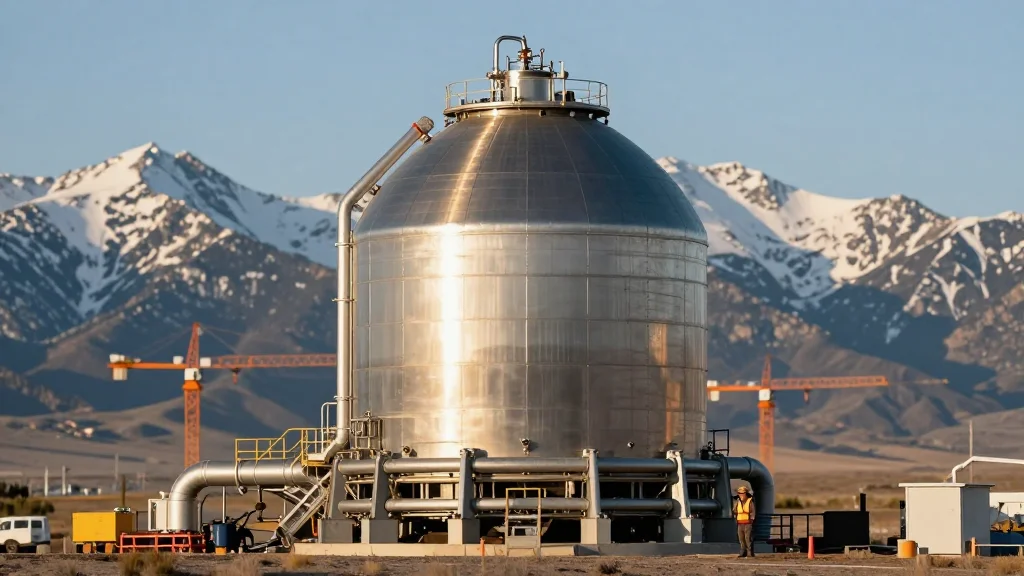
Wyoming Gets Federal Go‑Ahead for Terra Power’s Advanced Nuclear Reactor, a $2 B Low‑Carbon Project

Companies Mentioned

Why It Matters
The Kemmerer licensing decision marks a tangible shift from policy rhetoric to physical infrastructure in the U.S. nuclear renaissance. By delivering a large‑scale, low‑carbon baseload source, the project can help meet rising electricity demand from AI‑driven data centers without relying on additional natural‑gas peaker plants, thereby reducing emissions and enhancing grid resilience. Moreover, the partnership between federal funding and private capital demonstrates a viable financing model for future advanced reactors, potentially accelerating the deployment of next‑generation nuclear technology across the country. Beyond emissions, the project could revitalize rural economies that have suffered from coal plant closures. Construction jobs, long‑term operations staff, and ancillary services are expected to inject millions of dollars into the local tax base, creating a political constituency that may further support nuclear expansion in the Mountain West.
Key Takeaways
- •Terra Power receives NRC construction license for advanced sodium‑cooled reactor in Kemmerer, Wyoming
- •Project cost estimated at $2 billion, with roughly $1 billion funded by the DOE Infrastructure Law
- •Plant aims to supply power for about 500,000 homes, targeting commercial operation by 2031
- •Agreements signed with Meta to power future data centers, addressing projected 130 % rise in U.S. data‑center electricity demand by 2030
- •Licensing follows a five‑year safety review and a competitive siting process that selected Kemmerer over other western towns
Pulse Analysis
Terra Power’s licensing win is more than a single project approval; it signals that advanced nuclear designs are finally breaking through regulatory and financing barriers that have stalled the industry for decades. The sodium‑cooled fast reactor, unlike traditional light‑water reactors, promises shorter construction timelines and inherent safety features that address public concerns about meltdowns. By burying critical components underground and eliminating high‑pressure water systems, the design reduces the risk profile that has historically hampered public acceptance.
The financial structure of the Kemmerer project also offers a template for future builds. The DOE’s willingness to shoulder half the capital cost under the Infrastructure Law reduces the equity risk for private investors, making the economics more palatable in a market where nuclear projects have historically suffered cost overruns. This public‑private partnership could become the standard for other advanced reactors, especially in states that lack the tax base to fund large infrastructure projects alone.
Strategically, the plant positions Wyoming as a potential hub for the emerging nuclear supply chain, complementing neighboring states’ ambitions to host fuel‑cycle facilities. If the Kemmerer reactor proves operationally successful, it could catalyze a cascade of similar projects across the West, creating economies of scale that drive down per‑megawatt costs. The convergence of rising data‑center demand, federal climate goals, and a maturing advanced‑reactor technology suggests that the nuclear renaissance is moving from theory to practice, with Wyoming at its forefront.
Wyoming Gets Federal Go‑Ahead for Terra Power’s Advanced Nuclear Reactor, a $2 B Low‑Carbon Project
Comments
Want to join the conversation?
Loading comments...