Plugged In: the energy news podcast
Feeling the Heat: Preparing Europe's Grids for Summer
Why It Matters
As climate change makes extreme heat the new normal, grid failures could jeopardize energy security across Europe, affecting households, industry, and the broader climate transition. Understanding and investing in grid resilience and storage now is critical for policymakers, utilities, and consumers to ensure reliable, low‑carbon power in a hotter future.
Key Takeaways
- •Heatwaves increase grid resistance, causing forced plant outages.
- •Renewable buildout outpaces grid infrastructure, creating bottlenecks.
- •Long‑duration batteries improve resilience but aren’t fully commercial.
- •Cooling water scarcity forces thermal plant output reductions across Europe.
- •Demand shifts to summer peaks due to air‑conditioning and electrification.
Pulse Analysis
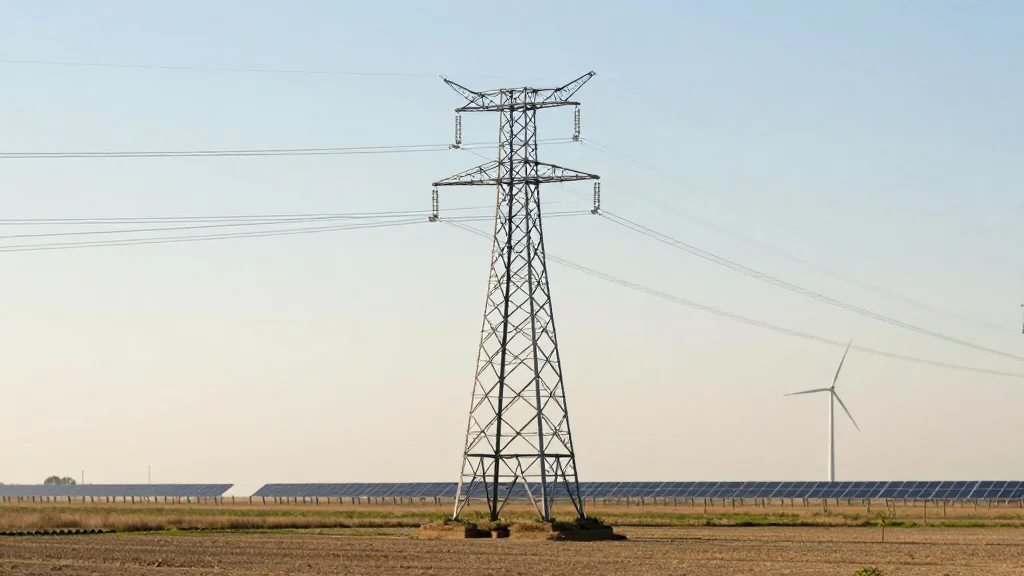
Europe’s electricity grids are feeling the heat. Extreme temperatures raise conductor resistance and force thermal plants—nuclear, coal and gas—to shut down when cooling water becomes too warm. This physical reality, combined with soaring air‑conditioning demand, creates a double‑whammy: higher load and fewer available generators. Operators also grapple with reduced hydro output during droughts, amplifying the stress on an already strained system. The convergence of these factors makes heat‑wave resilience a top priority for policymakers and market participants alike.
At the same time, renewable capacity is expanding faster than the transmission network can accommodate. Solar farms can be built in months, yet new high‑voltage lines require decades. The resulting bottlenecks—often described by German terms like "Dunkelflaute" and "Hitzelflaute"—mean that during hot, wind‑quiet periods, the grid relies on fossil backups. Flexibility resources such as demand‑response, battery storage and long‑duration energy storage are emerging as critical tools. Modern batteries now offer four‑hour to eight‑hour discharge durations, providing both frequency response and inertial support traditionally supplied by fossil generators.
Despite rapid technology advances, Europe still faces gaps in speed and financing. Schemes like the UK’s Long‑Duration Energy Storage programme aim to commercialise multi‑hour batteries and pumped hydro, but widespread deployment remains limited. Grid congestion, lengthy permitting processes, and the need for ancillary services impede the transition to a zero‑carbon hour of operation. Accelerating grid reinforcement, streamlining market rules, and scaling long‑duration storage will be essential to keep lights on as heatwaves become the new normal.
Episode Description
Europe's power systems are facing a new reality.
As heatwaves become more frequent and intense, electricity networks are coming under growing pressure. Rising cooling demand, aging infrastructure and the rapid expansion of renewable energy are all changing how grids operate during periods of extreme weather.
The recent Iberian blackout also highlighted how important resilience, flexibility and interconnection have become in maintaining system security.
So is Europe's electricity system ready for a hotter future?
In this episode of Plugged In, Richard speaks with Julia Demirdag, Germany Correspondent at Montel News, Guy Nicholson from Statkraft, and Paweł Czyżak from Ember about how heatwaves are reshaping Europe's power sector.
Together they explore why grids are increasingly becoming the critical point of vulnerability, what lessons can be learned from the Iberian blackout, and how batteries, storage and smarter system design could help future-proof Europe's electricity networks.
#PluggedInPodcast #MontelNews #EnergyTransition #PowerMarkets #GridResilience #Heatwaves #EnergySecurity #BatteryStorage #ElectricityMarkets #Renewables #EnergyPolicy #NetZero
Host: Richard Sverrisson – Editor-in-Chief, Montel News
Guests:
Julia Demirdag – Germany Correspondent, Montel News
Guy Nicholson – Head of Zero Carbon Grid Solutions, Statkraft
Dr Paweł Czyżak – Europe Programme Director, Ember
Editor: Alexandra Carlon
Producer: Alexandra Carlon
Comments
Want to join the conversation?
Loading comments...