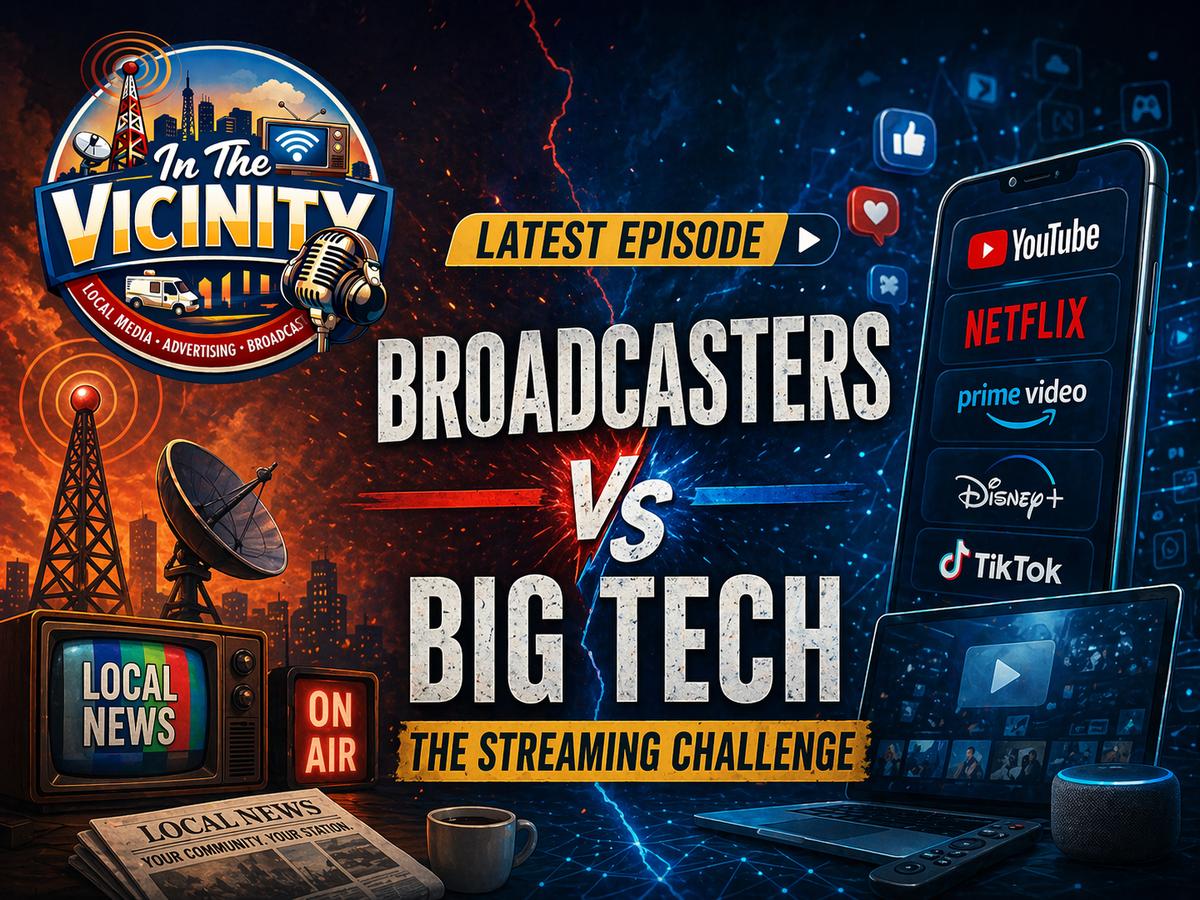
Broadcasters vs Big Tech: The Streaming Challenge
Key Takeaways
- •Big tech now captures ~44% of local ad spend
- •Nexstar‑Tegna merger on judicial hold, delaying scale
- •Broadcasters adopt AI‑driven ad platforms and unified marketplaces
- •Station swaps and private‑equity deals emerge as alternative scaling
- •Margin growth hinges on omnichannel inventory and cost‑plus pricing
Pulse Analysis
The rise of big‑tech platforms has fundamentally altered the local advertising landscape. Companies like Netflix, TikTok and other streaming services now command roughly 44% of local ad dollars, siphoning revenue from traditional broadcasters whose audiences are fragmenting among digital channels. This shift pressures TV stations to innovate or risk obsolescence, prompting industry leaders to explore new revenue models that blend linear broadcast with over‑the‑top (OTT) and connected‑TV (CTV) inventory. Understanding this competitive imbalance is essential for advertisers seeking effective reach in a multi‑screen world.
Consolidation has long been touted as a remedy, but the stalled Nexstar‑Tegna merger underscores the regulatory and operational complexities of large‑scale deals. While a combined entity could offer broader market reach and bargaining power, the judicial hold delays any immediate benefits and fuels uncertainty across the sector. Consequently, broadcasters are evaluating alternative strategies such as station swaps, private‑equity‑backed acquisitions, and targeted market‑level partnerships that can deliver scale without the same regulatory hurdles. These moves aim to preserve local voice while achieving the economies of scale needed to negotiate with dominant digital platforms.
Technology is becoming the linchpin of the broadcaster’s comeback. AI‑enhanced ad platforms enable real‑time audience segmentation and dynamic pricing, while unified marketplaces—exemplified by Hearst’s new ad hub and Gray Media’s Quickplay integration—allow advertisers to purchase cross‑channel inventory in a single transaction. Coupled with cost‑plus pricing models, these innovations promise higher margins and more transparent revenue recognition. For CFOs, the challenge lies in aligning legacy accounting practices with these omnichannel sales flows to unlock true profitability. As broadcasters modernize their ad stacks, they position themselves to compete on data, efficiency, and relevance in an increasingly digital ad ecosystem.
Broadcasters vs Big Tech: The Streaming Challenge
Comments
Want to join the conversation?