🎯 Today's Entertainment Pulse

ABC’s productions generate $509M economic boost and create 7,700 jobs
The Australian Broadcasting Corporation reported its commissioned productions delivered an economic boost of $772 million AUD (about $509 million USD) and supported more than 7,700 full‑time jobs, leveraging $1.31 of external funding for every dollar spent.
Also developing:

🚀 Top Entertainment Headlines

Netflix Expands Japan Slate With Deals for 20 NHK Dramas, Nippon TV’s ‘Monday Late Show’
The streamer's deal with Japan's public broadcaster, NHK, marks a notable expansion of its Japanese drama lineup, with six titles launching this week spanning period dramas, "asadora" and Drama 10 formats.
The Hollywood Reporter (THR)

CRTC Mandates 15% Contribution on Streamers, Lowers Linear Base Obligation
This content is restricted to subscribers The post CRTC mandates 15% contribution on streamers, lowers linear base obligation appeared first on Cartt.ca.
Cartt.ca (Canada)
Spotify Bets on Taste as Differentiator in the AI Era
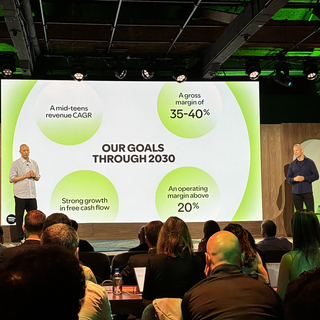
Spotify believes it will become much more profitable over the next four years by leveraging AI to build a "large taste model" that supports interactive sharing over passive listening. Why it matters: The streamer spent the past four years proving it could turn its popularity into a meaningful business. Now, it wants to show Wall Street it can sustain and build on that momentum in the agentic era. Driving the news: Leaning into taste as a strategic differentiator will help the streaming giant create a stickier audio ecosystem and strike more partnerships that serve fans, executives told investors at an event in New York City on Thursday. The company unveiled a new "Reserved" ticketing service, in partnership with Live Nation, that sets aside concert tickets for premium subscribers. It also announced a landmark deal with Universal Music Group to create a new tool that allows fans to create covers and remixes of their favorite songs by participating artists and songwriters. This summer, the company will roll out tools that allow eligible creators to offer subscriptions directly to their most dedicated fans on Spotify. The big picture: It took Spotify nearly two decades to reach full-year profitability, but now it's starting to earn Wall Street's trust. Its stock surged 13% Thursday after executives unveiled its strategy alongside a slew of new partnerships and products. Zoom out: Spotify's new co-CEOs Gustav Söderström and Alex Norström introduced four big ideas to drive the company's growth around its taste advantage. Tiered revenue products: The company said it's building its platform around a wider set of higher-margin products, instead of just focusing on premium and free tiers. Individually, those products may serve smaller audiences than Spotify's Premium tier, but in the long term, the company believes they will yield higher monetization potential. More interactivity: Spotify is moving from a single media player focused on passive music consumption to an interactive player designed for sharing and collaboration. AI personalization: The company plans to use AI to personalize users' media experience in real-time around their taste, context and intent. The company is introducing more ways to gather taste data from its users in order to generate stronger real-time recommendations. Time well spent: Spotify says it will prioritize user loyalty — or return visits — in addition to time spent. This reflects its focus on creating valuable experiences over engagement bait. By the numbers: These ideas, executives said, will help support the company's new business targets, which includes boosting its gross margin to 35%–40% by 2030 from around 33% today. The company forecasted stronger revenue growth (a mid-teens compound annual growth rate) and a continued focus on efficiency to achieve an operating margin of above 20% and an increase in free cash flow. It will use that cash to fuel opportunist deals, although it remains biased toward building over buying, chief financial officer Christian Luiga said. In the future, average revenue per user will become a more meaningful growth driver through price adjustments, more defined product tiers and the expansion of a la carte add-ons, executives said. Norström said Spotify believes it's still on its way to reach 1 billion users by 2030. Yes, but: Advertising continues to be a pain point for the company. The company said it expects reinvigorated ad growth in the back half of 2026, but it didn't offer any new product updates. What to watch: Luiga emphasized a healthier balance sheet will enable the company to continue to take big swings that will pay off long term. After pouring over $1 billion into its podcast business, Spotify's vice president and global head of podcasts Roman Wasenmüller told Axios he believes podcasts will eventually drive 40% margins from ads. Global head of audiobooks Owen Smith said the company is on track to reach $100 million in annualized recurring revenue from audiobooks alone by this July.
Axios – General

PlayStation Plus Prices Across The Board Are Up in A Rather Baffling Choice From Sony
Sony had us all fooled with its carefully worded announcement about price hikes on PS Plus, but the cat's out of the bag now.
GamingBolt

YouTube Makes Its Case at Goafest 2026: Reach Faster, Sell Smarter, Own Your Narrative
YouTube makes its case at Goafest 2026: reach faster, sell smarter, own your narrative
IndianTelevision.com
💬 Top Entertainment Social Posts

Thread by @Zachbussey
Twitch is aware of the abuse occurring with the combined viewership through Guest Star (Stream Together). They have some enforcement in place, but are working on other ways to limit shared viewership.

Ronda Rousey's Netflix MMA Return Sets U.S. Viewership Record at 11.6 Million
Ronda Rousey’s comeback bout against Gina Carano on Saturday drew a peak of 11.6 million U.S. viewers and 17 million worldwide, setting the highest‑ever U.S. audience for a mixed‑martial‑arts event and the first live MMA broadcast on Netflix. The three‑fight main card, produced by Most Valuable Promotions (MVP), averaged 9.3 million U.S. viewers, according to Netflix and MVP data released Tuesday. ## Record‑Breaking Viewership Sets New Benchmark for Streaming MMA "We're incredibly proud of what was accomplished alongside our partners at Netflix and grateful to the athletes who helped make MVP MMA's debut such a success," said Nakisa Bidarian, co‑founder of MVP, in a statement. "We've received an overwhelming amount of interest from investors, strategic partners, and fighters who want to be involved with MVP and the future of MVP MMA." The quote underscores the immediate investor buzz sparked by the event’s numbers. Rousey, 39, secured a 17‑second armbar victory, while Carano, 44, returned after a 17‑year hiatus, adding a narrative hook that helped drive the audience surge. The viewership spike shattered the prior U.S. record of 8.8 million set by UFC on FOX 1 in 2011. The AP reported that the event’s global reach of 17 million eclipsed any prior MMA broadcast, highlighting the power of a star‑driven card combined with Netflix’s global platform. The card also featured veteran matchups—Mike Perry vs. Nate Diaz, which ended in a doctor’s stoppage, and Francis Ngannou’s first‑round knockout of Philipe Lins—providing depth beyond the headline fight. ## Strategic Implications for Netflix and the Sports‑Streaming Market Netflix’s foray into live combat sports aligns with its broader sports strategy, which includes the upcoming T‑Mobile Home Run Derby, expanded 2026 NFL slate, and global streaming rights for the 2027 FIFA Women’s World Cup. By delivering a record‑setting MMA event, Netflix demonstrated that its subscriber base will tune in for premium live sports, a metric traditionally dominated by cable networks and dedicated sports platforms. The success may accelerate negotiations with other combat‑sport promoters and could prompt the streaming giant to allocate additional resources toward live‑event production and rights acquisition. Looking ahead, MVP said it is "reviewing all strategic options to do something very meaningful within MMA on a go‑forward basis with a distribution partner like Netflix." The partnership’s next steps could involve a regular series of live events, pay‑per‑view specials, or integrated promotional content that leverages Netflix’s recommendation engine. For advertisers, the 11.6 million‑viewer peak offers a compelling audience for brand integrations, potentially opening a new revenue stream for a platform historically reliant on subscription fees. The record viewership also raises questions about how traditional broadcasters will respond. If Netflix can consistently deliver comparable or higher numbers for live sports, cable networks may need to rethink their distribution models, possibly accelerating the shift toward hybrid streaming‑plus‑linear offerings. For now, Rousey’s return serves as a proof point that star power, strategic distribution, and a global platform can rewrite the metrics of sports television.