US Copyright Office Proposes Massive Fee Hike: What It Means
Key Takeaways
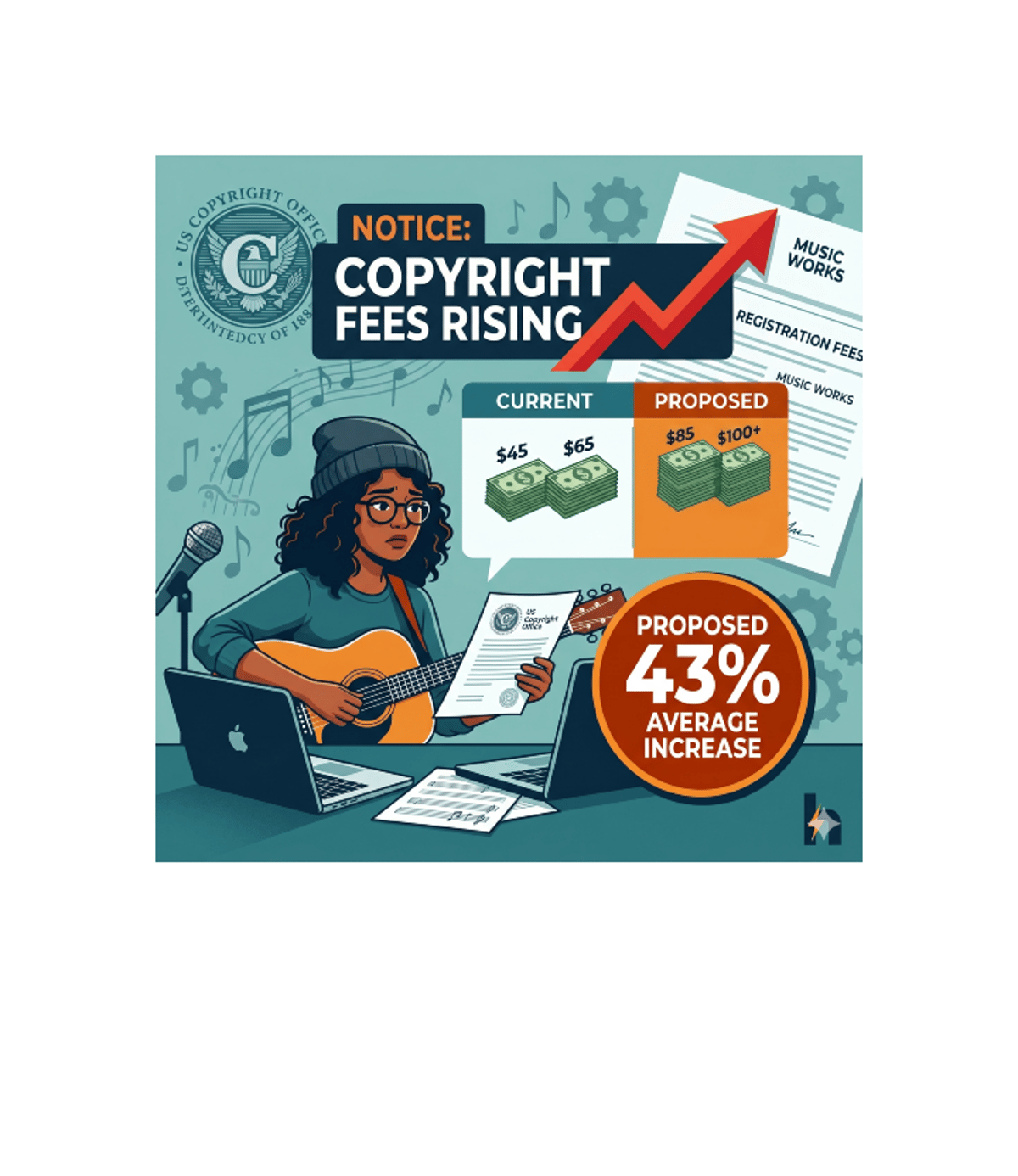
- •Average fee increase of 43% across USCO services.
- •$45 single application eliminated, forcing $85 standard registration.
- •Paper filing fees rise to over $200, discouraging mail submissions.
- •Recording Academy and allies formally oppose the fee hikes.
- •USCO considers tiered pricing and subscription models for creators.
Pulse Analysis
The U.S. Copyright Office announced a sweeping revision of its fee schedule, citing inflation and the need to fund a modern digital registration platform. The proposal lifts the average cost of copyright services by 43 percent, with the standard electronic application climbing from $65 to $85 and the long‑standing $45 single‑work filing disappearing entirely. Paper filings would jump to more than $200, a move intended to accelerate the shift to electronic processing. For independent musicians and songwriters, these numbers represent a sudden, sizable expense that could delay or deter protection of new works.
The proposed hikes have ignited a coordinated response from the music community. A coalition that includes the Recording Academy, A2IM, the Artist Rights Alliance and several songwriter societies has filed formal objections, warning that the increases create a ‘barrier to justice’ for creators without deep pockets. Lawmakers and advocacy groups are watching closely, with some members of Congress signaling willingness to intervene if the Office proceeds unchecked. The backlash underscores a broader tension: while larger publishers can absorb higher fees, indie labels and solo artists risk losing a vital tool for safeguarding their intellectual property.
Beyond the immediate price shock, the Copyright Office is exploring structural reforms that could benefit high‑volume registrants. Options such as tiered pricing for small entities, subscription‑based bulk registration, and automatic inflation indexing aim to smooth future cost spikes. Creators who anticipate multiple releases may find these models attractive once implemented. In the short term, the office’s 120‑day rule‑making timeline gives independent artists a narrow window to lock in current rates by filing now. How the industry adapts will shape the balance between affordable protection and a sustainably funded copyright infrastructure.
US Copyright Office Proposes Massive Fee Hike: What It Means
Comments
Want to join the conversation?