10 Years Later, ANA Finds Transparency Concerns Remain Acute
Companies Mentioned
Why It Matters
The findings signal that while headline transparency metrics improve, the underlying friction between advertisers and agencies is deepening, prompting tighter contract negotiations and heightened scrutiny from both brands and regulators.
Key Takeaways
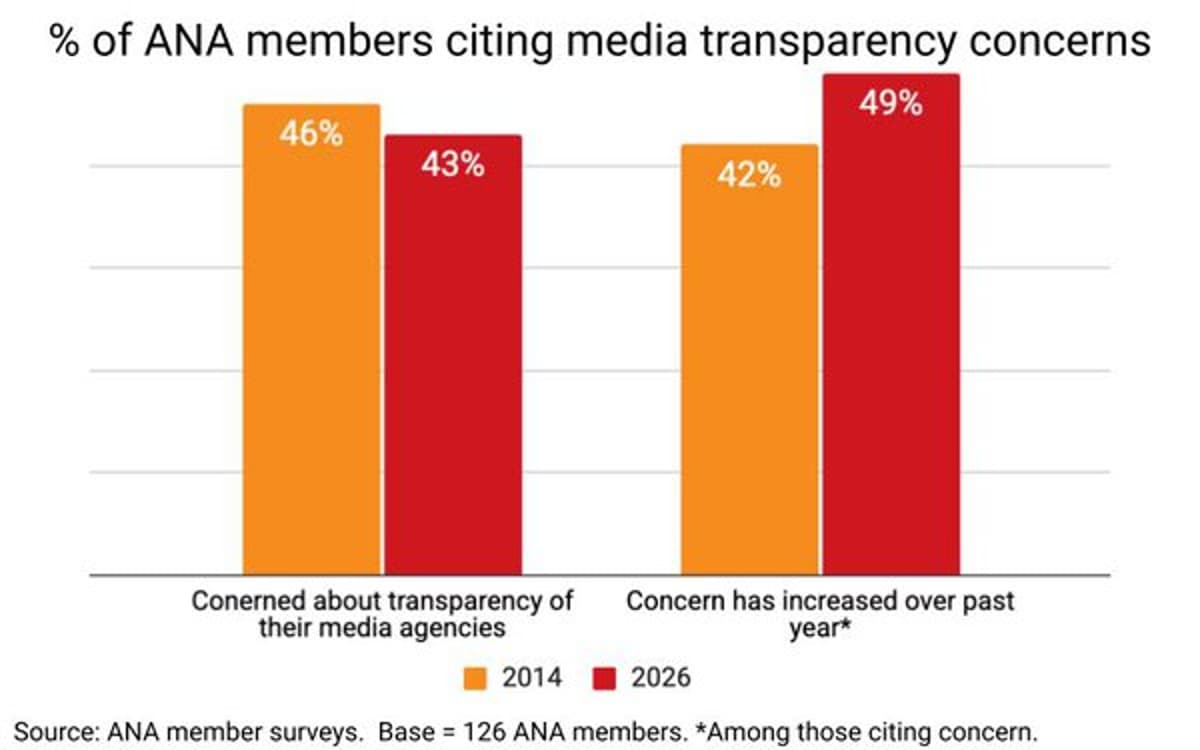
- •Transparency concerns fell from 46% (2014) to 43% (2026).
- •Among concerned advertisers, issues intensified, especially principal media‑buying.
- •56% updated agency contracts in past year; 89% in two years.
- •Only 54% added rebate clauses; 61% added principal media clauses.
- •Jon Mandel returns as whistleblower for ANA’s 10‑year transparency webinar.
Pulse Analysis
The ANA’s original 2014 transparency report sparked a wave of industry introspection, pushing advertisers to demand clearer fee structures and performance metrics from media agencies. Over the past ten years, the conversation has evolved from a niche compliance issue to a central pillar of agency‑client relationships, influencing everything from contract language to technology investments. By revisiting the benchmark, the ANA not only measures progress but also highlights lingering blind spots that could affect spend efficiency and brand safety.
The latest survey paints a nuanced picture. Overall concern among advertisers has dipped modestly, suggesting that some transparency initiatives are taking root. Yet the subset of advertisers still uneasy reports heightened anxiety, particularly around principal media‑buying—a sign that opaque pricing models and hidden rebates remain problematic. Contractual updates are common, with more than half of members renegotiating terms within the last year, but the data reveal a gap: only about half of those contracts now explicitly address rebates or principal media, leaving room for continued disputes and mistrust.
For the broader market, these insights carry strategic weight. Brands may need to allocate additional resources to audit agency invoices and enforce stricter contractual safeguards. Agencies, in turn, risk losing business if they fail to demonstrate transparent pricing structures. The involvement of Jon Mandel, a high‑profile whistleblower, underscores the growing appetite for external accountability and may accelerate regulatory attention. Advertisers that proactively tighten contracts and demand granular reporting are likely to gain a competitive edge in an increasingly scrutinized media ecosystem.
10 Years Later, ANA Finds Transparency Concerns Remain Acute
Comments
Want to join the conversation?
Loading comments...