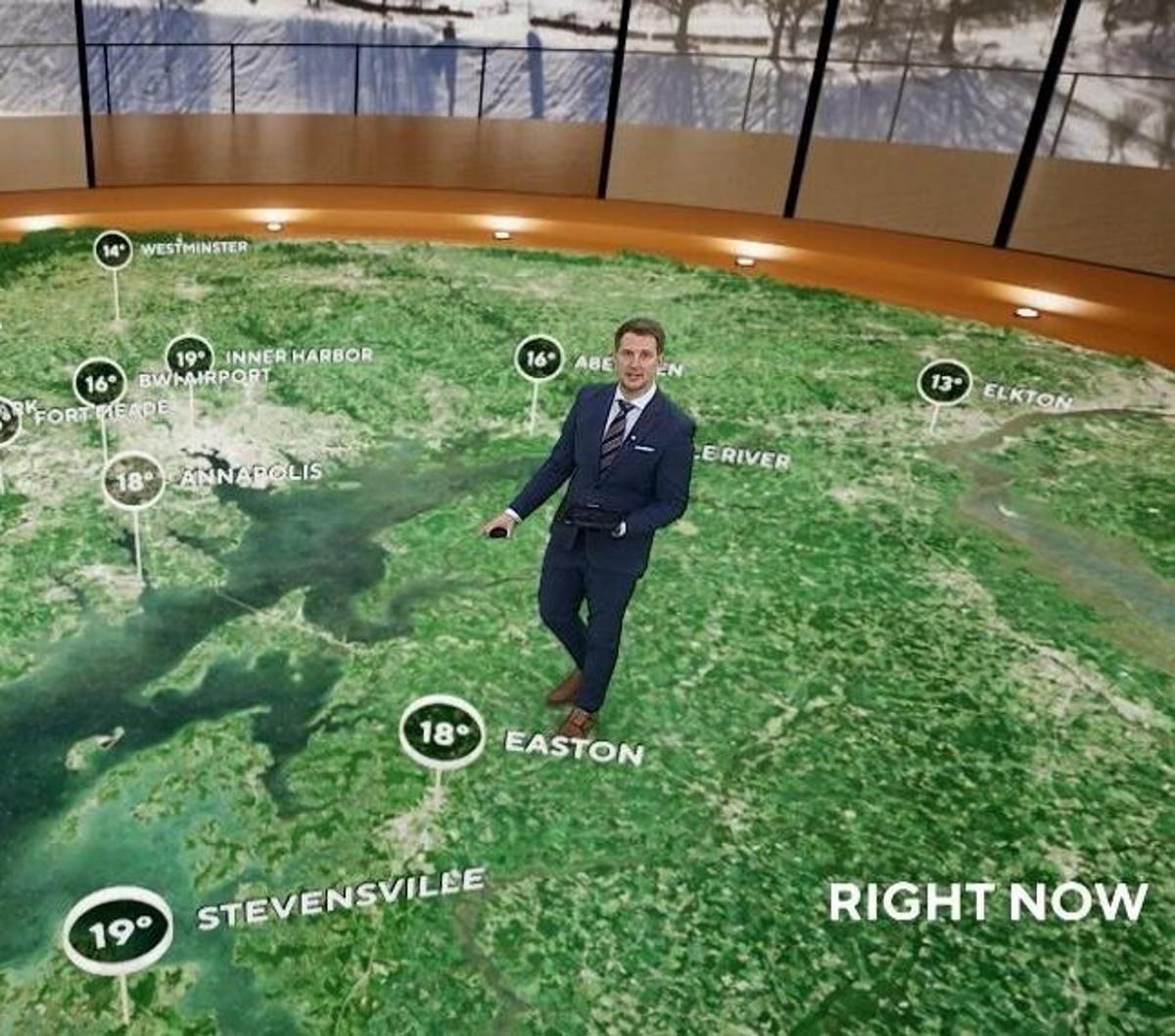
CBS Rolls Its AR/VR Studio Technology Into Charm City
•February 19, 2026
0


Why It Matters
The deployment elevates local news storytelling, potentially boosting viewer engagement and advertising revenue while setting a benchmark for broadcast innovation.
Key Takeaways
- •CBS launches AR/VR studio at WJZ‑13 Baltimore.
- •Immersive weather visuals show hyper‑local flood, snow impacts.
- •Sports segments gain dynamic analysis via virtual graphics.
- •Expansion follows deployments in eight major U.S. markets.
- •Expect more AR/VR studios launching across the country this year.
Pulse Analysis
CBS’s AR/VR studio rollout represents a strategic push to modernize local television news. By integrating real‑time 3‑D graphics into weather and sports segments, stations can translate complex data—like micro‑climate variations or play‑by‑play analytics—into intuitive visual stories. This technology, first piloted in flagship markets such as New York and Los Angeles, now arrives in Baltimore, where viewers will see flood zones highlighted on a virtual map and athletes dissected with layered graphics, enhancing comprehension and retention.
For WJZ‑13, the immersive platform is more than a visual upgrade; it aligns with shifting audience expectations for interactive content. Younger viewers, accustomed to digital experiences on platforms like TikTok and YouTube, demand immediacy and depth. AR/VR enables the station to meet those demands, offering hyper‑local weather alerts that illustrate real‑world impact and sports breakdowns that feel like a live‑coach’s telestration. The result is a more engaging broadcast that can command higher ad rates and attract sponsors eager to associate with cutting‑edge storytelling.
Industry analysts view CBS’s aggressive AR/VR expansion as a bellwether for the broader broadcast sector. As advertisers seek measurable engagement, stations that can deliver immersive experiences gain a competitive edge over traditional newscasts. Moreover, the technology’s scalability—evident from deployments in eight major markets—suggests a rapid diffusion across mid‑size cities. This could reshape local news economics, prompting rivals to invest in similar capabilities or partner with tech firms to avoid falling behind in the race for viewer attention.
CBS Rolls Its AR/VR Studio Technology Into Charm City
0
Comments
Want to join the conversation?
Loading comments...