Entertainment News and Headlines
  • All Technology
  • AI
  • Autonomy
  • B2B Growth
  • Big Data
  • BioTech
  • ClimateTech
  • Consumer Tech
  • Crypto
  • Cybersecurity
  • DevOps
  • Digital Marketing
  • Ecommerce
  • EdTech
  • Enterprise
  • FinTech
  • GovTech
  • Hardware
  • HealthTech
  • HRTech
  • LegalTech
  • Nanotech
  • PropTech
  • Quantum
  • Robotics
  • SaaS
  • SpaceTech
AllNewsDealsSocialBlogsVideosPodcastsDigests

Entertainment Pulse

EMAIL DIGESTS

Daily

Every morning

Weekly

Sunday recap

NewsDealsSocialBlogsVideosPodcasts
EntertainmentNewsIIMW Recap: India Has a Venues Problem
IIMW Recap: India Has a Venues Problem
Entertainment

IIMW Recap: India Has a Venues Problem

•February 13, 2026
0
Music Ally
Music Ally•Feb 13, 2026

Why It Matters

Without a robust mid‑tier venue ecosystem, artists cannot grow sustainably and the live‑music market risks stagnating, limiting revenue streams for promoters, sponsors, and ancillary services.

Key Takeaways

  • •Mid‑capacity venues (500‑5,000) scarce across India
  • •Production costs rise non‑linearly beyond 500 seats
  • •Promoters resort to malls, compromising acoustics
  • •Government pilots single‑window venue clearance system
  • •State initiatives aim to repurpose unused spaces

Pulse Analysis

India’s live‑music sector is booming, yet the infrastructure that supports it remains lopsided. While intimate bars and massive festivals thrive, the 500‑to‑5,000‑seat segment—crucial for artist development and revenue diversification—remains under‑served. This capacity gap mirrors challenges faced in other emerging markets, where rapid audience growth outpaces venue supply, leading to bottlenecks that can dampen long‑term industry momentum.

Financially, scaling a concert from a 500‑seat hall to a 2,000‑seat arena is not a linear equation. Fixed costs such as sound, lighting, and licensing multiply, while variable costs like staffing and security surge, often inflating budgets from roughly ₹1 million to over ₹5 million. Promoters therefore gravitate toward malls and commercial courtyards that already house basic infrastructure, even though acoustic quality and audience comfort suffer. This compromise erodes brand perception for both artists and event organizers, and may deter premium sponsorships that seek high‑quality production environments.

Recognizing these constraints, Indian authorities are piloting a single‑window clearance platform that consolidates permits across municipal, police, and cultural departments, aiming to reduce bureaucratic friction. Parallel efforts in states like Goa and Karnataka demonstrate how public‑private partnerships can unlock dormant spaces—warehouses, exhibition halls, and civic venues—for cultural use at concessional rates. If these policies scale nationally, they could catalyze a new wave of mid‑capacity venues, fostering a healthier ecosystem where emerging talent can transition smoothly from clubs to larger stages, ultimately strengthening India’s concert economy.

IIMW recap: India has a venues problem

India’s live music industry faces a mid‑capacity venue gap, experts say

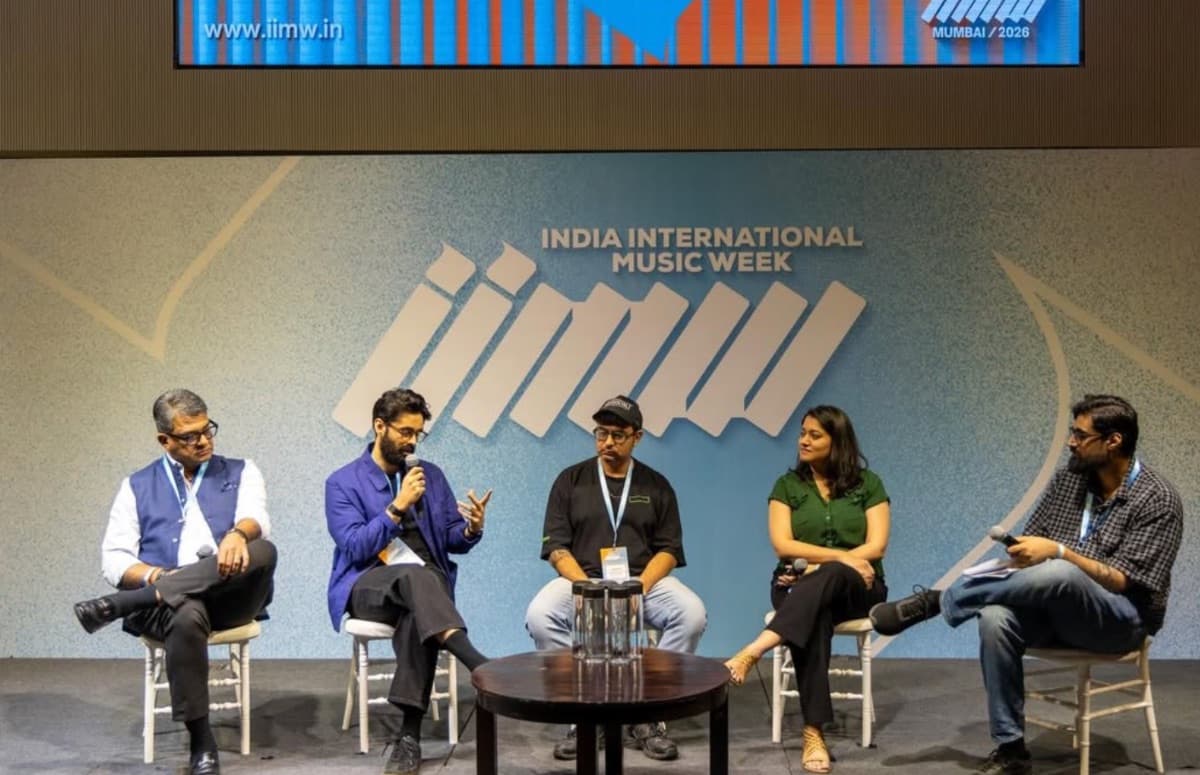
India’s live music industry formed a substantial part of the conversations at the India International Music Week (IIMW) conference, which was held in Mumbai on 11‑12 February and was attended by delegates from Australia, Europe, Africa and South Asia. Among the most insightful panels were those focused on festivals, touring in India, and the capacity gaps for venues in the country. There were also one‑on‑one meetings with promoters and agents, and showcase performances by both Indian and visiting musicians.

The common thread that ran through the panel discussions about venues and touring—which were moderated by journalist Bhanuj Kappal and Mae Thomas, the founder/CEO of podcasting company Maed In India—was the severe lack of mid‑capacity spaces.

“India’s whole [live] music ecosystem is like an hourglass, where you have the small bars and venues at the bottom, and then straight on the top you have the massive festivals,” said Vivek Dudani, partner at the Mumbai bar antiSOCIAL, which is among the few spots in the city to regularly host gigs. “What’s missing is the middle. And that’s a very important thing for growing the music scene in India. An artist cannot just go from a 200‑capacity venue straight to a big festival. That happens, but that can only happen once or twice in the year.”

Himanshu Vaswani, the co‑founder of 4/4 Experiences, an events services company that works across live production, curation and consultancy, added further perspective by putting figures to the problem.

“It’s the 500‑5,000 level where there’s a lot of struggle and effort because if, hypothetically speaking, the cost of doing [a show] for 500 people is Rs 1,00,000 (≈ $1,100), the moment you take that to 1,000 or 1,500, then Rs 1,00,000 automatically becomes Rs 1.5 million (≈ $16,500), or Rs 2 million (≈ $22,000), or even more. So it’s not going up proportionately.”

A big part of the reason for this is that promoters have to build almost all the infrastructure.

“[Occasionally,] antiSOCIAL does events outdoors [as well], and at this point, whenever we try to think of doing [one] above 500‑capacity, it feels like it’s a construction project,” said Dudani. “We spend 40 % of our budgets on the sound, on the lights. And then you have to go to 15, 20 different people for licensing.”

Consequently, event organisers look for less‑than‑ideal alternatives. Dublin Square, the closed courtyard of the Phoenix Market City mall in Mumbai—and recently host of concerts by singer‑songwriter Passenger and the Hindi‑film music composer trio Shankar‑Ehsaan‑Loy—is every gig‑goer’s favourite worst venue because of its sub‑optimal sound.

“You have to go to places like malls and warehouses,” said Arjun Shah, founder/CEO of artist‑management and entertainment‑solutions company Shark & Ink. “We’ve got to do with what’s available. Those are places that give you some sort of infrastructure in terms of production and tech so you don’t have to put everything out of your pocket. If I have to make a venue from scratch, even if I sell 2,000 tickets, I won’t necessarily break even without brand [sponsorship] support.”

Vaswani explained why malls are popular from a financial standpoint.

“If you were to do a gig at Dublin Square at Phoenix Market City, you could pull it off at Rs 1.5 million (≈ $16,500), or Rs 2 million (≈ $22,000). If you were to go to [the seaside outdoor venue] Bayview Lawns, you would probably have to do it in Rs 5 million (≈ $55,100). It makes me cringe, the idea of attending a show at a mall. You can do it [elsewhere], but you’ll lose money. That’s where the debate comes in, should I keep doing these small gigs again and again and maybe not provide the best experience versus doing it right and losing money?”

Dudani believes that malls are filling a role that should be played by the government.

“Most of these malls are hosting gigs because they need footfalls. Retail stores are dying. They need other forms of entertainment [to bring in people]. Promoters look to malls because malls are investing it with them. So malls are acting as partners, whereas it should be the government, [which] giving out their unused spaces like warehouses to promoters at a concessive rate.”

This is already happening at some level in other cities and states, said Dipti Rao, deputy general manager of auditorium operations at the Prestige Centre for Performing Arts in Bengaluru.

“What the government has done in Goa with Serendipity Arts Festival, and in Bengaluru with BLR Hubba is offer space.”

Overall, panelists were cautiously optimistic that central, state and city authorities are finally paying attention to the live‑events industry after the massive success of Coldplay’s 2025 tour alerted them to India’s booming “concert economy”. In Mumbai, for instance, the current municipal commissioner and the current police commissioner are both pro‑live events, which is why you’re seeing a lot of things happening at the Mahalaxmi Racecourse,” said Albert Almeida, consultant to the chairman’s office at the National Centre for the Performing Arts. “To navigate the system is still a challenge, but [it’s something] I think we shall overcome.”

In the conference’s opening discussion, about ‘The State of the Union’—moderated by journalist Chintan Girish Modi—Sabbas Joseph, founder of events company Wizcraft Global, shared that “one of the first agendas” of the Live Event Development Cell—a joint working group comprising representatives of the events industry and the government, led by Prithul Kumar, joint secretary (broadcasting) of the Ministry of Information and Broadcasting—is to launch a “single‑window clearance” system.

“The trial phase has ten pre‑approved venues for a large concert where all permissions are applied for in one particular common application form, which all the government departments are linked to and are required to approve within a time frame or come back with questions or queries.”

Image 1: Five people sit on stage for a panel in front of an “India International Music Week” backdrop

Read Original Article
0

Comments

Want to join the conversation?

Loading comments...