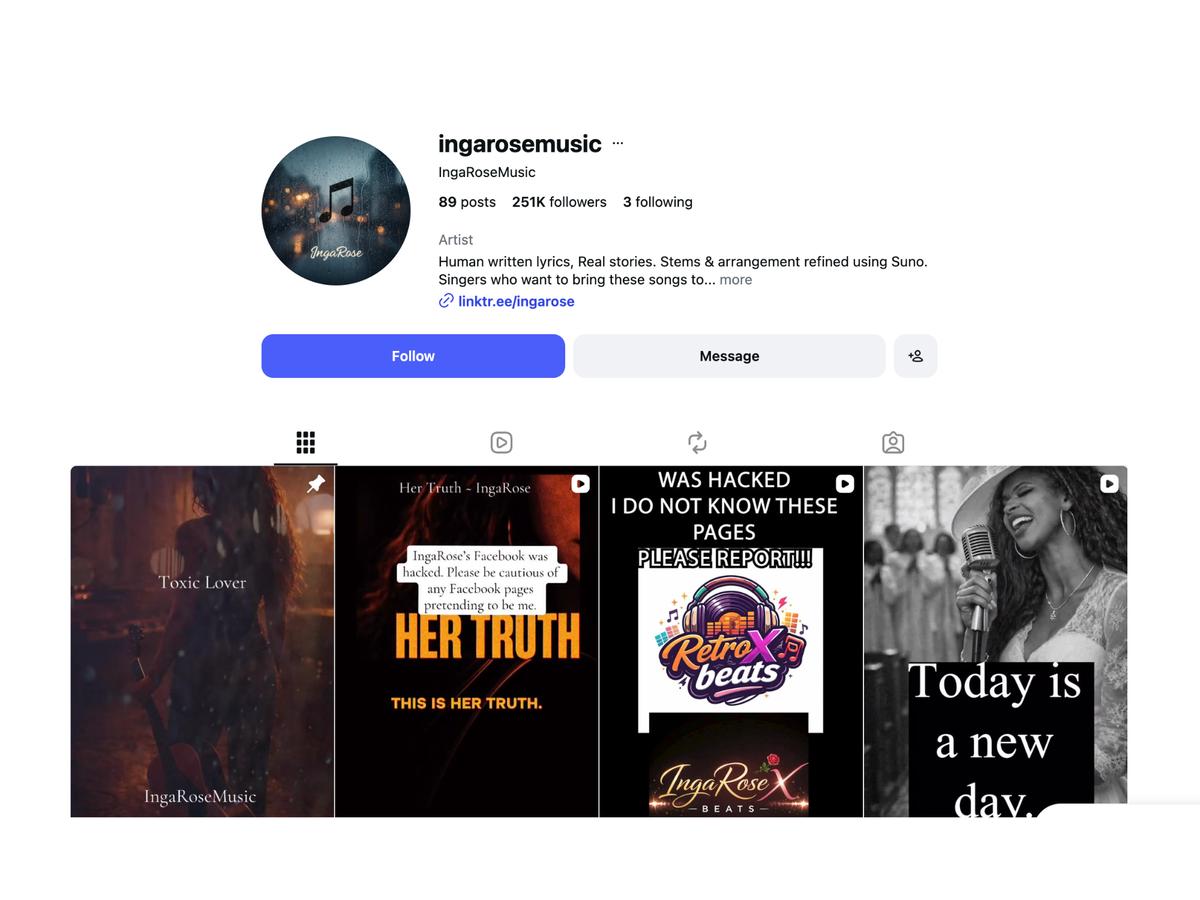
IngaRose Is a Hit as SIQA Launches ‘AI Music Intelligence’ Report
Companies Mentioned
Why It Matters
The findings confirm that AI music is moving beyond novelty, becoming a mainstream, human‑augmented production model that reshapes publishing, distribution, and genre trends. Industry players must adapt to the tools and channels that now dominate the AI‑music ecosystem.
Key Takeaways
- •IngaRose amassed 240k TikTok followers and 942k Spotify listeners.
- •31.7% of AI‑generated tracks are R&B/Soul, leading genre.
- •48% of submissions are AI‑assisted; only 19% fully AI‑generated.
- •Suno powers 90.4% of AI music submissions.
- •75.8% of tracks use DistroKid for distribution.
Pulse Analysis
The rise of AI‑generated music is no longer a fringe experiment; projects like IngaRose illustrate how generative tools can amplify a songwriter’s reach across platforms. By blending human‑crafted lyrics with Suno‑engineered arrangements, IngaRose has captured sizable audiences on TikTok, Instagram, YouTube, and Spotify, translating digital engagement into chart success in the US, UK, France, Canada, and New Zealand. This hybrid approach signals a shift where AI serves as a creative catalyst rather than a replacement, allowing artists to scale output while preserving authentic storytelling.
SIQA’s AI Music Intelligence Report deepens the picture, revealing that R&B/Soul now leads AI‑music submissions at 31.7%, challenging the stereotype that electronic EDM dominates the space. The report also highlights a nuanced production landscape: 48% of tracks are AI‑assisted, 33% are human‑plus‑AI hybrids, and only 19% are fully autonomous. Suno emerges as the de‑facto engine, powering 90.4% of entries, while tools like ChatGPT handle lyrical tasks for roughly one‑fifth of creators. These insights underscore a collaborative workflow where human oversight remains essential.
From a business perspective, the distribution data is striking—over three‑quarters of AI‑music releases rely on DistroKid, positioning the service as a critical conduit to streaming platforms. This concentration suggests that emerging AI‑artist ventures will prioritize cost‑effective, rapid‑upload solutions to stay competitive. As AI tools become more accessible, labels and publishers will need to rethink royalty structures, rights management, and marketing strategies to accommodate hybrid creations. The convergence of AI production, social‑media virality, and streamlined distribution points to a new, scalable model for music monetization that could reshape the industry’s value chain in the coming years.
IngaRose is a hit as SIQA launches ‘AI Music Intelligence’ report
Comments
Want to join the conversation?
Loading comments...