Why It Matters
The trial proves 5G can replace traditional wired links for live sports and event broadcasting, unlocking faster, more flexible production workflows. It signals broader industry adoption of wireless, IP‑centric infrastructures.
Key Takeaways
- •Videe deployed six Sony 5G kits for live events
- •Trials covered sailing, football, reality TV, and ski marathon
- •5G handled high‑movement, bandwidth‑intensive production scenarios
- •Sony’s NXL‑ME80 processor enabled integrated camera and connectivity
- •Success signals broader 5G adoption in broadcast industry
Pulse Analysis
The rollout of 5G across live‑production workflows marks a turning point for broadcasters seeking ultra‑low latency and massive bandwidth. Italian company Videe’s recent field trials demonstrate how the technology can replace traditional microwave links and fiber back‑haul in demanding environments. By deploying six Sony‑engineered 5G kits during events ranging from the Nitto ATP Finals to the 70‑kilometre Marcialonga ski marathon, Videe proved that a single wireless infrastructure can simultaneously power cameras and deliver real‑time data streams. These results underscore 5G’s capacity to sustain high‑definition, multi‑camera productions even under extreme motion and weather conditions.
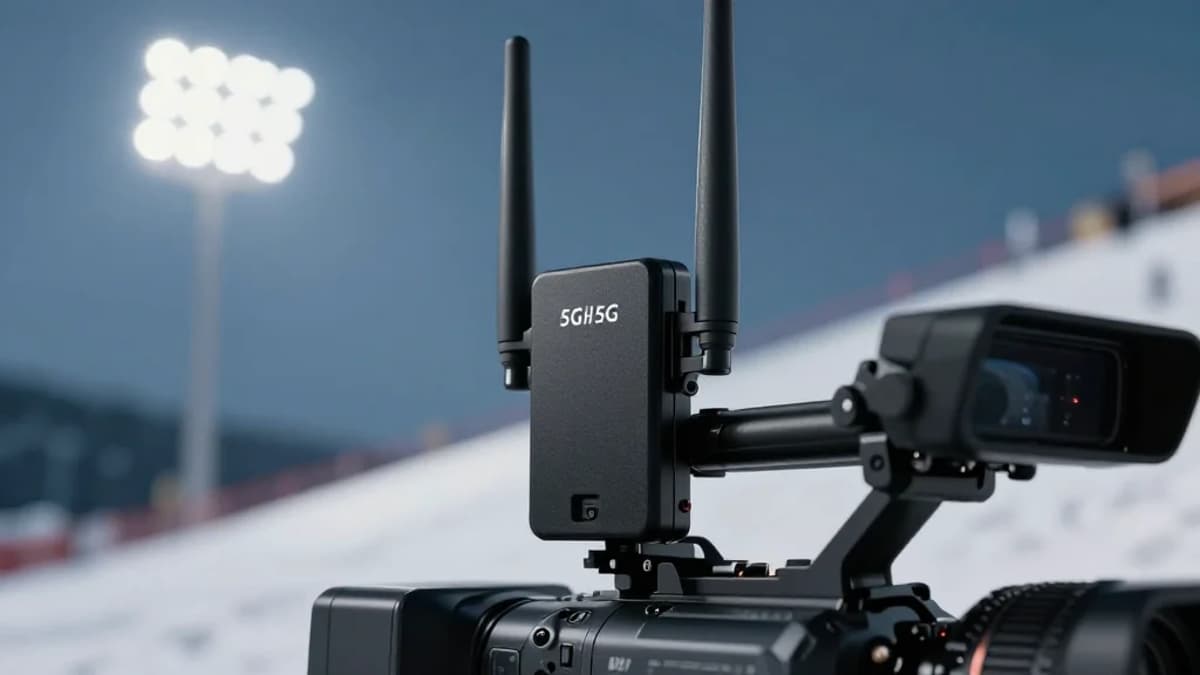
Sony’s NXL‑ME80 media edge processor, paired with the CBK‑RPU7 remote production unit and PDT‑FP1 portable transmitter, forms a compact end‑to‑end solution for IP‑based broadcasting. The processor handles on‑the‑fly encoding, while the remote unit manages camera control and signal routing, eliminating the need for separate uplink stations. Portable transmitters deliver gigabit‑per‑second links even in congested spectrum, ensuring consistent throughput for 4K HDR feeds. This modular architecture allows operators to scale deployments quickly, adding or relocating cameras without rewiring, which is especially valuable for sports venues and outdoor festivals where infrastructure is temporary.
The successful 5G deployment by Videe signals a broader shift toward wireless‑first production pipelines across Europe and beyond. Broadcasters can now envision cost‑effective, rapid‑deployment studios that bypass legacy cabling, reducing both capital expenditure and setup time for live events. As spectrum regulators allocate more mid‑band frequencies, competition among equipment vendors will intensify, driving further innovation in edge processing and AI‑assisted workflow automation. Ultimately, the convergence of 5G connectivity with IP production standards promises to unlock new revenue streams, such as immersive multi‑angle streaming and real‑time audience interaction, reshaping the future of televised sports and entertainment.
Italian production company goes live with 5G
0
Comments
Want to join the conversation?
Loading comments...