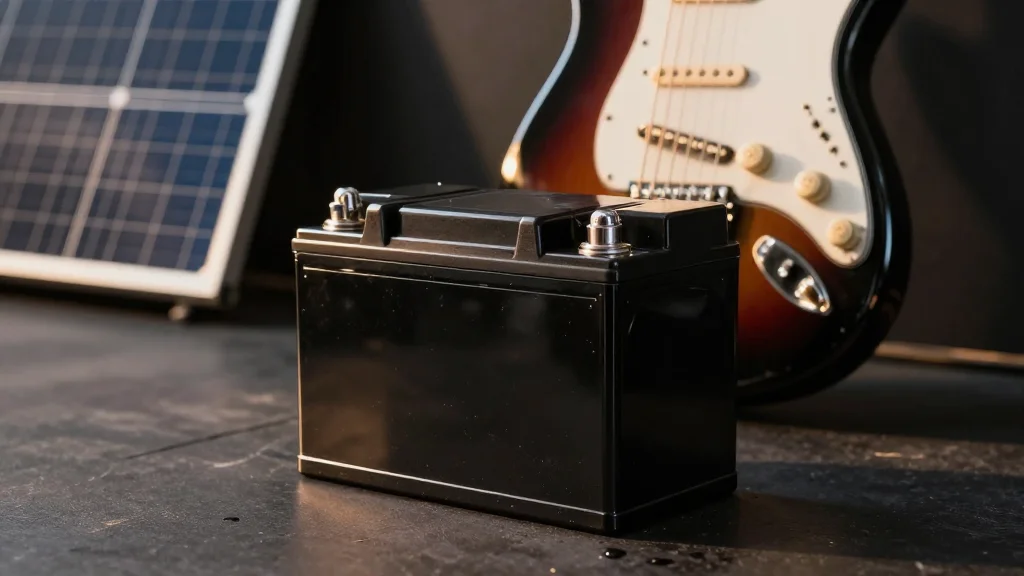
Kansas City Rapper AY Young Powers Hundreds of Green Concerts with Battery‑Run Gear

Why It Matters
AY Young’s Battery Tour demonstrates that sustainable technology can be integrated into live‑music production without sacrificing artistic quality. By cutting fuel costs and reducing carbon footprints, the model offers a financially viable alternative for independent musicians and a branding lever that aligns with consumer demand for eco‑friendly experiences. If adopted at scale, it could lower the overall environmental impact of the touring industry, which currently accounts for significant greenhouse‑gas emissions. Beyond economics, the initiative highlights how artists can become catalysts for social change. Young’s partnership with UN Sustainable Development Goals and his focus on energy access in underserved regions illustrate a new paradigm where entertainment serves as a conduit for humanitarian outreach, potentially reshaping the relationship between culture, commerce, and community development.
Key Takeaways
- •AY Young has completed over 100 battery‑powered concerts across the U.S. and abroad.
- •Solar‑charged marine batteries replace diesel generators, cutting energy costs by up to 80%.
- •UN named Young a Young Leader for the Sustainable Development Goals.
- •Potential market for portable renewable energy in entertainment could reach $1‑2 billion in five years.
- •Next phase includes a ‘Solar Stage’ pilot at a major festival circuit in summer 2027.
Pulse Analysis
The Battery Tour is a micro‑economic experiment that could trigger macro‑level change in the live‑music ecosystem. Historically, touring has been a cost‑intensive venture, with energy expenses and carbon emissions often treated as unavoidable externalities. Young’s model flips that narrative, turning energy into a strategic asset. By front‑loading capital expenditures on batteries and solar panels, artists can lock in lower marginal costs, akin to the way streaming services amortized content creation over subscription revenue. This shift could democratize touring, giving independent acts the logistical freedom previously reserved for major label acts with deep pockets.
From a branding perspective, sustainability is rapidly becoming a differentiator. Millennials and Gen‑Z consumers are willing to pay a premium for experiences that align with their values, and artists who can credibly claim zero‑emission shows gain a competitive edge. The Battery Tour’s success may prompt venues to invest in infrastructure that supports off‑grid performances, creating a feedback loop that lowers entry barriers for future green tours. However, scalability challenges remain: battery weight, charging time, and the need for reliable power output during high‑energy sets could limit adoption for stadium‑scale events. A hybrid approach—combining grid power with renewable backup—might emerge as the industry’s pragmatic path forward.
If the upcoming Solar Stage pilot proves viable, it could serve as a proof point for larger festivals and touring circuits, potentially unlocking new revenue streams for equipment manufacturers and green‑tech investors. In that scenario, the entertainment sector would not only reduce its carbon footprint but also generate a new market segment that aligns profit with planet, echoing broader trends in ESG‑focused investment. AY Young’s grassroots innovation thus stands at the intersection of culture, technology, and sustainability, offering a template for how artists can lead industry transformation.
Kansas City Rapper AY Young Powers Hundreds of Green Concerts with Battery‑Run Gear
Comments
Want to join the conversation?
Loading comments...