Entertainment News and Headlines
  • All Technology
  • AI
  • Autonomy
  • B2B Growth
  • Big Data
  • BioTech
  • ClimateTech
  • Consumer Tech
  • Crypto
  • Cybersecurity
  • DevOps
  • Digital Marketing
  • Ecommerce
  • EdTech
  • Enterprise
  • FinTech
  • GovTech
  • Hardware
  • HealthTech
  • HRTech
  • LegalTech
  • Nanotech
  • PropTech
  • Quantum
  • Robotics
  • SaaS
  • SpaceTech
AllNewsDealsSocialBlogsVideosPodcastsDigests

Entertainment Pulse

EMAIL DIGESTS

Daily

Every morning

Weekly

Sunday recap

NewsDealsSocialBlogsVideosPodcasts
EntertainmentNewsLove Is Not Enough
Love Is Not Enough
Entertainment

Love Is Not Enough

•February 10, 2026
0
Pitchfork
Pitchfork•Feb 10, 2026

Why It Matters

The release demonstrates how legacy metalcore acts can stay commercially relevant by balancing aggression with thematic depth, influencing streaming trends and festival line‑ups. It also signals continued demand for veteran bands to evolve without alienating core audiences.

Key Takeaways

  • •Converge releases eleventh album after nine-year hiatus
  • •Album splits into aggressive political half and moody personal half
  • •Features brutal opening tracks, slower experimental middle
  • •Frontman Jacob Bannon writes about love's limits, mortality
  • •Band maintains technical prowess, avoids sounding like retread

Pulse Analysis

Converge’s new album *Love Is Not Enough* arrives at a pivotal moment for the metalcore genre, where streaming platforms reward both consistency and innovation. By delivering a record that juxtaposes ferocious, politically charged tracks with expansive, mood‑driven pieces, the band taps into listeners’ appetite for narrative depth alongside head‑bangable riffs. This duality not only broadens their demographic reach but also positions the album for playlist placement across hard‑rock, alternative, and even introspective mood categories, driving higher algorithmic visibility.

The album’s thematic focus on love’s insufficiency and mortality resonates with a generation confronting post‑pandemic disillusionment. Jacob Bannon’s lyrical ambiguity invites personal interpretation, a tactic that fuels fan‑generated content and social media discussion—key drivers of organic promotion in today’s music market. Moreover, the collaboration history with artists like Chelsea Wolfe hints at cross‑genre appeal, potentially opening doors for joint tours and merch collaborations that can boost ancillary revenue streams beyond pure album sales.

From a business perspective, Converge’s ability to release a compelling record after a near‑decade hiatus underscores the value of brand longevity in the music industry. Their meticulous production, combined with a strategic rollout that leverages press outlets, streaming exclusives, and limited‑edition merch, exemplifies a holistic approach to monetization. As veteran acts continue to navigate a saturated digital landscape, *Love Is Not Enough* serves as a case study in balancing legacy fan expectations with innovative content to sustain relevance and profitability.

Love Is Not Enough

Converge – 2026

By Patrick Lyons

Reviewed February 10, 2026


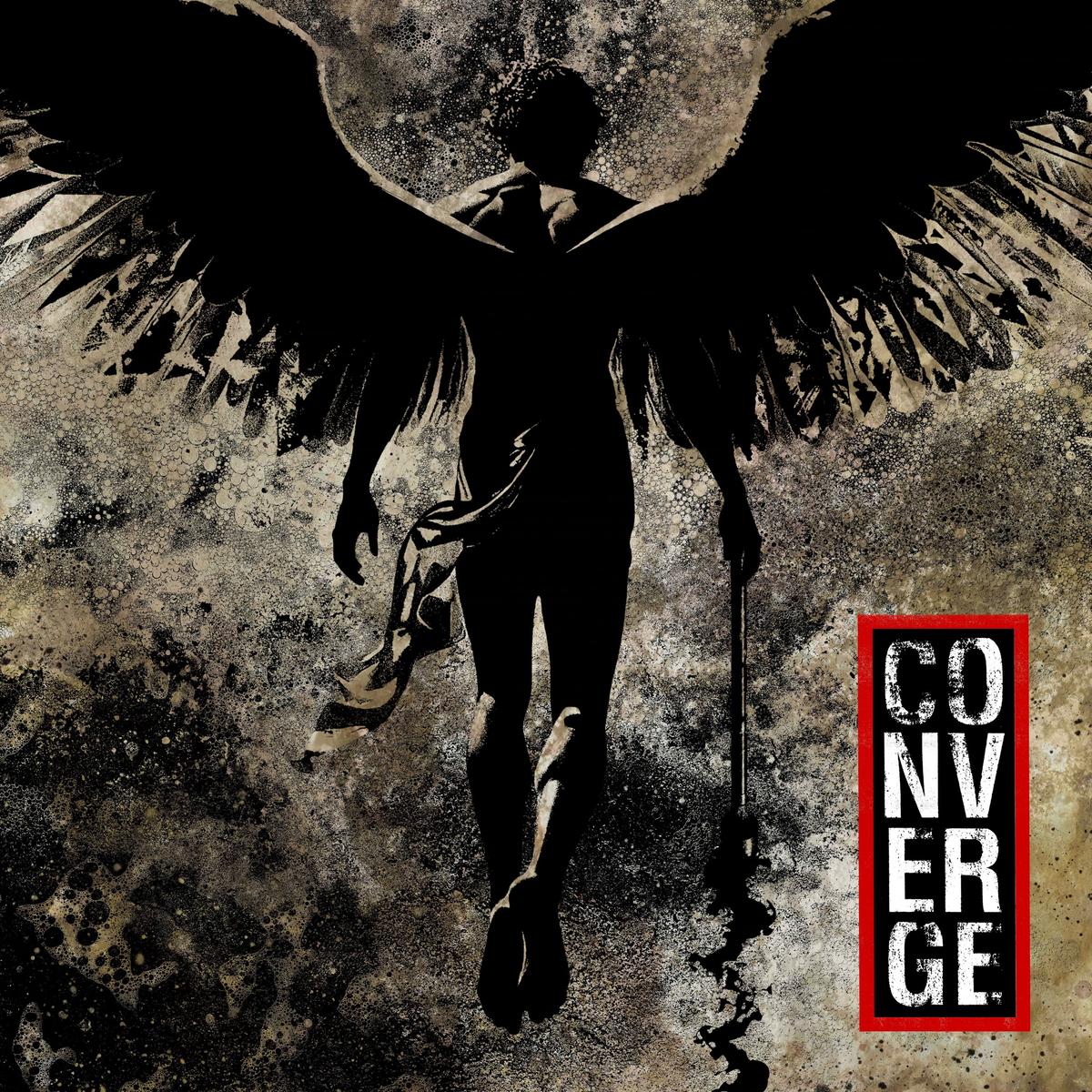
Converge – Love Is Not Enough

You need to understand how big of a deal it is for Converge to tell us that Love Is Not Enough. Their eleventh album, arriving 36 years after the band’s formation, is their second with “love” in the title, and their eleventh with “love” appearing at least once (but usually many more times) in the lyric sheet. Converge made their name by taking hardcore and making it more knotty and abrasive, as if they were distressing a new pair of jeans. But they have always focused their aggression on heightening empathy rather than rejecting it. Their 2001 breakout, Jane Doe, is still one of the nastiest‑sounding albums ever recorded, and it’s tempting to pit that sound against the heartfelt lyrics. As is most evident on “Heaven in Her Arms,” that roiling tumult mirrors the internal rollercoaster that comes with emotional bloodletting:

“I just needed a lover and I needed a friend

And there you were

Running from forever like all the rest

Three simple words bled me dry

Three simple words bled us dry, bled us dry

I love you”

It’s been nine years since the last proper Converge album, and in the interim the band linked up with doom‑folk singer‑songwriter Chelsea Wolfe for 2021’s meandering, ostentatious, and uneven collaboration, Bloodmoon: I. It might be shocking to hear Converge open their latest with four lean, brutal barn‑burners—reflecting the “no frills, no BS” mission offered by frontman Jacob Bannon in a recent interview—but the album eventually concludes with a suite of longer, more methodical tracks.

Human connection has always been the motivating force in Bannon’s lyrics, and his approach tends to be hyper‑personal while still opaque enough to invite interpretation. He usually operates in first‑person, and it rarely seems like he’s invoking perspectives other than his own, but his lack of specificity almost always spurns proper nouns. He continues to keep things vague on Love Is Not Enough, an album that splits its focus between big‑picture outrage and internal reckonings with mortality. The refrain of the opening title track, “Love is not enough / To fend off the scavengers,” could feasibly belong to any disillusioned post‑Reagan punk band. On the other hand, Bannon wrote the album closer in a funeral‑home parking lot, and his lyrics lament the fact that death is the easiest way to bring people together.

Love Is Not Enough is split between two distinct halves: the first more blistering and political, the second more moody and personal. There’s still a clear linked sentiment—that our traditional understanding of “love” either needs an update or an expansion to maintain its value in modern life. For a band in its fourth decade, whose ages range between 45 and 52, this is a particularly generative notion. The sense of desperate searching connects the mass‑pacification protest “To Feel Something,” for instance, and the opiate‑addiction lament “Gilded Cage.”

“Systematically we seethe,” he shouts. “Pharmaceutically we bleed.”

After an uptempo opening, the album’s momentum screeches to a halt with the droning two‑and‑half‑minute instrumental “Beyond Repair,” and when Converge return to their regularly scheduled programming, they’re sludgier and more long‑winded. They’ve been making pace‑slowers forever, but ever since they closed 2009’s Axe to Fall with two plodders, Converge have sounded less like corroded In Utero offspring and more like a band so inspired by Neurosis that they launched a collaborative merch line.

The technical prowess still shines through—check the swaggering stutter of “Force Meets Presence” and the swirling grandeur that closes “Make Me Forget You”—once again reminding us that this is the most well‑oiled unit metalcore has ever produced, no matter what mode they’re in. Love Is Not Enough is never not invigorating (save for “Beyond Repair”), but its more vicious songs are such refreshing evidence of Converge’s vitality that every departure from that energy feels like a pulled punch.

In a recent Decibel profile, Converge revealed that, while sifting through years‑old demos of riffs, they accidentally rewrote a song they’d already recorded for a previous album. Drummer Ben Koller dubbed this “BCP: Big Catalog Problems,” and most bands that last this long inevitably end up repeating themselves. The thing about Converge is that, when they play to their strengths, it never sounds like a retread, even if they end up writing something that could slot seamlessly onto Jane Doe. Ironically, the only boring moments in their past 25 years come when they’re clearly attempting a different sound. Boldness is baked into this band, and that’s what leads them to dizzying new compositions and refreshing shifts in perspective. Love may no longer be enough, but I hope Converge realize that their fundamental DNA always will be.

Read Original Article
0

Comments

Want to join the conversation?

Loading comments...