The film illustrates how real‑time game engines are reshaping independent cinema, while its critique of artistic insecurity resonates with today’s gig‑economy creatives.
The most striking aspect of *The Misconceived* is its production pipeline. By leveraging Unreal Engine, the filmmakers achieved real‑time rendering that rivals traditional VFX budgets, allowing on‑set adjustments and a seamless blend of photorealistic and stylized elements. This approach signals a shift where indie directors can access tools once reserved for AAA video games, reducing post‑production timelines and expanding creative possibilities. The result is a visual texture that feels both familiar to gamers and fresh for cinema audiences.
Beyond its technical bravado, the narrative dives deep into the psyche of the modern creative class. Tyler’s dual identity as a writer‑handyman becomes a metaphor for the precarious gig economy, where artistic ambition clashes with survival instincts. The film’s dialogue‑heavy scenes expose the corrosive comparison culture among artists, especially when juxtaposed with Tobin’s rising success at the Whitney Biennial. By framing these tensions within a house‑renovation project, the story grounds lofty existential dread in everyday labor, making the satire both relatable and unsettling.
The festival debut at Rotterdam’s Harbour sidebar underscores the growing appetite for boundary‑pushing works that fuse technology and storytelling. As more festivals spotlight films employing game engines, industry stakeholders anticipate a new wave of hybrid productions that blur the line between interactive media and traditional cinema. This convergence could democratize high‑quality visual storytelling, encouraging studios and streaming platforms to experiment with real‑time pipelines. For creators, the success of *The Misconceived* offers a blueprint for marrying avant‑garde narrative with cutting‑edge tech, hinting at a future where cinematic experiences are as dynamic as the games that inspire them.

Seven years after collaborating on The Plagiarists, writers James N. Kienitz Wilkins and Robin Schavoir return with The Misconceived—another incisive, inventive movie about the anxieties faced by the never-quite-made-it creative class. Directed by Peter Parlow, that earlier film played with the tropes of found-footage horror to tell a story about untested urban liberalism and the dual tyrannies of artistic authenticity and writer’s block. The Misconceived—described in press notes as an acidic satire and more than lives up to that corrosive billing—is a little harsh on the eyes, but it swims in similarly rich thematic waters and doesn’t skimp on formal experimentations.
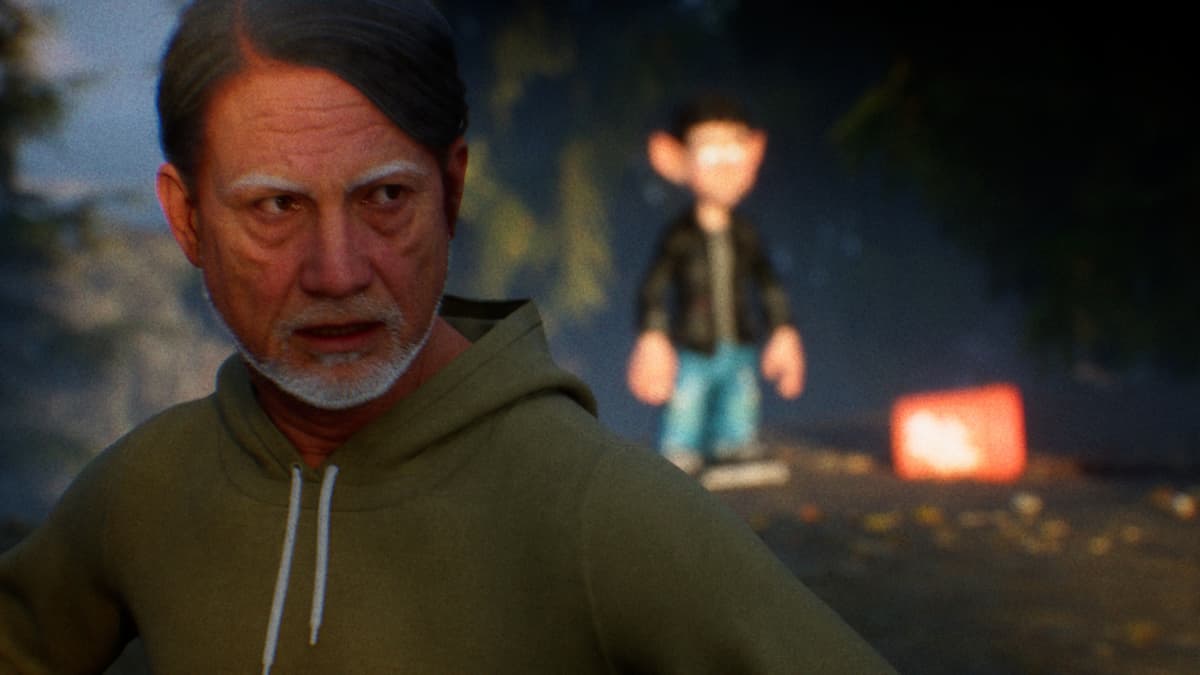
The movie, which focuses on the renovation of a house in upstate New York, is itself a reconstruction of sorts—it was created using Unreal, the graphics engine used to render popular open-world video games like Hogwarts Legacy and the recent Final Fantasy VII remake. If the intention here is to have some fun while also making Kienitz Wilkins and Schavoir’s perennially disappointed characters feel even more like NPCs in their own lives: mission accomplished.
Indeed, for such unreality, this story’s emotions are all too real. Its protagonist, Tyler (John Magary), is the kind of guy who might describe himself as a writer who also does some work as a handyman—even if you just know, in his heart of hearts, he puts them the other way around. The Misconceived duly plops him into a reliably emasculating situation: only after showing up with his work crew does Tyler realize that his new employer, Tobin (Jesse Wakeman), is a former college roommate—a sculpture artist with a cheerier disposition and an upcoming spot at the Whitney Biennial, to boot. For the most part, The Misconceived doesn’t build towards a conflict or resolution—Tobin is mostly supportive and has plenty hang-ups of his own, including a slightly chilly relationship with his wife. Instead, it simply allows the appearance of a more successful contemporary to fan the flames of Tyler’s feelings of inadequacy. “I’m at the time in my life,” he explains at one point, trying to not look too crestfallen, “where I’ve gotta put survival first.”
This, of course, is fertile ground for Kienitz Wilkins and Schavoir to work with: across The Misconceived‘s 88 minutes, which mostly play out during working hours and takes us some way towards the house’s completion, the filmmakers allow their characters to bounce off each other—sometimes genially, usually not—in a series of dialogue-dense sequences that are either caustically funny or just downright caustic. Whether the video-game-cut-scene vibes outstay their welcome will depend on the viewer’s tastes—I must say that, without a great deal of wide shots, they got a little repetitive after a while, but the film makes enough interesting choices to keep things moving. To wit: while Tobin and Tyler are motion-captured in the usual way, other characters, like a foul-mouthed younger colleague named Mikey Jess Barbagallo, are rendered to look like cartoons.
The Misconceived premiered in IFFR’s Harbour sidebar, the Dutch festival’s home for more adventurous fare. This felt like the right place for it—even if the LantarenFenster Kino’s usually welcome tendency to crank the volume left me a little wind-blasted by Kienitz Wilkins and Schavoir’s restless screenplay. Soaking up the movie’s look and its winking, cine-literate dialogue (filmmakers mentioned include the Safdies and Sean Baker, and even Richard Brody’s name gets dropped with a nice little Francophile flourish) I was reminded of Richard Linklater’s Waking Life—a similarly verbose if less-pessimistic movie, albeit one from a decidedly less-pessimistic time. Mileage may vary, but there are some similarly cosmic things to take from The Misconceived. Just don’t expect reassurance to be among them.
The Misconceived premiered at the 2026 International Film Festival Rotterdam.
The post Rotterdam Review: The Misconceived is an Incisive, Inventive Look at Contemporary Life first appeared on The Film Stage.
Comments
Want to join the conversation?
Loading comments...