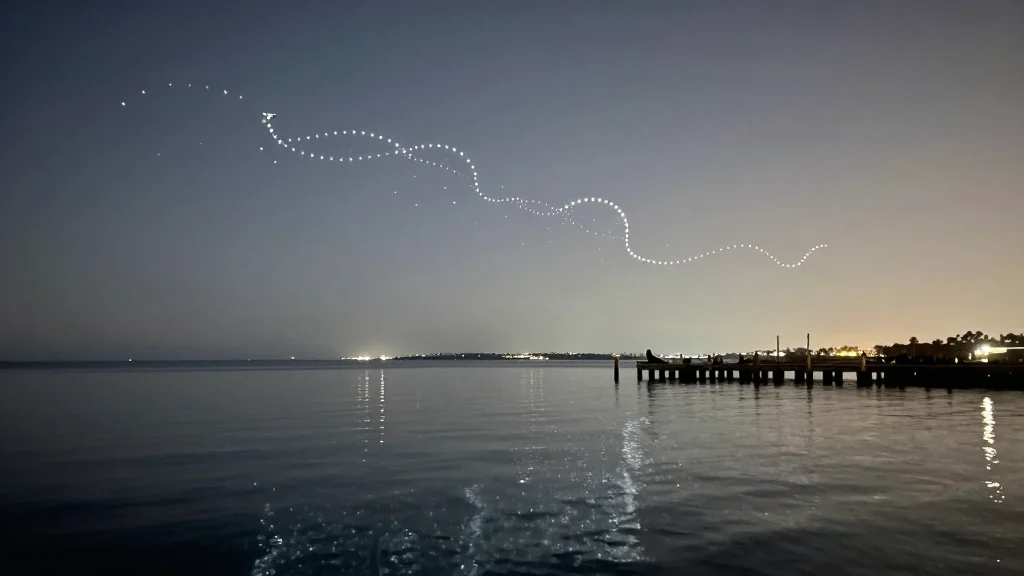
SeaWorld San Diego Is Poised to Pivot From Its Annual Fireworks Shows
Why It Matters
Replacing fireworks with drones could significantly reduce environmental impacts on coastal wildlife while preserving the park’s nighttime attraction, setting a precedent for other venues facing similar scrutiny. The shift also demonstrates how litigation and community pressure can accelerate sustainability innovations in the leisure industry.
Key Takeaways
- •SeaWorld seeks approval for up to 110 drone shows, targeting 78 this year
- •Drone displays limited to 15 minutes, 1,000 drones, max 660‑ft altitude
- •Environmental lawsuit settlement spurs shift from fireworks to drones to protect wildlife
- •Fireworks likely reduced to only July 4th event if drone pilot approved
Pulse Analysis
The push to replace fireworks with drone light shows at SeaWorld San Diego reflects a broader trend of entertainment venues confronting environmental regulations. After a lawsuit alleging Clean Water Act violations tied to fireworks debris, the park negotiated a settlement that encouraged it to explore lower‑impact alternatives. By proposing a controlled pilot—capped at 1,000 drones, 15‑minute runs, and a 660‑foot ceiling—SeaWorld aims to demonstrate that high‑tech spectacles can coexist with coastal ecosystem protection, satisfying both regulators and a growing eco‑conscious audience.
Drone technology offers several operational advantages that appeal to theme parks seeking to modernize. Unlike pyrotechnics, drones generate no smoke or chemical residues, and their flight paths can be precisely programmed to avoid sensitive habitats. Real‑time monitoring, mandated by the commission’s conditions, will capture data on noise, light, and bird interactions, creating a feedback loop for continual improvement. This data‑driven approach not only mitigates legal risk but also provides a marketing narrative of innovation and stewardship, potentially attracting visitors who value sustainability.
If SeaWorld’s pilot proves successful, the model could ripple across the amusement industry, especially in coastal or wildlife‑adjacent locations. Parks could replace costly fireworks permits with programmable drone shows that are reusable, customizable, and less likely to trigger regulatory penalties. Moreover, the shift may influence policy, prompting agencies to update guidelines that currently favor traditional fireworks. As the entertainment landscape evolves, SeaWorld’s experiment may become a benchmark for balancing guest experience with environmental responsibility.
SeaWorld San Diego is poised to pivot from its annual fireworks shows
Comments
Want to join the conversation?
Loading comments...