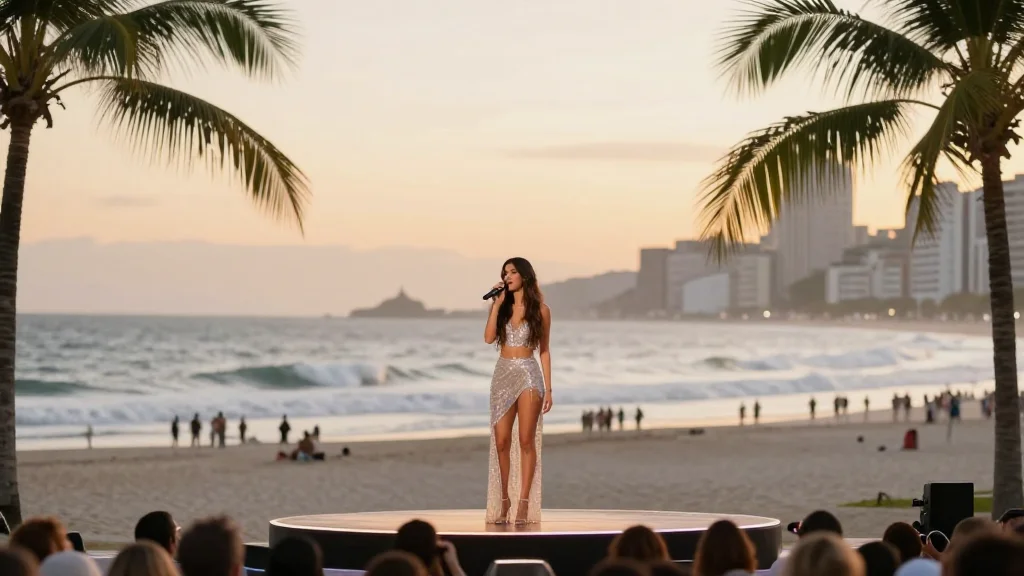
Shakira Draws 2 Million to Free Copacabana Show, Boosts Rio’s Economy

Why It Matters
The concert illustrates a growing trend where cities partner with global pop stars to generate tourism, spur local commerce, and reinforce cultural identity. By offering a free, high‑profile event, Rio leveraged Shakira’s brand to attract 2 million attendees, translating fan enthusiasm into measurable economic activity. For the entertainment industry, the success of Shakira’s free beach show signals that massive, ticket‑less performances can be financially viable when supported by municipal funding and ancillary revenue streams. This model could reshape how tours are structured, especially in emerging markets where live‑music demand outpaces traditional venue capacity.
Key Takeaways
- •2 million spectators attended Shakira’s free Copacabana concert
- •Mayor claims a 40‑fold financial return, about $155 million in projected revenue
- •Event part of the “Las Mujeres Ya No Lloran” world tour
- •Street vendors expected to earn roughly $100 each from sales
- •Concert positioned to boost Rio’s post‑Carnival economy
Pulse Analysis
Shakira’s Copacabana concert marks a pivotal moment in the economics of live music, where public funding and free admission converge to create a win‑win for both artists and host cities. Historically, mega‑concerts have relied on ticket sales to offset production costs; this event flips that script by treating the audience as a catalyst for indirect revenue—hospitality, transportation, and informal commerce. Rio’s projection of a 40‑times return underscores how municipalities can monetize crowd density through taxes, permits, and ancillary spending, a blueprint that could be replicated in other tourism‑driven locales.
The cultural dimension is equally significant. By foregrounding Latin solidarity and women’s empowerment, Shakira tapped into a narrative that resonates across Brazil, Colombia, and the broader Latino diaspora. This alignment amplifies brand loyalty and positions the artist as a cultural ambassador, a role that can translate into sustained streaming numbers, merchandise sales, and future tour demand. The inclusion of local ethnomusicologists and community voices in the coverage further cements the concert’s relevance beyond pure entertainment.
Looking ahead, the success of free, city‑backed concerts may pressure traditional promoters to rethink ticket pricing structures, especially in markets where fans are price‑sensitive but demand high‑energy experiences. As cities vie for global attention, we may see a competitive race to host similar spectacles, each promising economic uplift and cultural cachet. For artists, the model offers a platform to reach unprecedented audience sizes without the logistical constraints of stadium capacities, potentially reshaping tour routing strategies for the next decade.
Shakira Draws 2 Million to Free Copacabana Show, Boosts Rio’s Economy
Comments
Want to join the conversation?
Loading comments...