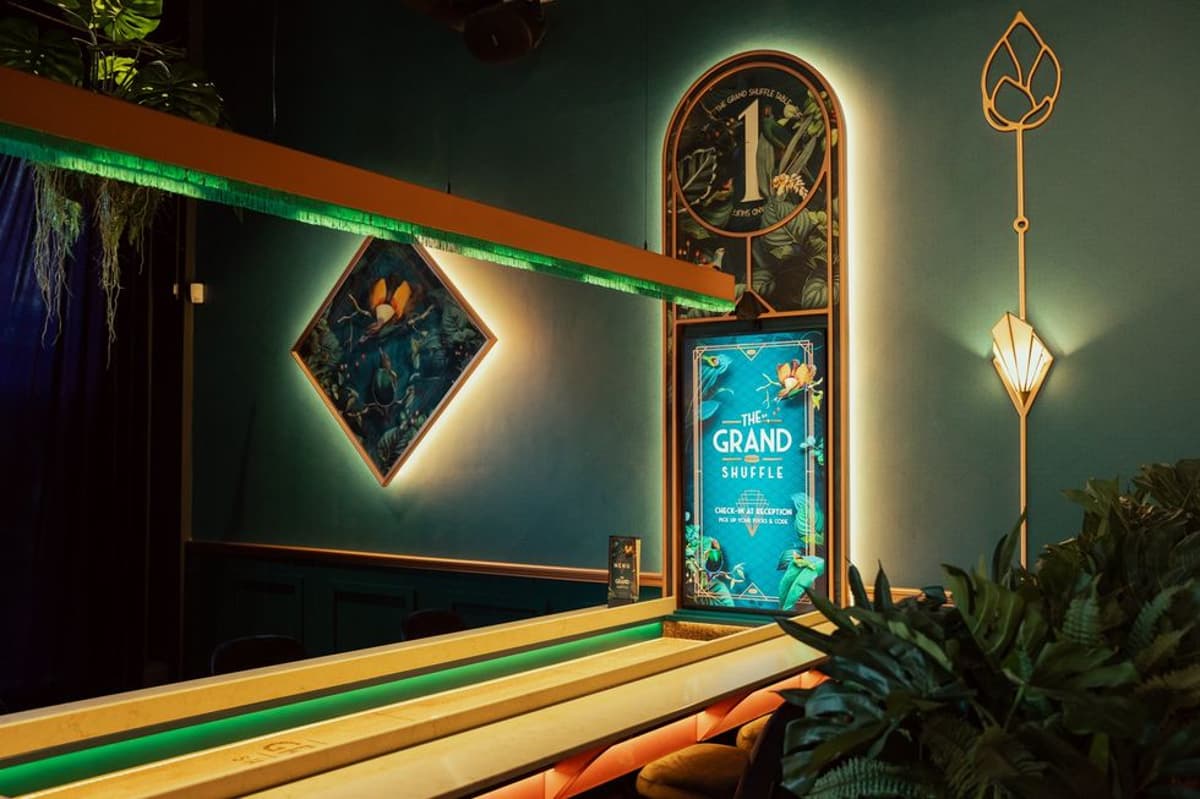
Shuffly Impresses with Shuffleboard-Centered Hospitality Concept at The Grand Shuffle
•March 2, 2026
0
Why It Matters
By centering the business model on digital shuffleboard, the concept demonstrates a new revenue‑driven hospitality format that can be replicated across markets. It signals a shift from novelty games to scalable entertainment assets for bars and restaurants.
Key Takeaways
- •Eight custom digital shuffleboards with automatic scoring.
- •Venue dedicated solely to shuffleboard, first in Netherlands.
- •Structured booking system aligns play time with food ordering.
- •Optimized layout improves sightlines, circulation, and turnover.
- •Shuffly’s Interactive launch expands multi-activity potential.
Pulse Analysis
The hospitality sector is increasingly chasing experiences that blend social interaction with technology. Digital shuffleboard fits this trend, offering a tactile yet data‑rich game that appeals to both casual diners and competitive players. By embedding proprietary scoring and multiple game modes, Shuffly transforms a traditional pastime into a high‑turnover attraction, reducing staff training and accelerating table turnover.
The Grand Shuffle’s operational blueprint showcases how a purpose‑built venue can synchronize gameplay with food and beverage service. Structured booking slots ensure predictable foot traffic, while the layout—designed for clear sightlines and smooth circulation—keeps guests moving between rounds and the bar. This synergy boosts average spend per patron and creates a repeatable model for other hospitality operators seeking to diversify revenue streams beyond drinks alone.
Beyond the Utrecht flagship, Shuffly’s recent Interactive launch hints at broader applicability across entertainment venues, from family centers to corporate event spaces. The ability to repurpose the digital board for multi‑activity experiences opens pathways for franchising and cross‑brand collaborations. As operators look to differentiate in a crowded market, scalable, technology‑driven concepts like The Grand Shuffle could become a cornerstone of next‑generation hospitality design.
Shuffly impresses with shuffleboard-centered hospitality concept at The Grand Shuffle
0
Comments
Want to join the conversation?
Loading comments...