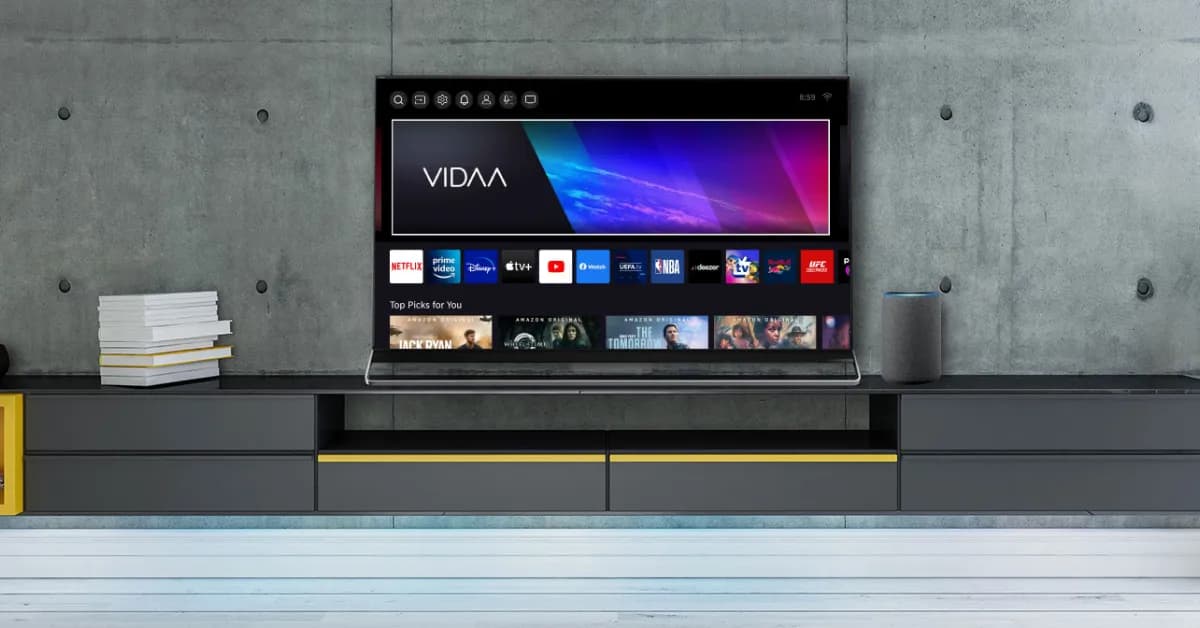
VIDAA Takes on Nielsen, Comscore with V Index Measurement Solution
•February 17, 2026
0
Why It Matters
Unified cross‑platform measurement gives advertisers clearer insights, challenging entrenched U.S. rating firms and reshaping TV ad buying.
Key Takeaways
- •V Index unifies linear and streaming TV audience data.
- •Launch targeted first in EMEA, 30M smart TV homes.
- •Aims to challenge Nielsen, Comscore measurement dominance.
- •Offers advertisers transparent, cross‑platform viewership metrics.
- •Plans U.S. rollout after EMEA validation.
Pulse Analysis
The television advertising ecosystem has long relied on legacy rating systems that treat linear broadcast and streaming as separate silos. As viewers migrate to on‑demand apps, advertisers struggle to reconcile disparate data sources, leading to fragmented buying decisions. VIDAA’s V Index arrives at this inflection point, promising a unified audience metric that captures what people watch, how they watch it, and when, across both traditional channels and over‑the‑top services. By consolidating these signals, V Index reduces the complexity of media planning and offers a more accurate reflection of true screen time.
Built on VIDAA’s extensive smart‑TV footprint—over 30 million homes worldwide—the platform aggregates granular usage data directly from devices, then contextualizes it with app‑level analytics. This approach mirrors Europe’s GDK model, delivering real‑time insights into content performance, peak viewing windows, and the split between linear and streaming consumption. For advertisers, the result is a single, transparent KPI that can be applied to both broadcast spots and connected‑TV ad inventory, simplifying buying strategies and improving ROI measurement.
Strategically, VIDAA is sidestepping the saturated U.S. market to perfect V Index in EMEA, where major U.S. measurement firms have limited reach. Success there could position the company as a credible alternative to Nielsen and Comscore, especially for brands seeking global consistency. As the platform scales, a U.S. launch could force incumbents to modernize their methodologies, accelerating industry convergence toward holistic, screen‑agnostic measurement. The move underscores a broader shift: big‑screen advertising is increasingly defined by viewer behavior, not distribution channel.
VIDAA takes on Nielsen, Comscore with V Index measurement solution
0
Comments
Want to join the conversation?
Loading comments...