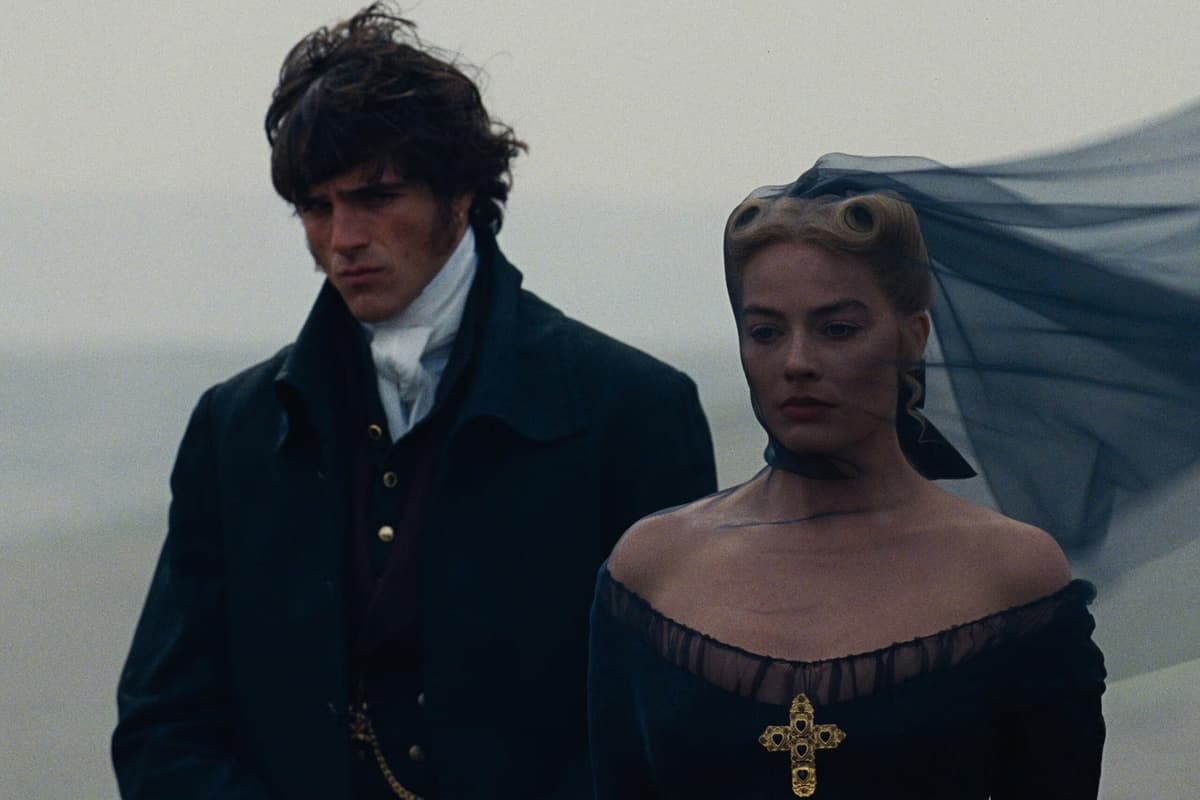
The movie illustrates how contemporary directors are re‑packaging classic literature with explicit content to attract younger audiences, reshaping box‑office expectations for literary adaptations.
The latest cinematic rendition of Emily Bronté’s *Wuthering Heights* arrives amid a wave of literary reboots that aim to blend classic storytelling with modern sensibilities. Emerald Fennell, known for her edgy tone in *Promising Young Woman*, approaches the 19th‑century tale as a visual playground, foregrounding skin, fluids, and provocative set‑pieces. This strategy reflects a broader industry trend: leveraging recognizable intellectual property while injecting contemporary sexual politics to differentiate the product in a crowded streaming and theatrical marketplace.
Critics note that the film’s erotic focus overshadows the novel’s intricate class conflict and supernatural undertones. Robbie’s Cathy and Elordi’s Heathcliff possess undeniable chemistry, yet their scenes often feel staged for shock rather than emotional resonance. The climax, compressed into a hurried third act, leaves the tragic arc feeling unfinished, diluting the emotional payoff that has defined successful adaptations. Audiences seeking a genuine reinterpretation may find the overt sexualization superficial, while younger viewers might be drawn to the glossy aesthetic without grasping the story’s darker themes.
From a business perspective, the movie tests the viability of high‑concept, adult‑oriented adaptations targeting a teen‑plus demographic. If box‑office returns meet studio forecasts, studios may double down on similar projects that marry literary prestige with explicit content, potentially reshaping green‑light criteria for future period dramas. Conversely, a lukewarm reception could signal market fatigue, prompting a recalibration toward more nuanced, character‑driven retellings. Either outcome will influence how Hollywood balances artistic ambition with commercial imperatives in the era of content saturation.

Is the sight of the human tongue really so shocking? Were 1996 audiences ducking in their seats à la L’Arrivée d’un train en gare de La Ciotat when Matthew Lillard kept jutting his out like a jackass in Scream? Judging from Emerald Fennell’s Wuthering Heights, we’re meant to react like so to the sight of Jacob Elordi’s tongue in many of the film’s erotically charged scenes. That is perhaps a microcosm of this new adaptation’s failed transgression.
Of course, Emily Brontë’s text has been adapted countless times––be it by Luis Buñuel, Jacques Rivette, William Wyler, or, most recently, Andrea Arnold. (This iteration shares some of the latter’s “this ain’t your grandma’s Wuthering Heights” DNA.) The source’s elaborate structure, frequent cruelty, and supernatural overtones have been difficult for any one adaptation to perfectly capture, as all those qualities often seem incongruous. This is likely why so many films have been made from it: each adaptation is not so much a “we’ll get it right this time” effort as it is an invitation for directors to treat the book as an open canvas.
Enter Emerald Fennell, the “female edgelord” (to quote an interview published on this site) of contemporary middlebrow filmmakers. She sticks to the basic set-up: our romantic leads, Cathy and Heathcliff, meet as children on the 19th-century Yorkshire moors, the latter a servant to the former’s brutish father. Their connection is instant, but fate and class structure tear them apart. Having grown into adults portrayed by two remarkably beautiful movie stars (Margot Robbie and Jacob Elordi), the moment has come for them to finally consummate their longing. However, the hard times fallen upon Cathy’s father mean she must marry for money, rather than love, to the wealthy Edgar Linton (Shazad Latif). The heartbroken Heathcliff rides off into the sunset, while Cathy is destined for a lavish lifestyle––and a lot of boring missionary sex––with her new husband.
Once Heathcliff re-enters the picture years later, now a lord to rival Edgar, Wuthering Heights‘ two strands––kinkiness and tragedy––become apparent. Fennell’s big change to the text seems her desire to make Cathy a new icon of “female gooning.” The film’s focus on skin, fluids, goo, and fingers in orifices signals her highly sexualized take. Yet it never quite erupts or––to evoke its own imagery––gushes. If anything, it feels tame. Fennell has said her intention was to create a new Titanic (a romantic classic that younger girls would see over and over) but the film feels stuck in that adolescent space while simultaneously trying to be “shocking.” Will anyone over 13 years old actually be rattled by any of this?
It doesn’t help that Wuthering Heights struggles significantly in its third act, giving an impression of too much footage left on the cutting-room floor. Between odd tonal swerves and the rushed conclusion to a character’s tragic arc, Fennell’s ending lands with a total thud. The film ultimately, oddly feels as square as William Wyler’s 1939 iteration, no matter how many allusions to masturbation.
Wuthering Heights opens in theaters on Friday, February 13.
The post Wuthering Heights Review: A Highly Sexualized But Oddly Square Adaptation first appeared on The Film Stage.
Comments
Want to join the conversation?
Loading comments...