Casimir Secures $12 Million Seed Round to Launch Quantum Vacuum Energy Chip

Companies Mentioned
Why It Matters
Casimir’s seed round marks the first sizable venture investment in a technology that extracts usable power from quantum vacuum fluctuations, moving the concept from laboratory physics to a potential commercial product. By offering a battery‑free power source, the MicroSparc chip could eliminate one of the most persistent constraints in IoT design—energy storage—thereby reducing maintenance costs and environmental impact. Beyond the immediate IoT market, the technology could influence sectors that demand ultra‑reliable, low‑maintenance power, such as aerospace, defense, and autonomous vehicles. If the chip scales as projected, it would diversify the quantum hardware ecosystem, which has been dominated by qubit‑centric approaches, and could spur a new wave of investment in quantum‑energy applications.
Key Takeaways
- •Casimir closed a $12 million seed round, exceeding its $8 million target.
- •The round was led by Scout Ventures and included investors such as Lavrock Ventures and Tim Draper.
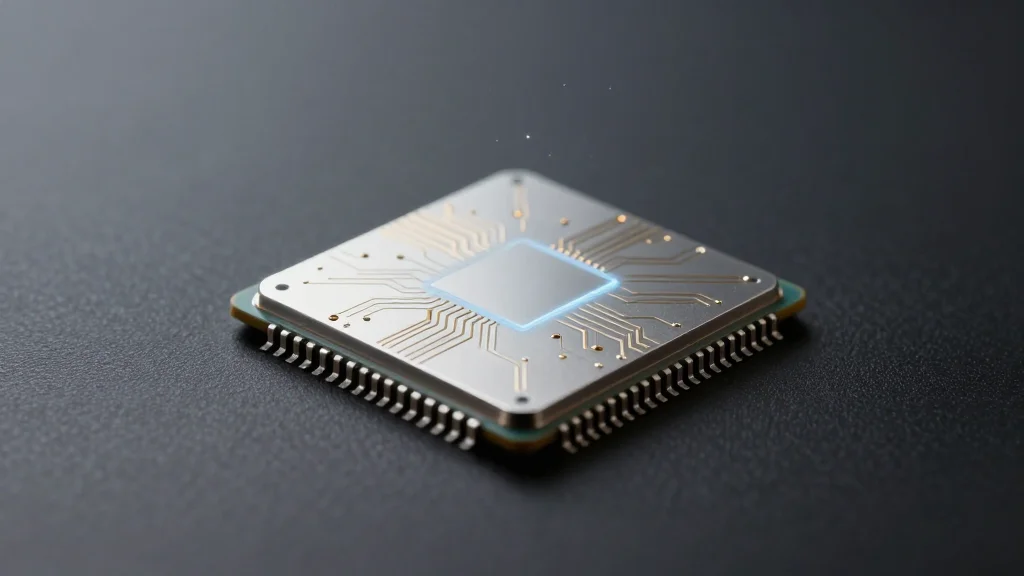
- •MicroSparc chip delivers 1.5 V at 25 µA from quantum vacuum energy, comparable to a small rechargeable battery.
- •Initial market focus is the $10 billion ultra‑low‑power IoT segment, with a $67 billion total addressable market.
- •Commercial launch of the first‑generation chip is planned for 2028, with pilot production starting later this year.
Pulse Analysis
Casimir’s funding round underscores a broader shift in quantum technology investment, moving from pure computation toward energy solutions. While superconducting and trapped‑ion qubits have dominated headlines, the promise of a self‑sustaining power source addresses a different, equally critical bottleneck: energy supply for the exploding number of edge devices. The $12 million seed round, though modest compared with multi‑billion AI rounds, is sizable for a hardware‑intensive, physics‑heavy venture, indicating that investors see a clear path to revenue in the near term.
Historically, attempts to harness the Casimir effect have been confined to academic papers. Casimir’s ability to translate that effect into a manufacturable semiconductor chip suggests a maturation of nanofabrication techniques, likely aided by prior DARPA funding and university collaborations. If the pilot trials validate the chip’s longevity and output, the company could attract follow‑on capital to accelerate scaling, potentially positioning it alongside early‑stage power‑tech firms like Ambri or Form Energy, but with a distinct quantum advantage.
Looking ahead, the key risk lies in the transition from prototype to volume production. Quantum vacuum energy extraction is still a nascent field, and any variability in output could limit adoption in safety‑critical applications. However, the strategic involvement of investors with deep defense and space ties—Scout Ventures, Draper Associates, and the Limitless Space Institute—provides a safety net of government contracts that could de‑risk the technology. Success would not only validate a new class of quantum hardware but also open a revenue stream that could fund further quantum research, creating a virtuous cycle of innovation.
Casimir Secures $12 Million Seed Round to Launch Quantum Vacuum Energy Chip
Comments
Want to join the conversation?
Loading comments...