Focused Energy Secures $240 Million Series A to Build Laser‑Fusion Reactor

Companies Mentioned
Why It Matters
Focused Energy’s $240 million raise illustrates how deep‑tech entrepreneurship is maturing from laboratory breakthroughs to commercial‑scale projects. By marrying private capital with public grants and situating the reactor in existing nuclear infrastructure, the startup is addressing two of fusion’s biggest hurdles: financing and regulatory complexity. If successful, the Lighthouse demo could prove that laser‑fusion is not only scientifically viable but also economically tractable, accelerating the timeline for a carbon‑free baseload source. The funding also reflects a broader shift in the energy investment landscape, where utilities like RWE are becoming active venture partners rather than passive end‑users. This partnership model could unlock new pathways for other high‑capital, high‑risk technologies, encouraging more utilities to back entrepreneurial ventures that promise long‑term decarbonisation benefits.
Key Takeaways
- •Focused Energy closed a $240 million Series A, led by utility RWE.
- •Total private capital now stands at $300 million; combined with $200 million in grants, total funding is about $500 million.
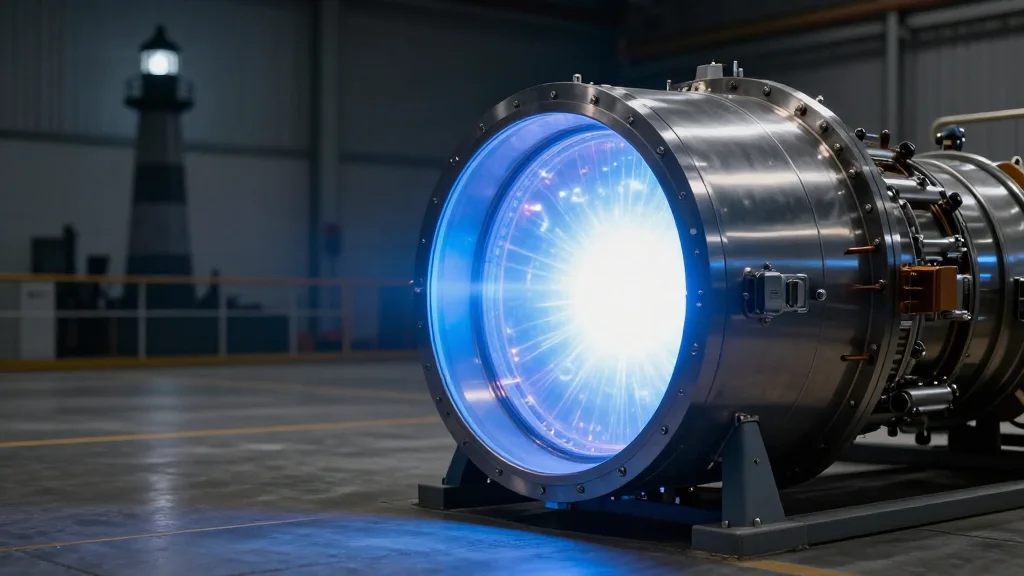
- •The company will build a demonstration reactor, "Lighthouse," at a decommissioned German fission plant.
- •Direct‑drive laser fusion eliminates the hohlraum, aiming for 10 shots per second versus NIF’s 400 shots per year.
- •Funding arrives amid a surge of European fusion investments, including $450 million for Inertia Enterprises and $863 million for Commonwealth Fusion Systems.
Pulse Analysis
The Focused Energy round marks a pivotal moment where venture capital, utilities, and government agencies converge on a single deep‑tech objective: commercial fusion power. Historically, fusion has been dominated by large, government‑funded programs with long development cycles. The emergence of a venture‑backed model, exemplified by RWE’s lead investor role, suggests a re‑calibration of risk appetite among traditional energy players. Utilities now see direct equity stakes as a hedge against future carbon‑pricing regimes and a way to secure early access to breakthrough generation assets.
From a competitive standpoint, Focused Energy’s direct‑drive approach differentiates it from magnetic confinement rivals like Commonwealth Fusion Systems. By simplifying the target architecture and leveraging existing nuclear sites, the startup reduces both capital expenditures and regulatory friction. However, the technical challenge of scaling laser shot rates from a few hundred per year to hundreds of thousands per day remains formidable. Success will hinge on breakthroughs in laser efficiency, target manufacturing, and heat‑extraction systems—areas where the company’s new chief strategy officer, Debbie Callahan, brings critical expertise.
Looking ahead, the next five years will test whether the infusion of private capital can translate into a demonstrable, grid‑connected fusion output. If Lighthouse achieves its 2029 plasma target, it could catalyse a new wave of utility‑venture collaborations, prompting a cascade of similar projects across Europe and the United States. Conversely, any delay or technical shortfall could reinforce the perception that fusion remains a speculative, long‑term play, potentially cooling investor enthusiasm. The market will be watching closely as Focused Energy moves from fundraising to engineering, with the outcome likely to shape the trajectory of clean‑energy entrepreneurship for the decade.
Focused Energy Secures $240 Million Series A to Build Laser‑Fusion Reactor
Comments
Want to join the conversation?
Loading comments...