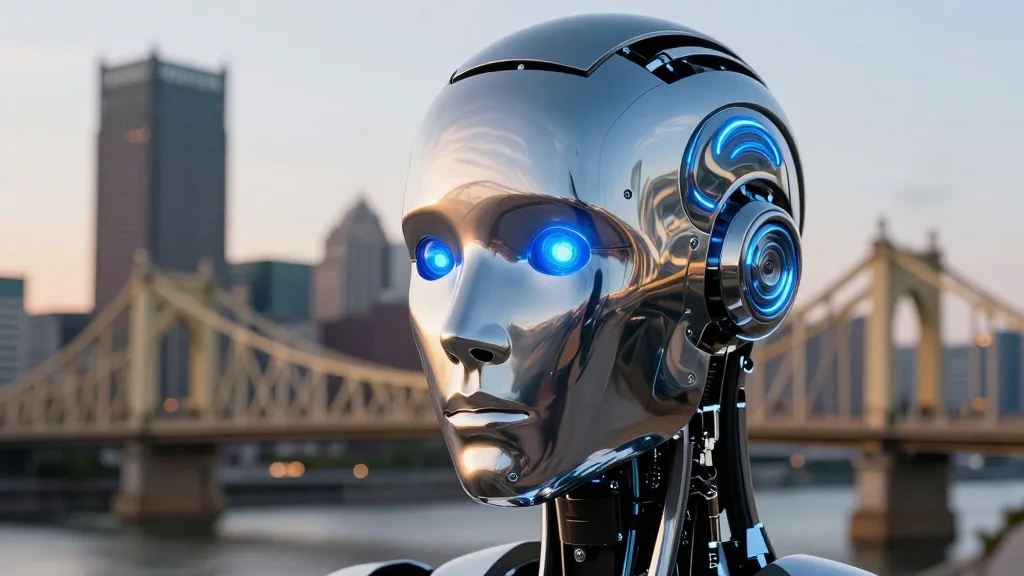
Mark Cuban Touts Pittsburgh as AI Hub, Urging Entrepreneurs to Seize Opportunity

Companies Mentioned

Why It Matters
Pittsburgh’s emergence as an AI hub could reshape the geography of American entrepreneurship, offering a low‑cost alternative to coastal tech clusters. By attracting AI talent and venture capital, the city can generate high‑paying jobs, retain local graduates and stimulate ancillary industries such as biotech and advanced manufacturing. Cuban’s endorsement adds credibility, potentially accelerating funding pipelines and encouraging other high‑profile investors to look beyond traditional tech centers. The focus on AI agents for small‑ and mid‑size businesses also highlights a broader shift in the entrepreneurship landscape: the move from building generic SaaS products to delivering bespoke AI solutions. This trend could democratize AI adoption, allowing a new generation of founders to capture value by solving niche operational problems for the millions of U.S. firms that lack in‑house expertise.
Key Takeaways
- •Mark Cuban praised Pittsburgh’s AI ecosystem as a "limitless" growth engine for startups.
- •Cuban highlighted Carnegie Mellon, the University of Pittsburgh and low living costs as key advantages.
- •He urged entrepreneurs to become "experts in making agents for business," citing 33 million U.S. firms as potential clients.
- •AI spending pressures are high—Visa burns 1.9 trillion tokens a month—creating opportunities for agile AI integrators.
- •Cuban’s endorsement may attract venture capital and accelerate AI‑focused incubators in Pittsburgh.
Pulse Analysis
Cuban’s endorsement of Pittsburgh is more than a celebrity shout‑out; it signals a strategic realignment of the U.S. startup ecosystem. Historically, tech clusters have formed around dense talent pools and venture capital, both of which have been concentrated on the coasts. Pittsburgh, however, offers a rare combination of world‑class research (CMU’s AI labs), a legacy of manufacturing expertise, and a cost structure that can sustain early‑stage cash‑burn. This trifecta lowers the barrier to entry for AI‑focused founders who might otherwise be priced out of Silicon Valley.
The broader market context reinforces Cuban’s point. As AI adoption accelerates, large enterprises are splurging on compute—Visa’s 1.9 trillion token usage illustrates the scale. Yet the majority of U.S. businesses are midsize firms that lack the resources to build in‑house AI teams. This creates a sizable addressable market for boutique AI integrators, a niche Cuban explicitly targets. By positioning Pittsburgh as a breeding ground for such integrators, the city can capture a slice of this emerging $100‑plus‑billion AI services market.
Finally, Cuban’s narrative dovetails with a growing investor appetite for regional diversification. Venture firms are increasingly scouting secondary markets to avoid inflated valuations and talent wars on the coasts. Pittsburgh’s recent successes in biotech and robotics suggest a robust pipeline of spin‑outs that can cross‑pollinate with AI initiatives. If local policymakers and investors can translate Cuban’s enthusiasm into concrete funding mechanisms—seed funds, tax incentives, and AI‑focused accelerators—the city could become a replicable model for other mid‑size American metros seeking to reinvent themselves in the AI era.
Mark Cuban touts Pittsburgh as AI hub, urging entrepreneurs to seize opportunity
Comments
Want to join the conversation?
Loading comments...