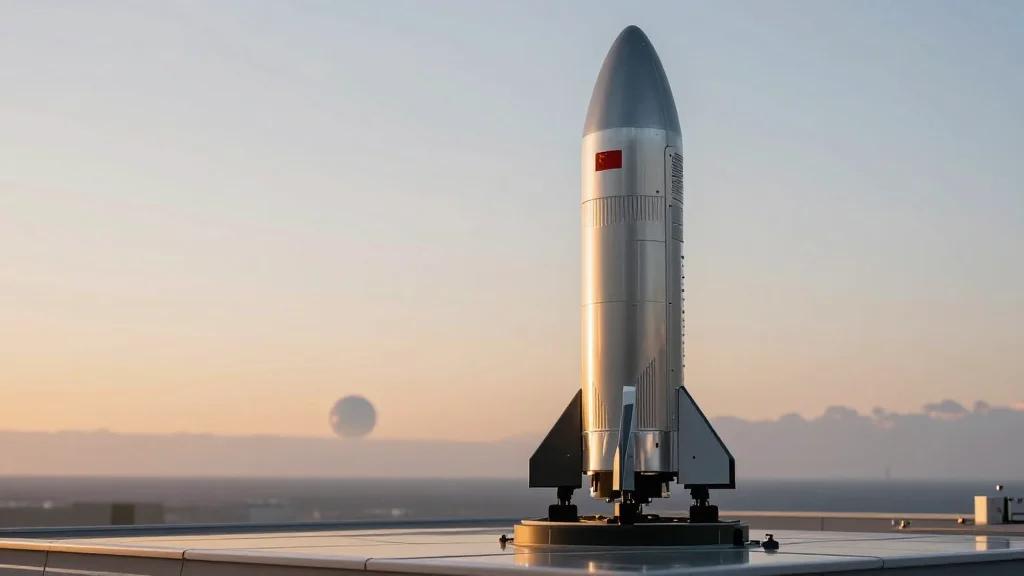
SpaceX IPO Speculation Surges as Valuation Nears $2 Trillion

Companies Mentioned

Why It Matters
The SpaceX IPO represents a watershed moment for entrepreneurship in the capital‑intensive space sector. By unlocking potentially $75 billion of public capital, the offering could fund a new wave of moon‑based manufacturing, orbital data centers, and next‑generation satellite constellations, lowering the barrier for startups that rely on SpaceX’s launch services. Moreover, the IPO’s size forces traditional financial institutions to adapt their underwriting and index‑inclusion frameworks, potentially accelerating the integration of frontier‑tech firms into mainstream markets. At the same time, the IPO highlights the tension between high‑growth, loss‑making ventures (X, xAI) and cash‑generating assets (Starlink). How investors price that mix will shape capital allocation across the broader space‑tech ecosystem, influencing everything from talent migration—evident in Starfighters’ recent hires—to the strategic calculus of rivals like Amazon, which is positioning its own satellite network to capture market share once SpaceX goes public.
Key Takeaways
- •SpaceX filed a confidential S‑1 targeting a $1.75‑$2 trillion valuation.
- •Roadshow scheduled for the week of June 8, with up to 30% of shares for retail investors.
- •Starlink projected to generate $18.7 billion in 2026, representing ~80% of SpaceX revenue.
- •Amazon’s Leo constellation acquisition of Globalstar for $11.6 billion intensifies competition.
- •Nasdaq’s new “fast entry” rule could admit SpaceX to the Nasdaq‑100 within weeks of listing.
Pulse Analysis
SpaceX’s impending IPO is more than a financial event; it is a litmus test for how capital markets value hybrid businesses that blend deep‑tech infrastructure with speculative consumer ventures. Historically, megacap listings have struggled to reconcile divergent profit profiles—think of Google’s early ad‑revenue versus its moonshot bets. SpaceX faces a similar dichotomy: a cash‑positive Starlink business versus loss‑making AI and social media arms. The market’s willingness to absorb that mix will set a precedent for future space‑tech unicorns, potentially encouraging founders to retain high‑margin services while spinning off or de‑emphasizing loss‑making experiments.
The competitive response from Amazon underscores a broader strategic shift: incumbents are now building satellite constellations not merely as ancillary services but as core revenue engines. If Amazon’s Leo network reaches operational scale before SpaceX’s public debut, it could force a pricing war that compresses Starlink’s margins, thereby reducing the overall attractiveness of the IPO. Conversely, a successful IPO could give SpaceX the financial firepower to accelerate satellite production, invest in next‑generation propulsion, and lock in long‑term launch contracts, reinforcing its market dominance.
Finally, the ripple effects on the entrepreneurship ecosystem are profound. A successful megacap float will likely lower the cost of capital for downstream suppliers and innovators, from reusable launch‑vehicle component makers to AI‑driven mission‑planning startups. It also signals to venture capitalists that public markets are now receptive to space‑tech at scale, potentially reshaping fundraising strategies and exit timelines for the next generation of aerospace entrepreneurs.
SpaceX IPO speculation surges as valuation nears $2 trillion
Comments
Want to join the conversation?
Loading comments...