What Was Nintendo's First Ever Product (Back in 1889)?
Companies Mentioned
Why It Matters
Nintendo’s evolution from cards to consoles illustrates how strategic diversification and relentless innovation can transform a modest family business into a global entertainment powerhouse.
Key Takeaways
- •Nintendo began as hanafuda card maker in 1889 Kyoto
- •1959 Disney plastic cards sold 600,000 packs, spurring public listing
- •Ultra Hand toy sold over 1 million units, boosting brand
- •Acquired Magnavox Odyssey rights in 1975, enabling game development
- •Gunpei Yokoi’s “lateral thinking” withered technology shaped Nintendo’s tech strategy
Pulse Analysis
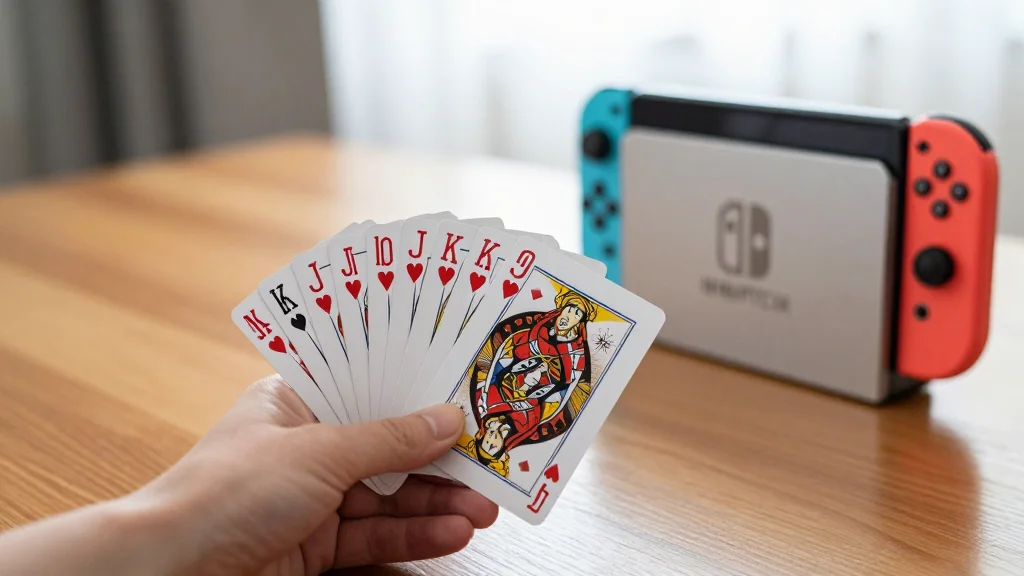
Nintendo’s origins lie in the traditional Japanese game of hanafuda, a set of flower‑themed cards that had been popular for centuries before gambling restrictions curtailed their use. Fusajiro Yamauchi’s decision to produce these cards by hand gave the fledgling company a niche market in late‑19th‑century Kyoto, where modest profit margins were offset by the cultural resonance of the product. This early focus on a specialized, culturally embedded commodity laid a foundation of craftsmanship and brand identity that would later prove adaptable to far broader audiences.
The post‑war era saw Hiroshi Yamauchi aggressively expand Nintendo’s portfolio, first by modernizing the card business with plastic printing and a high‑profile Disney licensing deal that moved 600,000 packs in its inaugural year. The success funded a public offering in 1962 and financed experimental ventures ranging from instant rice to vacuum cleaners. The most consequential of these experiments was the Ultra Hand toy, designed by engineer Gunpei Yokoi; its million‑unit sales demonstrated Nintendo’s capacity to translate novelty engineering into mass‑market appeal. Yokoi’s philosophy of "lateral thinking with withered technology"—leveraging mature components in inventive ways—became a strategic blueprint for future products.
Armed with a reputation for inventive low‑cost hardware, Nintendo secured the Japanese distribution rights for the Magnavox Odyssey in 1975, marking its first foray into electronic entertainment. This partnership sparked internal game development, leading to arcade hits like Donkey Kong and the launch of the Family Computer (Famicom) in 1983, which later became the Nintendo Entertainment System worldwide. The transition from cards to consoles underscores how disciplined diversification, combined with a culture of engineering pragmatism, can reposition a legacy brand at the forefront of a rapidly evolving industry. Today, Nintendo’s early lessons in risk‑taking and technology reuse continue to inform its approach to hardware and software innovation.
What was Nintendo's first ever product (back in 1889)?
Comments
Want to join the conversation?
Loading comments...