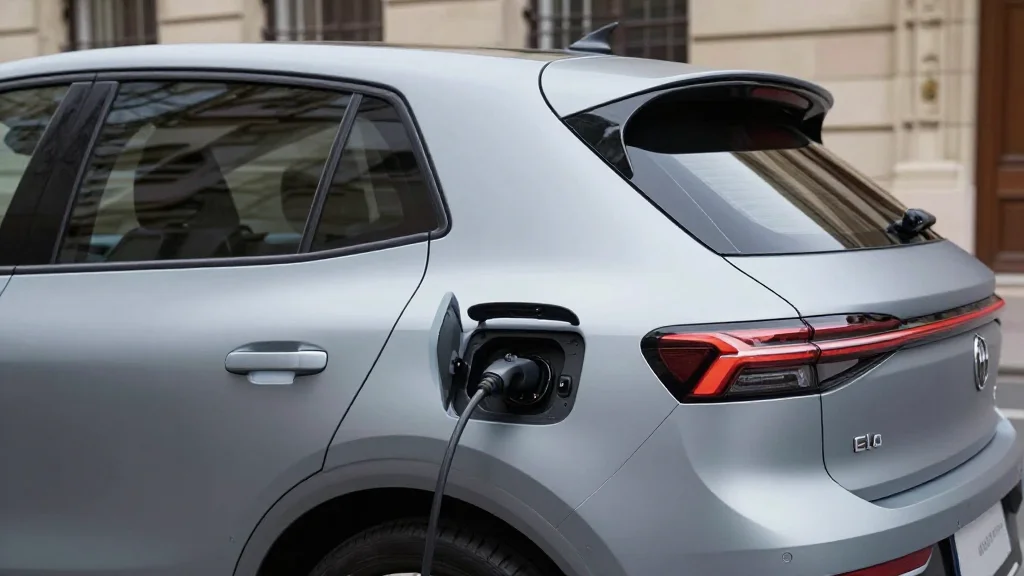
Stellantis to Roll Out Small Affordable EVs in 2028, Expands China Partnerships

Companies Mentioned
Why It Matters
The 2028 launch of a low‑cost European EV gives Stellantis a foothold in a segment that has been dominated by Asian manufacturers and premium European brands. By delivering affordable electric mobility, the group can tap into price‑sensitive consumers and meet tightening EU emissions targets, potentially boosting market share and profitability. Stellantis’s expanded partnerships in China also mitigate the risk of over‑reliance on any single market. The Dongfeng and Leapmotor collaborations provide local production capacity, access to Chinese supply chains, and a platform for exporting EVs to emerging markets. Together, these moves position Stellantis to compete more effectively against rivals that are scaling back or re‑orienting their China strategies.
Key Takeaways
- •Stellantis will begin production of its first small, affordable EVs in Europe in 2028.
- •CEO Antonio Filosa highlighted consumer demand for stylish, budget‑friendly electric cars.
- •A strategic partnership with Dongfeng will see Peugeot and Jeep EVs built in Wuhan starting 2027, involving a $1.12 bn investment.
- •Stellantis deepens its Leapmotor tie‑up, eyeing a 2028 launch of an Opel electric SUV at its Zaragoza plant.
- •The dual‑track strategy aims to capture European low‑cost EV demand while securing a competitive foothold in China.
Pulse Analysis
Stellantis’s 2028 EV rollout reflects a calculated shift from its traditional focus on larger, higher‑margin models toward a volume‑driven, cost‑conscious segment. Historically, the company’s European brands—Peugeot, Citroën, Opel—have struggled to achieve economies of scale in the EV space, often relying on shared platforms that inflate unit costs. By committing to a dedicated small‑car EV platform, Stellantis can spread development expenses across multiple badge‑engineered models, lowering the per‑vehicle price and improving margin potential.
The China partnerships serve a dual purpose: they secure a local manufacturing base that shields Stellantis from tariff volatility and provide a pipeline for technology transfer. Dongfeng’s established supply network and Leapmotor’s battery expertise could accelerate time‑to‑market for new models, while also offering a route to export‑ready EVs for emerging markets. This approach mirrors the strategy of Japanese automakers that have leveraged joint ventures to maintain relevance in China’s rapidly evolving EV ecosystem.
Looking forward, the success of Stellantis’s affordable EV push will hinge on its ability to manage battery costs, achieve sufficient production volumes, and navigate regulatory landscapes that are still in flux. If the company can deliver on its 2028 timeline, it could set a benchmark for European manufacturers seeking to democratize electric mobility, while its China ventures may become a template for other Western OEMs aiming to balance global ambitions with localized execution.
Stellantis to Roll Out Small Affordable EVs in 2028, Expands China Partnerships
Comments
Want to join the conversation?
Loading comments...