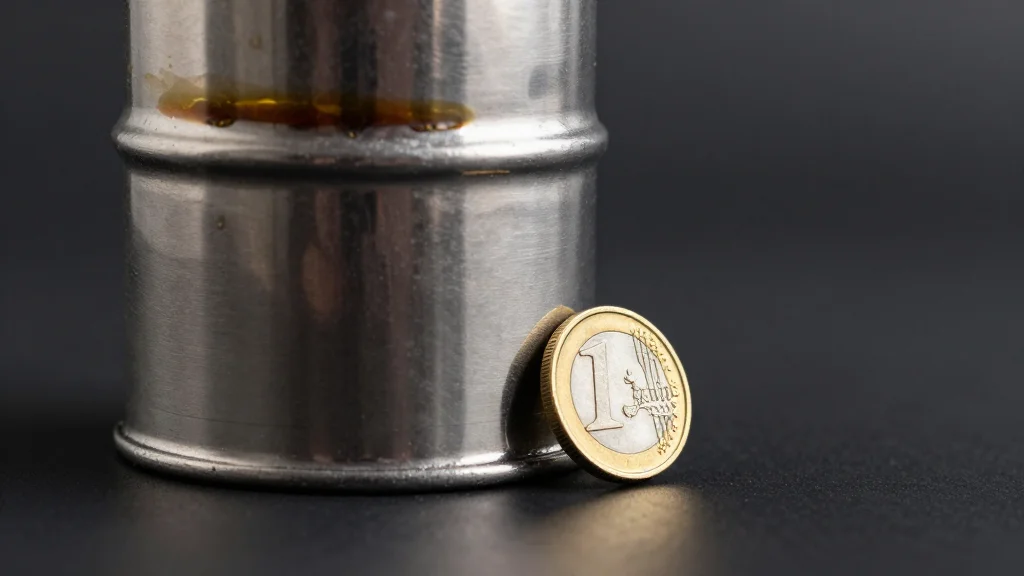
UAE Exits OPEC, Iran Peace Talks Spark Mixed Moves in European Stocks

Companies Mentioned
Why It Matters
The UAE’s exit from OPEC disrupts the cartel’s production discipline, raising the risk of supply shocks that can reverberate through global energy markets and, by extension, European equities that are heavily exposed to oil‑related sectors. Simultaneously, the prospect of a U.S.–Iran détente introduces a geopolitical variable that could either stabilize or further unsettle oil flows through the Strait of Hormuz, a chokepoint that supplies roughly a fifth of global oil. For European investors, these twin developments create a volatile backdrop that can swing sentiment in seconds, influencing portfolio allocations between defensive sectors and higher‑beta energy stocks. Beyond immediate price moves, the events highlight the growing interdependence between geopolitical decisions and market dynamics. A shift in OPEC’s composition may prompt European energy firms to reassess supply contracts and hedging strategies, while any U.S. policy shift on Iran could reshape trade flows, impacting everything from transportation costs to inflation expectations across the eurozone.
Key Takeaways
- •UAE announced its exit from OPEC on April 28, 2026, unsettling the cartel’s output coordination.
- •Stoxx 600 fell 0.3% in one report, while another source noted a slight rise, reflecting mixed market reactions.
- •Energy stocks rallied about 1.4% as oil prices responded to geopolitical uncertainty.
- •BP’s Q1 profit more than doubled, lifting its shares 1.7%; Barclays took a £200 million ($270 million) credit hit.
- •Analysts flag three key drivers: U.S.–Iran talks, OPEC re‑configuration, and upcoming central‑bank policy decisions.
Pulse Analysis
The divergent market narratives on April 28 reveal a classic case of geopolitical news creating a bifurcated equity response. When the UAE left OPEC, the immediate instinct was to anticipate tighter oil supplies, which traditionally benefits energy equities. Yet the simultaneous discussion of an Iran peace proposal injected a counter‑vibe, suggesting a possible de‑escalation that could ease supply constraints. This tug‑of‑war produced a net neutral effect on the broader Stoxx 600, but allowed the energy sector to decouple and post solid gains.
Historically, OPEC’s membership changes have been catalysts for short‑term volatility but rarely cause long‑term structural shifts unless accompanied by a sustained production cut or surge. The UAE’s departure, while symbolically significant, may not immediately alter output levels if other members compensate. However, the signal that the cartel’s cohesion is vulnerable could prompt investors to price in a risk premium for oil‑dependent stocks, especially in Europe where many energy firms still rely on OPEC‑sourced crude.
Looking ahead, the market’s next inflection point will likely be the outcome of the U.S.–Iran negotiations. A concrete agreement to reopen the Strait of Hormuz would likely depress oil prices, eroding the recent energy rally and potentially dragging the broader indices lower. Conversely, a breakdown in talks could keep oil prices elevated, reinforcing the sector’s outperformance. European investors should therefore keep a close eye on diplomatic headlines and OPEC’s subsequent statements, while also preparing for the macro‑policy backdrop set by the ECB and Fed, which could either amplify or dampen the current volatility.
UAE Exits OPEC, Iran Peace Talks Spark Mixed Moves in European Stocks
Comments
Want to join the conversation?
Loading comments...