Today's Finance Pulse
SpaceX’s record‑breaking IPO targets $75 billion raise, pushes valuation past $1.7 trillion
SpaceX filed for an IPO that could raise at least $50 billion and value the company above $1 trillion. The June 12 offering priced shares at $135, raising $75 billion and valuing the rocket maker at roughly $1.77 trillion. Analysts say the float highlights strong investor appetite for AI‑linked aerospace assets.
Also developing:

Abbott, Stringham & Lynch Adds Accounting Solutions Firm ArightCo
Abbott, Stringham & Lynch (ASL), a Silicon Valley CPA firm, announced the acquisition of San Jose‑based accounting solutions provider ArightCo. The deal, whose financial terms were not disclosed, adds ArightCo’s outsourced finance and accounting services to ASL’s portfolio. ArightCo, founded in 2008, specializes in bookkeeping, CFO‑level support, and strategic advisory for midsized tech, SaaS, manufacturing, and nonprofit firms. The integration aims to broaden ASL’s service depth for both existing and prospective clients.

MicroStrategy Spends $1.5B on Bond Buyback, Not BTC
$MSTR just bought 1.5BN of its 0's of 2029 for 92. Paying up 3% over prior close While funding with ATM stock and 11.5% $STRC they "bought back" a bond with a 4% yield to put. The "good news"...

Brookfield to Acquire World Freight Company in $1.2 Billion Deal
Brookfield Asset Management announced an agreement to acquire World Freight Company for an enterprise value of about $1.2 billion from EQT and PAI Partners. The deal, expected to close by the end of 2026, gives Brookfield a platform that serves more...

Iridium to Acquire Aireon for $366.7 Million, Expanding Satellite Connectivity
Iridium Communications announced a $366.7 million deal to acquire the remaining 61% of Aireon, bringing the sole space‑based ADS‑B surveillance system fully under its control. The transaction, split into two equal payments, positions Iridium to bundle air‑traffic data with its satellite...

BofA and Goldman Sachs Lift Marvell Price Target to $200 as AI Rally Fuels 135% Stock Surge
Bank of America and Goldman Sachs upgraded Marvell Technology (MRVL), boosting the price target to $200 from $125 after the stock surged 135% since early March. Analysts cited a $1.7 trillion AI data‑center TAM, expanding transceiver markets and strong earnings outlook...
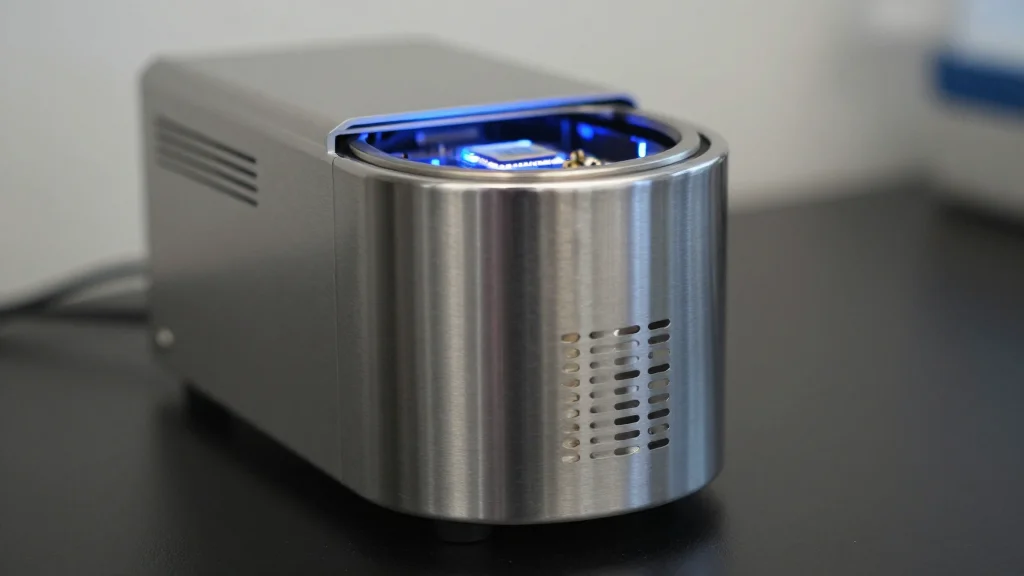
IQM’s $1.8 B SPAC Deal Highlights Quantum’s Long Road to Commercial Scale
Finland‑based IQM Quantum Computers filed a Form F‑4 to merge with SPAC Real Asset Acquisition Corp., valuing the firm at roughly $1.8 billion and promising $465 million in cash. The move, alongside QSE’s launch of an enterprise post‑quantum migration platform, illustrates both the...

Anthropic Just Shipped 10 Finance Agents. I Installed and Tested Them for CFOs
Anthropic has launched ten ready‑to‑run finance agent templates for its Claude AI platform, spanning front‑office and back‑office functions such as KYC screening, month‑end closing, and model building. The AI CFO Office newsletter tested the agents on real corporate data, finding...

Blackstone and KKR to Assume Control of Dental Group Affordable Care
Direct lenders Blackstone and KKR are set to take control of Affordable Care, a U.S. dental services provider, through a restructuring that slashes its debt by roughly 70%. The $1.4 billion private‑credit facility will be exchanged for a $225 million first‑lien term...

Why Are Huge Debit Card Issuers Still Paying Visa to Route Payments?
Bank of America, Chase and Wells Fargo control roughly a third of U.S. debit volume—$1.425 trillion in 2024—and earn about 49 basis points in interchange fees. New Durbin‑cap proposals and pending Supreme Court rulings threaten to cut that revenue to as low...

Brookfield Corp Posts $1.6 Bn Q1 Earnings, Lifts Fundraising and Asset Sales
Brookfield Corp announced $1.6 bn in distributable earnings for the first quarter, a 7% year‑over‑year rise, while asset‑management fundraising hit $67 bn year‑to‑date. The firm also advanced $17 bn of asset sales and completed a $40 bn Just Group acquisition, underscoring robust capital deployment...

USA Rare Earth Posts $67 M Loss but Secures $1.6 B US Funding and Brazil Acquisition
USA Rare Earth (USAR) posted a $67 million net loss for Q1 2026 but ended the quarter with $1.75 billion in cash after a $1.5 billion private placement. The company also announced a $300 million acquisition of Brazil’s Serra Verde Group and a pending...

Bullish to Acquire UK Payments Firm Equiniti in $4.2 B Deal
Bullish (BLSH) announced a $4.2 billion acquisition of UK payments and transfer‑agent specialist Equiniti, combining $2.35 billion of newly issued shares with $1.85 billion of assumed debt. The deal creates an end‑to‑end tokenization platform that could redefine how public‑company equity is issued and...

XTI Aerospace Posts $27.7M Q1 Revenue, Targets $160M+ in 2026
XTI Aerospace announced first‑quarter 2026 revenue of $27.7 million and a gross profit margin of 18.6%, while securing a $20 million asset‑based loan from JPMorgan. The company outlined a full‑year revenue target of at least $160 million and expects to break even on...

Frontera Energy to Return Up to $470 Million to Shareholders After $750 Million Asset Sale
Frontera Energy Corp announced that shareholders have approved a plan to return up to $470 million after selling its Colombian E&P assets for $750 million in enterprise value. The company posted Q1 2026 net income of $13.1 million and adjusted EBITDA of $28.5 million,...

Byron Allen’s $120 M Takeover of BuzzFeed Aims to Build a Global Free Streaming Service
Byron Allen is paying $20 million in cash and a $100 million promissory note to acquire a 52% stake in BuzzFeed, becoming its chairman and CEO. He plans to fuse BuzzFeed and HuffPost with his Local Now platform to launch a free, ad‑supported...

Alphabet and Amazon Issue Over $150 Billion in Investment‑Grade Debt, Pressuring Treasury Funding
Alphabet and Amazon have together issued more than $150 billion of senior unsecured notes in 2026, forcing investors to choose between corporate and sovereign credit. The surge in hyperscaler debt is tightening the pool of conservative capital that traditionally underpins Treasury...

Honda Posts First Annual Loss in 70 Years as $10 B EV Write‑offs Hit Bottom Line
Honda Motor Co announced a net loss of 423.9 billion yen ($2.7 billion) for the fiscal year ended March 2026, its first full‑year deficit since 1957. The loss stems from roughly $10 billion in electric‑vehicle write‑offs and a broader slowdown in global EV demand,...
HSBC Halts Planned $4bn Private Credit Push
HSBC has paused its planned $4 billion deployment into private‑credit funds, a year after announcing the initiative to grow its alternative‑lending footprint. No capital has been allocated and the bank cited heightened market scrutiny and recent volatility in U.S. private credit...

Checklist of What Makes Someone a “Qualified Business Buyer” In the Eyes of a Seller:
The article outlines five core criteria sellers use to label a buyer as qualified: proof of cash or financing, relevant industry experience, a clear and realistic acquisition plan, cultural and strategic compatibility, and solid references or advisory support. Demonstrating ready...

PIF’s Strategic Reset Signals a More Disciplined Global Ambition
Saudi Arabia’s sovereign wealth fund, the Public Investment Fund (PIF), unveiled a new five‑year plan that redefines its global investment approach. The strategy pulls back from costly prestige assets while deepening exposure to Asian markets and committing to long‑term economic...

i.AM Innovation Lab Lays Groundwork for Wider ILS Investor Base with Reusable Tokenisation Platform
i.AM Innovation Lab has upgraded its tokenised insurance‑linked securities (ILS) solution from a 2024 pilot with Schroders Capital and Hannover Re to a reusable, institutional‑grade platform. The new system supports larger transactions, allowing funds and pension managers to invest via digital...

Merck & Co. (MRK): Our Calculation of Intrinsic Value
Merck & Co.’s discounted cash‑flow model values the stock at $96‑98 per share, roughly 14% below its current $113 market price. The analysis assumes an 8% discount rate and 2% terminal growth, projecting free cash flow of $15‑18 billion from 2026...

American Express Acquires Expense Management Company Hyper
American Express has completed the acquisition of Hyper, a cloud‑based expense‑management platform known for automated receipt capture and policy‑driven workflows. The deal is positioned to fuse Hyper’s spend‑tracking capabilities with AmEx’s corporate‑card ecosystem, creating a unified end‑to‑end solution for enterprise...

Rithm Capital Raises $500M via 8.5% Senior Notes to Fund Real Estate Expansion
Rithm Capital Corp. priced a $500 million senior unsecured note offering with an 8.5% coupon, due in 2031. The proceeds will support general corporate purposes, including debt repayment after a series of high‑profile real‑estate acquisitions. The deal underscores robust appetite for...

Deloitte Survey Finds 90% of Audit Committees Expect CFOs to Bridge Board Gaps
Deloitte’s latest Southeast Asia governance report reveals that 90% of audit committee members expect chief financial officers to act as a bridge between management and the board, with 62% demanding regular updates—a pace only 36% of CFOs say they currently...

CFO Shortage Deepens as Retirements Surge and Interim Hires Rise
Russell Reynolds Associates reports a sharp rise in CFO retirements and a record 12% share of interim CFO hires in Q1 2026, underscoring a growing shortage of battle‑tested finance chiefs for S&P 500 and global firms.

Anthropic Boasts over 500% Net Dollar Retention
Anthropic CFO just said they have a Net Dollar Retention ratio of over 500% by the way

Biogen Seals $5.3 B Deal for Apellis, Adds Two Blockbuster Drugs
Biogen closed a $5.3 billion cash acquisition of Apellis Pharmaceuticals on May 14, 2026, bringing the complement‑driven therapies EMPAVELI and SYFOVRE into its portfolio. The transaction was financed with a new $2 billion unsecured term loan and includes a contingent value right...
Blackstone Digital Infrastructure Trust Prices $1.75 B Data‑Center REIT IPO at $20 per Share
Blackstone Digital Infrastructure Trust, a newly formed REIT focused on hyperscale data centers, priced its initial public offering at $20 per share, raising $1.75 billion. The deal, backed by a slate of 18 joint bookrunners, includes a 1% bonus‑share incentive that...

Resideo Posts $1.9 B Q1 Revenue as CFO Carlet Pushes Cost‑Control Amid Freight Inflation
Resideo (REZI) posted $1.9 billion in first‑quarter revenue, an 8% year‑over‑year rise, and CFO Michael Carlet detailed a suite of cost‑control actions aimed at mitigating inflation‑driven freight expenses and funding a pending ADI Global Distribution spinoff.

KPMG Survey Finds 75% of Finance Functions Using AI for Governance
KPMG’s global survey of senior finance executives reveals that 75% of finance functions now actively use AI for governance, up from 30% a year earlier. The study links stronger AI performance to assurance readiness and highlights gaps in data quality...
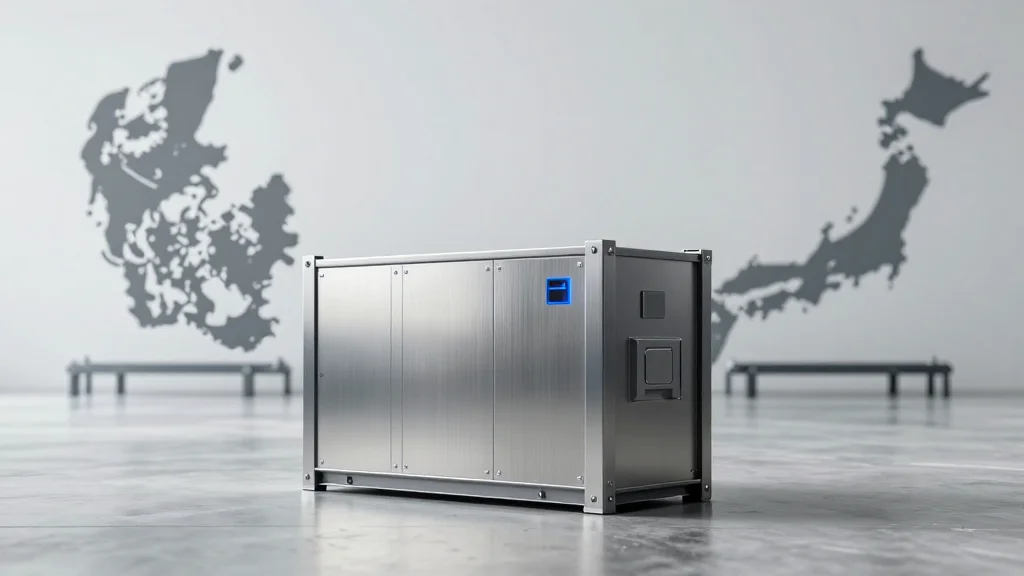
NeoVolta Inc (NEOV) Q3 2026 Earnings Call Transcript
NeoVolta (NEOV) reported Q3 2025 results showing revenue decline to $1.6 million and a net loss of $4.5 million, driven by higher operating expenses and the loss of Fresno EV management fees. The company highlighted a strategic shift toward stationary battery projects,...

Forian Inc. (FORA) Q1 2026 Earnings Call Transcript
Finance of America Companies reported a strong Q1 2026, posting $35 million net income and $26 million adjusted net income, translating to $1.10 adjusted EPS, a 112% year‑over‑year increase. Funded volume rose 6% to $596 million while originations submissions surged 20% to $918 million,...

LM Funding America Inc (LMFA) Q1 2026 Earnings Call Transcript
LM Funding America reported record Q1 2026 Bitcoin production, mining 26.1 BTC and achieving a historic 790 petahash energized hash rate. Revenue slipped to $2.1 million as Bitcoin prices fell, leading to a $10.1 million net loss driven largely by a $7 million...

Data Storage Corp (DTST) Q1 2026 Earnings Call Transcript
Data Storage Corp (DTST) completed a strategic overhaul in 2025, monetizing its Cloud First subsidiary for $40 million and generating $31.6 million in net proceeds. The company returned $29.3 million to shareholders via a tender offer, slashing the share count by roughly 72%,...

RedCloud Holdings PLC (RCT) Q4 2025 Earnings Call Transcript
Ready Capital Corp. reported $380 million of free cash in Q4, aiming for over $850 million to meet 2026 debt maturities through CRE asset sales and runoff. The legacy commercial‑real‑estate book is being trimmed by 60% to roughly $2 billion, driving a 14%...

SolarMax Technology Inc (SMXT) Q1 2026 Earnings Call Transcript
SolarMax Technology Inc. posted a record $1.0 billion in Q1 2026 net sales, up 24% year‑over‑year, driven by a 31% increase in module volume. Gross margin expanded to 47%, six points higher than 2025, helped by Section 45X tax credits and lower freight...

Skillz Inc (SKLZ) Q1 2026 Earnings Call Transcript
Skillz Inc. reported Q1 2026 GAAP revenue of $27 million, up 11% year‑over‑year, driven by higher ARPU and a 28% surge in paying monthly active users to 155,000. Adjusted EBITDA loss narrowed to $12 million, a 3% quarterly improvement, while net loss...

Silexion Therapeutics Corp (SLXN) Q1 2026 Earnings Call Transcript
Syndax Pharmaceuticals reported $172 million total revenue for 2025, driven by $124.8 million from its menin inhibitor RevuForge and $151.6 million from the chronic GVHD therapy Nictimvo. RevuForge saw 38% quarter‑over‑quarter revenue growth and a 35% rise in prescriptions, with 97% formulary coverage...

Safe Pro Group Inc (SPAI) Q1 2026 Earnings Call Transcript
Safe Pro Group reported Q1 2026 revenue of $147 million, a modest 1% year‑over‑year increase and 6% sequential growth driven by a back‑end‑weighted cadence. Branded Products led the surge with a 5% YoY rise to $97 million, while Healthcare Apparel...

Bit Digital, Inc (BTBT) Q1 2026 Earnings Call Transcript
Bit Digital reported Q1 2026 revenue of $27.9 million, a 13.7% decline from the prior quarter, as cloud services fell and mining revenue dropped sharply. The company holds roughly 155,000 ETH valued at $327 million and has secured approval from the...

Creative Realities Inc (CREX) Q1 2026 Earnings Call Transcript
Creative Realities Inc. (CREX) reported Q1 2026 revenue of $23.9 million, more than doubling year‑over‑year, with $13.6 million contributed by the recent CDM acquisition. Adjusted EBITDA surged to $5.2 million, and ARR climbed to $20.1 million, reflecting strong recurring‑revenue growth. The company highlighted major...

ZSpace, Inc. (ZSPC) Q1 2026 Earnings Call Transcript
Centerspace reported Q1 2026 core FFO of $1.12 per diluted share, with same‑store NOI down 1.1% and revenue flat. Leasing spreads improved, turning positive by March and reaching a preliminary 1.8% in April, while retention rose to 54.1%. Midwest markets,...

XCF Global Inc (BHAC) Q1 2026 Earnings Call Transcript
Bausch Health reported Q1 2026 revenue of $2.524 billion, a 12% year‑over‑year increase, and adjusted EBITDA of $837 million, up 27%. Growth was driven by strong Salix and Solta performance, with XIFAXAN sales and Solta’s China integration leading the surge. The company...

WEX Announces $1 Billion Share Repurchase Program
WEX announced a new $1 billion share repurchase authorization, allowing the company to buy back common stock at its discretion. The program includes all transaction costs and can be executed through various mechanisms such as Rule 10b5‑1 plans, open‑market purchases, and private...

FASB Tackles Transferable Tax Credits
The Financial Accounting Standards Board (FASB) voted to advance a project addressing the accounting treatment of non‑refundable transferable tax credits, a gap highlighted by recent clean‑energy incentives such as the CHIPS and Science Act and the Inflation Reduction Act. Stakeholders...

India May Scrap Tax on Foreign Bond Investors
India is apparently considering removing tax on fiis investing in Indian bonds. This is a good thing. Why? Foreign investors pay tax on all capital gains made in India. India is different from all major economies who follow residence based...

How Startups Prepare a Data Room for Investor Due Diligence
When investors request due diligence, startups have days—not weeks—to supply a structured data room. A well‑organized data room is now a baseline expectation that speeds deals, boosts investor confidence, and improves capital outcomes. Investors look for six core document groups—legal,...

Why Q2 Is the Best Time to Interview CPAs and Tax Firms
Most founders treat their CPA as a compliance‑only vendor, missing opportunities for proactive tax strategy. The article argues that Q2, after the rush of tax season, provides the clearest window to evaluate and potentially switch CPA firms. During this period,...

China FSD Approval: Tesla's Top Financial Catalyst 2024
Approval of FSD in China is the most financially material event of the year for $TSLA