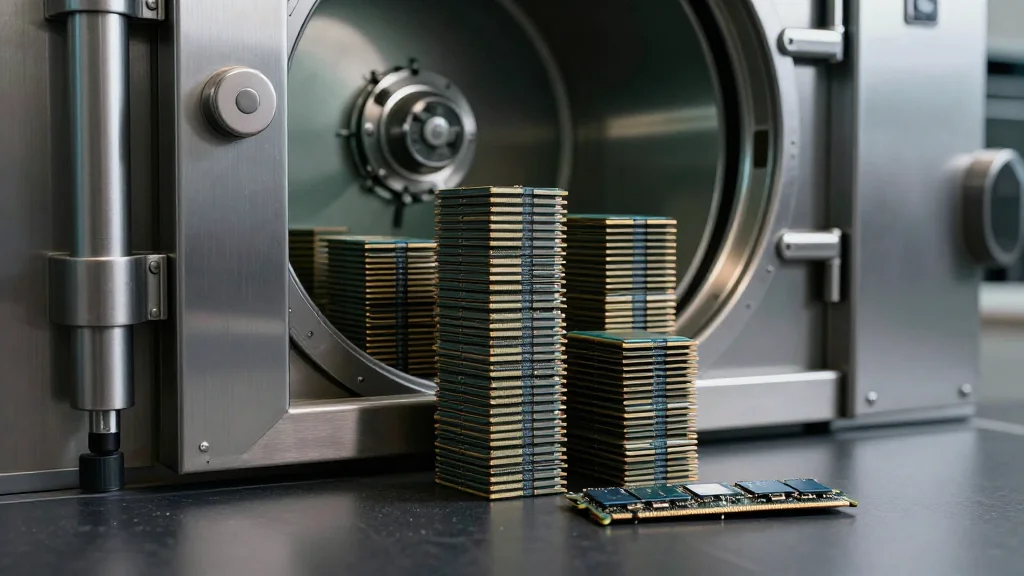
Big Four Cloud Titans Boost 2026 Capex 77% to $725 B Amid AI Chip Price Surge

Companies Mentioned

Why It Matters
The $725 billion capex surge reshapes the financial calculus for both cloud providers and the broader technology supply chain. Lenders, investors and corporate treasurers must now factor in higher component‑price risk when modeling cash flows, potentially tightening credit terms for hardware‑intensive projects. Moreover, the spending binge signals a massive influx of capital into semiconductor and fiber‑optic markets, likely accelerating consolidation and driving up valuations for firms that can secure long‑term supply contracts. For the finance sector, the ripple effects are twofold: first, the heightened demand for financing large‑scale infrastructure projects could expand syndicated loan markets and bond issuance tied to tech capex. Second, the pressure on margins may push cloud giants to explore new pricing models for AI services, influencing the revenue streams of downstream enterprises that rely on these platforms for digital transformation.
Key Takeaways
- •Combined 2026 capex guidance of $725 billion, up 77% from 2025.
- •Microsoft CFO Amy Hood said $25 billion of $190 billion capex is due to memory‑chip price hikes.
- •DRAM contract prices rose 58%‑63% QoQ; server memory costs doubled in six months.
- •Fiber‑optic cable prices surged 650% and power‑supply gaps widened 43%, creating new infrastructure constraints.
- •Goldman Sachs forecasts AI capex to reach $1.6 trillion by 2031.
Pulse Analysis
The capex escalation by the Big Four is less a sign of unchecked optimism than a strategic hedge against a tightening hardware supply chain. Historically, hyperscale providers have absorbed component price shocks by leveraging scale discounts; the current magnitude of price spikes—DRAM up over 60% and fiber optic costs up 650%—means even scale can no longer fully offset cost inflation. This forces providers to allocate capital to secure supply, effectively turning capex into a defensive maneuver.
From a market‑structure perspective, the surge could catalyze a new wave of vertical integration. Amazon’s $20 billion chip revenue run rate and Google’s open‑selling of TPUs suggest a pivot toward owning more of the hardware stack, reducing reliance on external vendors. If successful, this could reshape competitive dynamics, giving the Big Four a pricing edge on AI services while squeezing independent chip makers.
Looking forward, the financial community should monitor two leading indicators: the trajectory of component price indices and the evolution of cloud providers’ profit margins. A sustained price environment could trigger a re‑pricing of tech‑sector debt, while any margin compression may push providers to monetize AI workloads more aggressively, potentially raising the cost of cloud services for enterprise customers. The next earnings season will be a litmus test for whether the $725 billion capex ceiling is a temporary inflation‑driven spike or the new baseline for an AI‑centric economy.
Big Four Cloud Titans Boost 2026 Capex 77% to $725 B Amid AI Chip Price Surge
Comments
Want to join the conversation?
Loading comments...