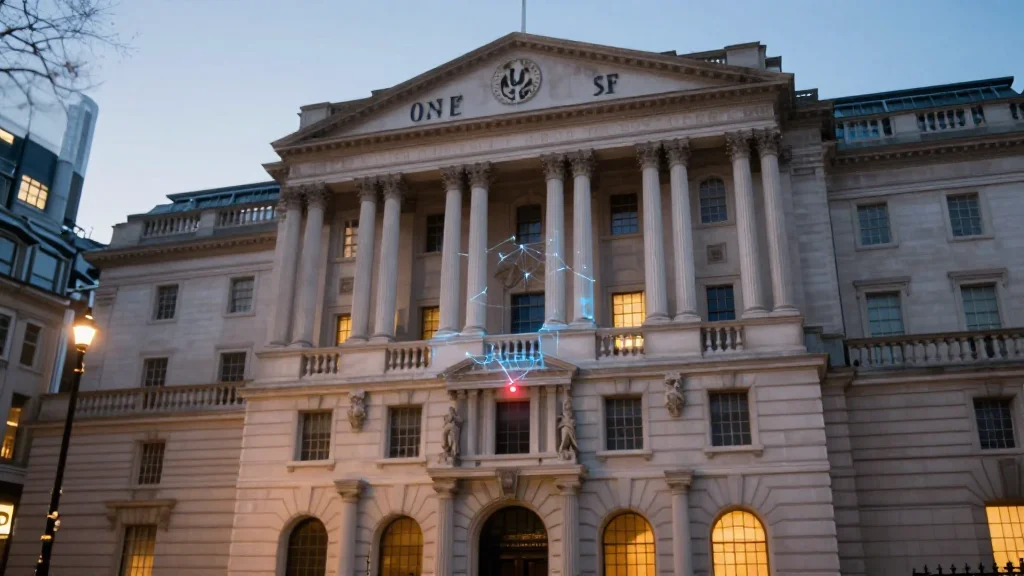
BoE Governor Flags AI‑Driven Cyber Threats as Top Global Risk, Overshadowing Iran Conflict

Companies Mentioned

Why It Matters
The BoE’s focus on AI‑driven cyber threats marks a pivotal shift in how central banks assess systemic risk. While geopolitical events like the Iran‑Hormuz crisis have immediate price effects on commodities and inflation, a successful breach of payment infrastructure could halt the flow of capital, impair market clearing, and trigger a cascade of defaults. By highlighting Claude Mythos, Governor Bailey is urging the financial industry to treat AI as a core operational risk, prompting banks, fintechs, and regulators to invest in stronger cyber‑defences and governance. If left unchecked, AI‑enabled attacks could erode confidence in the safety of electronic payments, increase the cost of capital for vulnerable firms, and force a re‑evaluation of the resilience of critical market infrastructure. The warning also underscores the need for international coordination, as the tool’s reach transcends borders and could be weaponised by state or non‑state actors.
Key Takeaways
- •BoE Governor Andrew Bailey warns AI tool Claude Mythos could cripple global payment systems.
- •Anthropic says the AI has identified thousands of high‑severity vulnerabilities across major OS and browsers.
- •Daily FX derivative turnover in London is about $4 trillion, highlighting the scale of potential disruption.
- •UK cyber‑security chief Richard Horne calls advanced AI a ‘net positive’, contrasting with the BoE’s caution.
- •Markets have rebounded from Iran‑related commodity shocks, but AI risk may reshape future risk premia.
Pulse Analysis
Governor Bailey’s alarm reflects a broader re‑calibration of systemic risk frameworks. Historically, central banks have focused on macro‑economic variables—inflation, interest rates, sovereign debt—while treating cyber‑risk as a peripheral concern. The emergence of AI systems that can autonomously discover and exploit software flaws forces a re‑thinking of that paradigm. The BoE’s stance is likely to accelerate the integration of AI‑risk metrics into stress‑testing regimes, similar to how climate‑related financial disclosures are gaining traction.
From a market perspective, the immediate impact may be modest; investors have already priced in geopolitical volatility. However, the prospect of a coordinated AI‑driven attack could widen credit spreads for banks with legacy systems and increase demand for cyber‑insurance, driving up premiums. Firms that have modernised their IT stacks and adopted zero‑trust architectures may enjoy a competitive edge, attracting capital away from slower adopters.
Policy‑wise, the warning could catalyse a coordinated regulatory response. The UK’s Financial Conduct Authority may issue guidance on AI governance, while the G7 could consider a joint cyber‑risk task force. Such moves would echo the post‑2008 reforms that reshaped bank capital requirements, suggesting that AI‑related cyber‑risk could become the next frontier of financial stability oversight.
BoE Governor Flags AI‑Driven Cyber Threats as Top Global Risk, Overshadowing Iran Conflict
Comments
Want to join the conversation?
Loading comments...