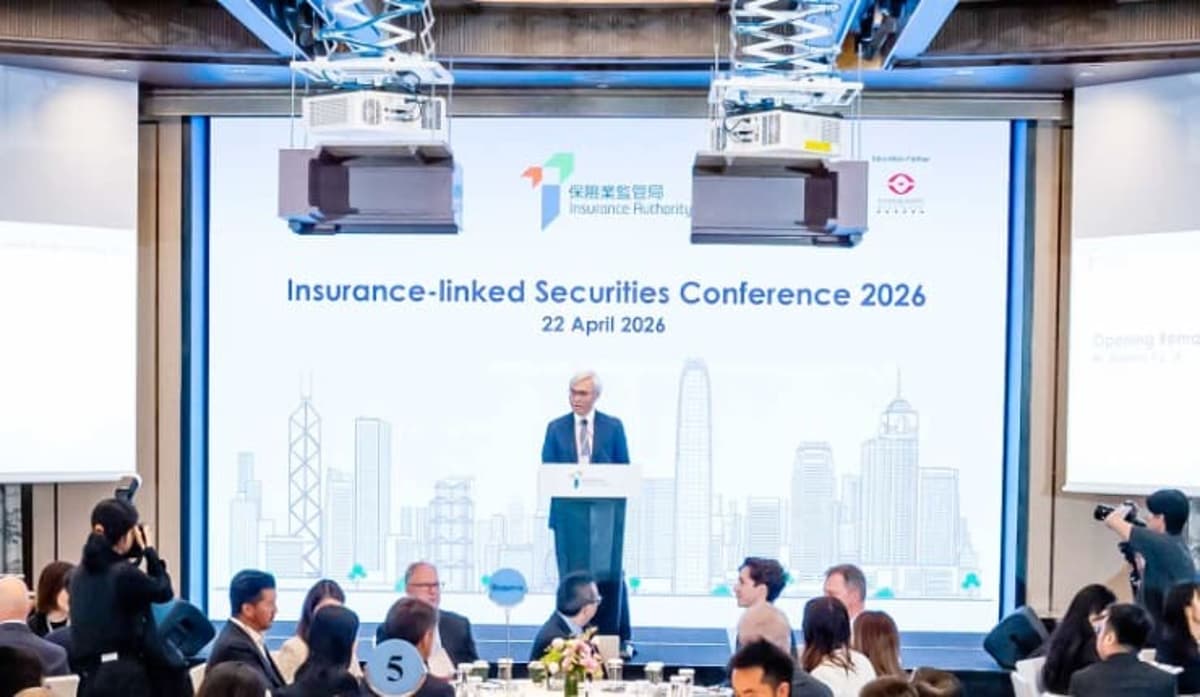
Hong Kong ‘Ideally Placed’ to Promote Use of Alternative Risk Transfer and ILS: IA’s Stephen Yiu
Why It Matters
The initiative strengthens Hong Kong’s role as an Asia‑Pacific risk‑management hub, drawing capital into a market where the protection gap exceeds 80 % and diversifying funding for climate‑related catastrophes.
Key Takeaways
- •Hong Kong hosts nearly $800 million in catastrophe bond issuances since 2021
- •IA extended its ILS grant scheme to 2028 with tax incentives
- •Family offices (~3,380) provide a ready investor base for alternative risk transfer
- •ILS AUM reached $129 billion in Q1 2026, a historic high
- •HK aims to become a blue‑ocean hub for insurance brokers
Pulse Analysis
Hong Kong’s financial ecosystem combines a deep capital market, proximity to mainland China, and a growing network of roughly 3,380 family offices, creating a fertile environment for alternative risk transfer (ART) products. Since the Insurance Authority introduced a bespoke ILS regulatory framework in 2021, the city has attracted issuers such as the World Bank and Peak Re, collectively raising close to $800 million in catastrophe bonds. The regulatory clarity, coupled with the recent extension of a three‑year grant scheme and preferential tax treatment for private funds, signals a long‑term commitment to building an ILS hub that can compete with established markets in Bermuda and London.
The surge in global ILS assets—$129 billion in the first quarter of 2026—reflects investors’ appetite for risk‑adjusted returns amid heightened climate uncertainty. Hong Kong’s exposure to frequent typhoons, monsoons, and flood‑induced losses underscores a sizable domestic protection gap, estimated at 88 % for the Asia‑Pacific region. By channeling capital into catastrophe bonds and other ART structures, the city can help close this gap while offering investors a hedge against extreme weather events. The IA’s focus on expanding risk types, including third‑party perils and innovative protected‑cell vehicles, broadens the product suite and attracts a more diverse investor base.
Strategically, positioning Hong Kong as an ILS nexus supports broader economic goals: it diversifies the city’s financial services offering, deepens ties with mainland insurers, and creates new revenue streams for local brokerage firms. The blue‑ocean narrative championed by Stephen Yiu emphasizes that Hong Kong’s entry will not displace existing hubs but rather inject fresh liquidity and expertise into the global market. As climate‑related losses rise, the city’s ART platform could become a critical conduit for financing resilience in vulnerable emerging economies, reinforcing its stature as a risk‑management centre for the region.
Hong Kong ‘ideally placed’ to promote use of alternative risk transfer and ILS: IA’s Stephen Yiu
Comments
Want to join the conversation?
Loading comments...