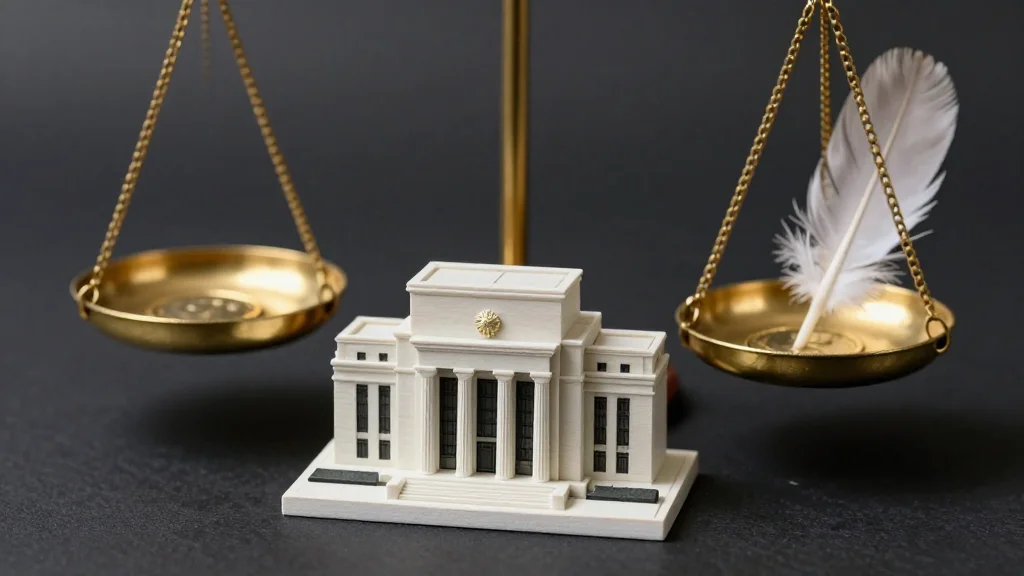
Kevin Warsh’s Fed Hearing Heightens Fight Over Monetary Policy Direction

Why It Matters
The Fed’s leadership determines the pace of interest‑rate adjustments, which directly affect borrowing costs for corporations, mortgage rates for consumers, and the valuation of fixed‑income assets. Warsh’s inclination toward balance‑sheet reduction could raise Treasury yields, increasing the cost of capital for businesses and potentially slowing investment. Moreover, a chair perceived as politically beholden could erode market confidence in the Fed’s independence, prompting volatility across equity and credit markets. For investors, the confirmation battle signals heightened policy uncertainty. Companies planning capital expenditures or debt issuances will need to factor in the risk of faster rate hikes or tighter liquidity. Meanwhile, pension funds and insurers, which rely on stable long‑term yields, may need to reassess asset‑allocation strategies if the Fed’s balance‑sheet runoff accelerates under Warsh’s stewardship.
Key Takeaways
- •Kevin Warsh survived a Senate Banking Committee hearing without sparking a Treasury market sell‑off.
- •Republican Sen. Thom Tillis ties Warsh’s confirmation to a DOJ probe of Fed Chair Jay Powell.
- •March inflation rose to 3.3% from 2.4% in February, dampening expectations of rate cuts.
- •Warsh has publicly advocated for a smaller Fed balance sheet, potentially raising bond yields.
- •A full Senate vote on Warsh’s nomination is expected within weeks, with partisan lines clearly drawn.
Pulse Analysis
Warsh’s nomination arrives at a crossroads for monetary policy. Historically, Fed chairs who have been perceived as politically aligned—such as Paul Volcker’s early confrontations with the Reagan administration—have faced heightened scrutiny and market turbulence. Warsh’s overt support for Trump’s growth agenda, coupled with his hawkish inflation record, creates a paradox: he must reassure markets that he will not capitulate to political pressure while also delivering the rate‑cut narrative the White House favors.
If confirmed, Warsh’s push to shrink the balance sheet could accelerate the Fed’s quantitative tightening timeline, a move that markets have already priced in partially. However, the speed and communication of such runoff will be critical. A poorly managed reduction could trigger a spike in long‑term yields, raising borrowing costs for corporates and potentially igniting a bond‑market correction. Conversely, a measured approach could reinforce the Fed’s credibility by demonstrating a commitment to normalizing policy after years of ultra‑accommodative stance.
The political dimension adds another layer of risk. A confirmation battle that hinges on unrelated investigations—like the DOJ probe into Powell’s renovations—could set a precedent for future nominations, politicizing the central bank’s leadership. Investors will watch the Senate vote closely; a narrow confirmation could signal a fragile mandate, while a bipartisan endorsement would restore some certainty. In either scenario, the market’s reaction will be shaped not just by Warsh’s policy preferences but by the perceived independence of the institution he may soon lead.
Kevin Warsh’s Fed Hearing Heightens Fight Over Monetary Policy Direction
Comments
Want to join the conversation?
Loading comments...