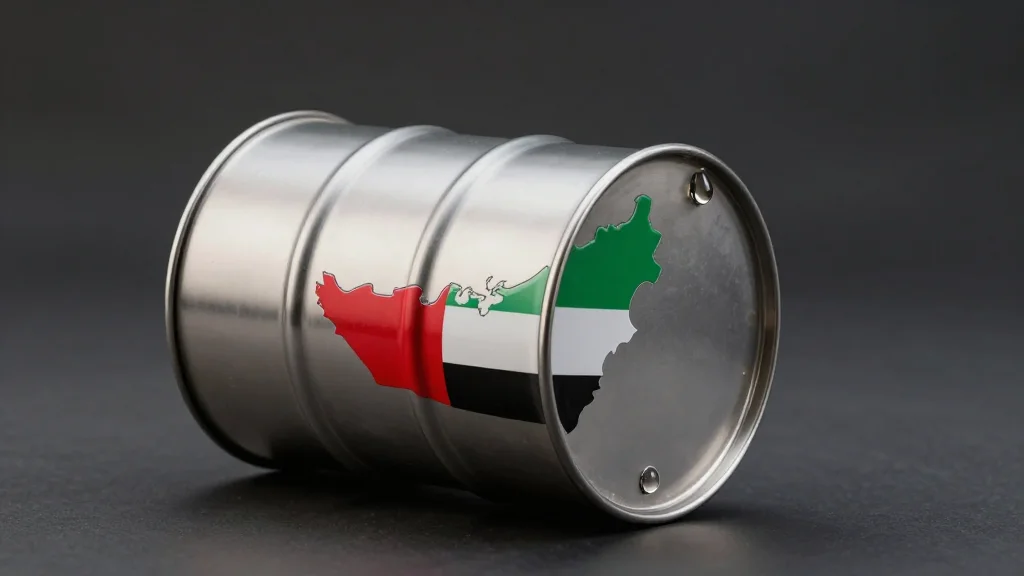
UAE to Leave OPEC+, Cutting 13% of Cartel Capacity and Shaking Oil Markets

Why It Matters
The UAE’s departure from OPEC+ reshapes the balance of power in the world’s most influential oil cartel. By freeing itself from production quotas, Abu Dhabi can increase output, potentially lowering global oil prices and easing inflation pressures in oil‑importing economies. At the same time, the loss of a major spare‑capacity holder weakens OPEC’s ability to manage supply shocks, which could lead to greater price volatility and force the group to seek new mechanisms for coordination. For financial markets, the move has direct implications for sovereign‑debt valuations, currency flows, and energy‑sector equities. Gulf sovereign bonds may see altered risk premiums as revenue forecasts adjust, while investors in oil‑related stocks will need to reassess supply‑demand dynamics absent the UAE’s disciplined output. Moreover, the concurrent discussions about a U.S. dollar swap line suggest a deepening of financial integration between the UAE and Western markets, potentially influencing capital‑allocation decisions and the broader geopolitics of energy finance.
Key Takeaways
- •UAE will leave OPEC+ on May 1, ending a 60‑year membership.
- •The exit removes roughly 13% of OPEC’s production capacity (~1.4 million bpd).
- •UAE’s production capacity sits at about 4.8 million bpd, up from the 3.4 million bpd quota.
- •Analysts warn a weaker OPEC will find it harder to stabilize prices and manage supply shocks.
- •Potential dollar swap line talks with the U.S. could deepen financial ties alongside the OPEC exit.
Pulse Analysis
The UAE’s exit is less a surprise than a logical culmination of a decade‑long trend toward greater operational independence among Gulf oil producers. Since the early 2010s, Abu Dhabi has poured roughly $150 billion into expanding its upstream infrastructure, aiming for a capacity that rivals Saudi Arabia’s lighter‑crude portfolio. The OPEC quota system, originally designed to prevent a price collapse during the 1970s oil shocks, now acts as a ceiling on a nation that has already built the pipelines, refineries, and export terminals to handle higher volumes. By stepping out, the UAE not only unlocks immediate revenue upside but also signals to other members that the cost of compliance may outweigh the benefits of cartel solidarity.
From a market‑structure perspective, the departure could accelerate a shift toward a more fragmented, price‑responsive oil market. Historically, OPEC’s influence has waned as U.S. shale production surged past 13 million barrels per day, diluting the cartel’s share of global supply. The UAE’s move further erodes the remaining leverage, potentially prompting OPEC+ to adopt a more flexible, perhaps bilateral, coordination model. Investors should watch for a recalibration of OPEC‑linked financial instruments—such as futures contracts, sovereign bonds, and currency swaps—as the pricing of risk adjusts to a new baseline where the cartel’s internal discipline is less predictable.
Finally, the diplomatic backdrop cannot be ignored. The timing of the exit, closely following high‑level talks on a U.S. dollar swap line, suggests a coordinated effort to align the UAE’s energy policy with broader financial objectives. A swap line would give Abu Dhabi a safety net against dollar‑denominated funding pressures, reinforcing its ability to fund further capacity expansion without resorting to market‑driven borrowing that could destabilize its fiscal position. In sum, the UAE’s OPEC+ departure is a strategic pivot that blends energy ambition with financial engineering, setting the stage for a more decentralized oil market and a re‑defined role for Gulf states in global finance.
UAE to Leave OPEC+, Cutting 13% of Cartel Capacity and Shaking Oil Markets
Comments
Want to join the conversation?
Loading comments...