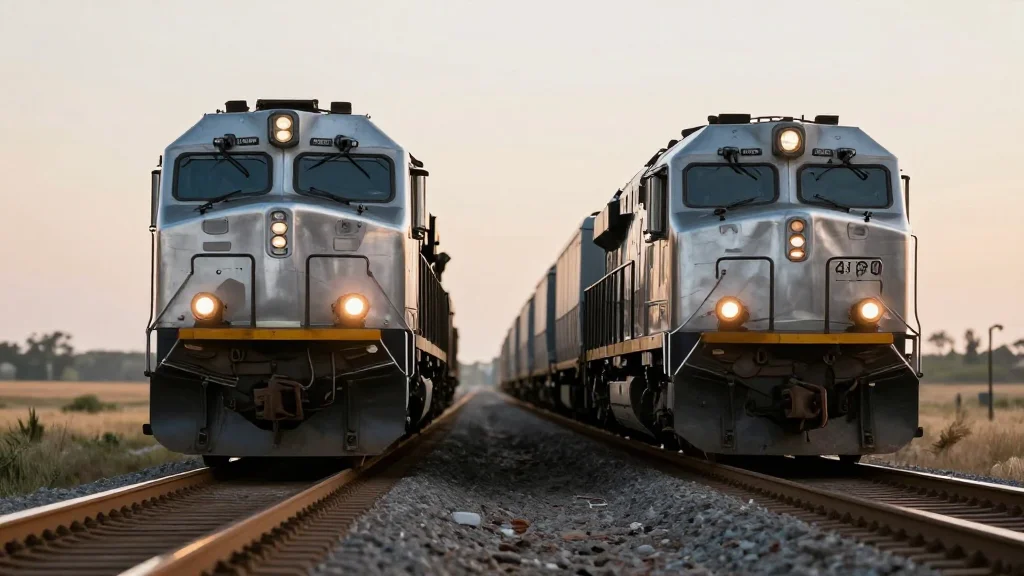
Union Pacific Awaits STB Ruling on $85B Norfolk Southern Merger as Investors Watch

Companies Mentioned
Why It Matters
The STB ruling will determine whether the United States’ two largest railroads can combine, creating a network that could dominate freight corridors from the Gulf Coast to the Midwest. A successful merger would likely increase pricing power, streamline operations, and potentially raise capital‑raising prospects for both companies, influencing investor sentiment across the transportation sector. Conversely, a rejection could preserve competition, keep freight rates more competitive, and maintain the status quo for shippers who rely on multiple carriers for service reliability. Beyond the rail industry, the decision signals how aggressively U.S. regulators will intervene in mega‑mergers that have national‑interest implications. The outcome could set a precedent for future consolidation attempts in other infrastructure‑intensive sectors, such as energy pipelines and telecommunications, where antitrust concerns intersect with national economic security.
Key Takeaways
- •STB expected to rule on UP‑NS $85 billion merger by end‑May 2026.
- •CEO Jim Vena says the $750 million concession figure is not accurate; the merger has minimal geographic overlap.
- •Total freight volumes up 1% YoY; industrial freight +4%, chemicals/plastics +6%, metals +5%; coal down 14%.
- •Diesel fuel cost rose from $4.00 to $4.25 per gallon, pressuring Q2 operating ratios.
- •Merger agreement expires Jan. 28, 2028, with automatic extensions if regulatory review exceeds that date.
Pulse Analysis
The Union Pacific‑Norfolk Southern deal represents the most consequential rail consolidation in decades, and the STB’s pending decision is a litmus test for how U.S. antitrust policy balances efficiency gains against market concentration. Historically, rail mergers have delivered cost synergies but also raised concerns about reduced competition on key corridors. If the board clears the revised application, UP could leverage its expanded network to offer more reliable, integrated service, potentially justifying higher rates in a market where pricing power has been eroded by overcapacity.
However, the competitive dynamics Vena highlighted—particularly the threat of price‑based competition—suggest that shippers may benefit from a more contested environment. A rejected filing would preserve multiple Class I players, sustaining competitive pressure on service quality and rates. Moreover, the $750 million concession debate underscores the difficulty of quantifying the true cost of integration, especially when traffic modeling is still evolving. Investors should therefore calibrate expectations, recognizing that even a green‑light does not guarantee immediate financial upside; integration risks, regulatory extensions, and potential divestitures could temper near‑term earnings.
In the broader context, the outcome will reverberate beyond railroads. A favorable ruling could embolden other infrastructure giants to pursue large‑scale consolidations, citing the UP‑NS case as a precedent for regulatory approval when comprehensive data and system‑wide analyses are presented. Conversely, a denial would reinforce a more cautious regulatory stance, signaling that even well‑argued, data‑rich applications must meet stringent competition thresholds. Market participants across logistics, commodities and capital markets should monitor the STB’s language closely, as it will likely contain clues about future enforcement priorities.
Union Pacific Awaits STB Ruling on $85B Norfolk Southern Merger as Investors Watch
Comments
Want to join the conversation?
Loading comments...