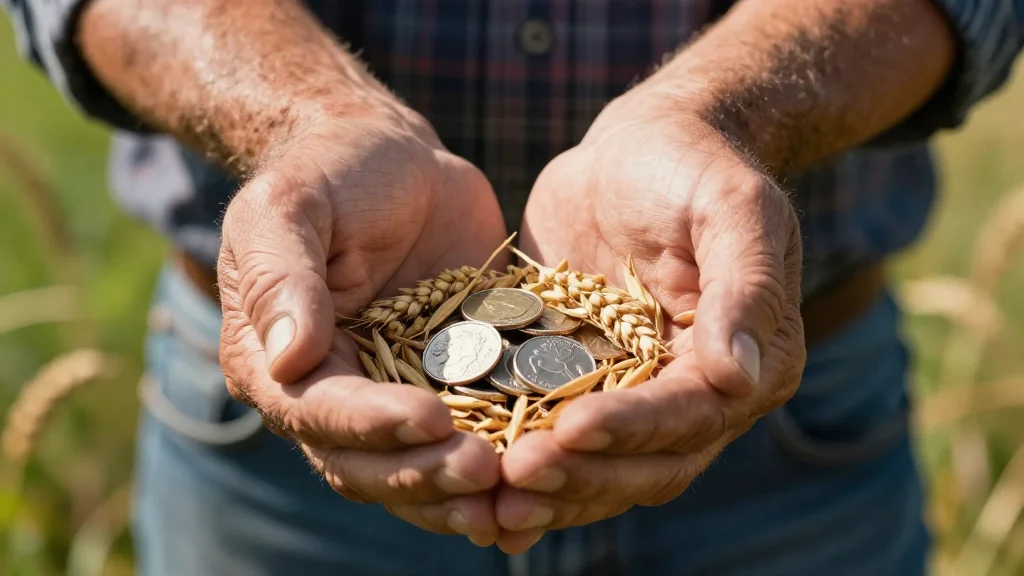
Farmers Get Short-Changed in Our Current Food System
Key Takeaways
- •Farmers receive under 6 cents of each food dollar (2023 USDA data)
- •Processing, retail, and services capture the majority of food revenue
- •Farm numbers have been falling steadily since mid‑20th century
- •Policy shift toward organic, regenerative farms could boost farmer incomes
Pulse Analysis
The USDA’s Food Dollar series, updated with 2023 figures, visualizes how a single U.S. food dollar is allocated along the supply chain. Less than 6 cents—just 0.06 USD—flows to the farmer, while processing, wholesale, retail and food‑service together claim more than 90 cents. This lopsided split reflects the high‑value services of packaging, branding, and distribution, but it also means that primary producers are left with a thin margin that barely covers seed, labor, and equipment costs. The data has become a rallying point for critics of the modern food system.
The financial squeeze accelerates a decades‑long trend of farm consolidation. USDA census data shows the number of U.S. farms falling each year, with average acreage rising as smaller operations exit the market. Fewer farms translate into reduced rural employment, weakened community ties, and diminished stewardship of the land. Moreover, large‑scale monocultures contribute to soil degradation and higher greenhouse‑gas emissions, whereas diversified, regenerative farms can sequester carbon, improve water quality, and enhance biodiversity—benefits that are increasingly hard to monetize under the current revenue structure.
Reversing the imbalance will require a fundamental redesign of the Farm Bill. Targeted subsidies, price‑support mechanisms, and carbon‑credit programs could raise farmgate prices to a level that sustains small‑scale organic and regenerative producers. Direct payments tied to soil health metrics or biodiversity outcomes would align federal spending with climate goals while delivering a livable income to growers. As consumer demand for transparent, sustainably produced food grows, market incentives combined with policy reforms could reshape the food dollar, ensuring that the farmer’s share more accurately reflects the true value they create.
Farmers get short-changed in our current food system
Comments
Want to join the conversation?