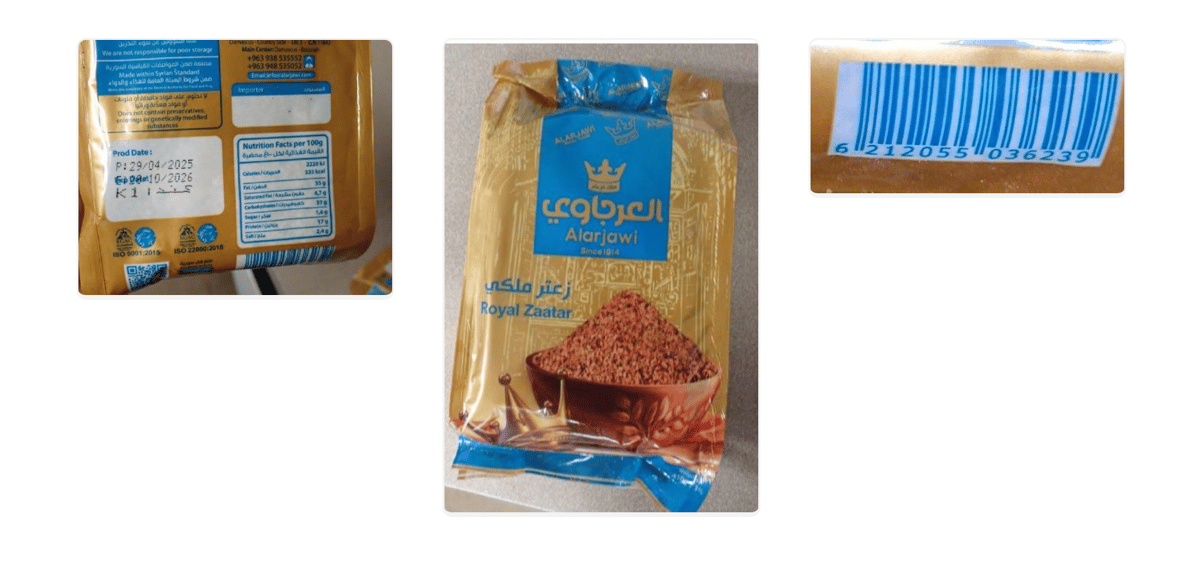
Zaatar Being Recalled in Canada because of Salmonella
Key Takeaways
- •Royal Zaatar 450‑g product recalled across five Canadian provinces
- •UPC 212055036239 and expiry 28 Oct 2026 identify the batch
- •No reported illnesses yet, but Salmonella can cause severe disease
- •Consumers advised to discard product and seek medical care if symptomatic
- •Recall underscores need for stricter testing of processed foods
Pulse Analysis
The recent recall of Royal Zaatar zaatar highlights how a seemingly innocuous pantry staple can become a vector for serious foodborne illness. While the product’s appearance, smell, and taste remain unchanged, the presence of Salmonella—a bacterium responsible for an estimated 1.2 million cases of illness in the United States each year—demonstrates the hidden vulnerabilities in supply chains that rely on bulk spice imports and minimal processing. Regulatory agencies such as Canada’s CFIA act swiftly to contain potential outbreaks, but the lag between contamination detection and public notification can leave consumers exposed, especially in provinces where the product enjoys strong market penetration.
From a business perspective, the recall carries immediate financial repercussions for Alarjawi and its distribution partners, including product write‑offs, logistics costs for product retrieval, and potential legal exposure if any illnesses surface later. More subtly, the incident may trigger a reassessment of quality‑control protocols across the spice industry, prompting manufacturers to invest in advanced microbial testing, blockchain traceability, and stricter supplier audits. Such measures, while costly, can restore consumer trust and differentiate brands in a crowded market where safety is increasingly a purchasing criterion.
For public health officials, the episode serves as a reminder that Salmonella infections often go undetected because symptoms mimic other gastrointestinal ailments. Education campaigns that emphasize proper food handling, awareness of recall notices, and the importance of reporting gastrointestinal distress can mitigate the impact of future outbreaks. As the global food system becomes more interconnected, coordinated surveillance between agencies in Canada, the United States, and exporting nations will be essential to preemptively identify contamination hotspots and protect vulnerable populations from preventable illness.
Zaatar being recalled in Canada because of Salmonella
Comments
Want to join the conversation?