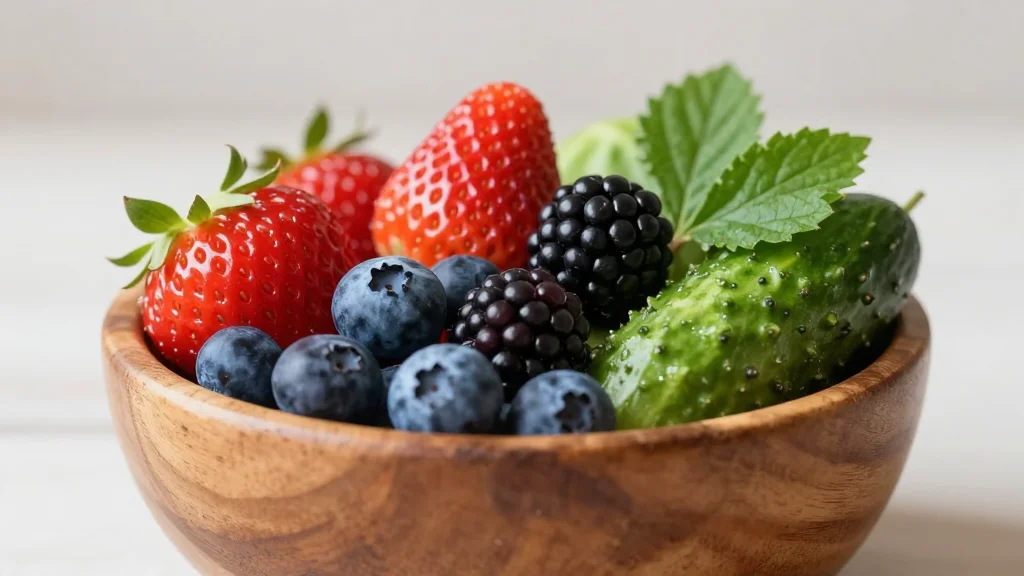
Berries Lead the Way in Fresh Produce Sales Growth
Why It Matters
The surge in berry and cucumber sales signals shifting consumer preferences toward socially driven, health‑focused produce, prompting retailers to adjust assortments and pricing. Persistent cost barriers, however, could curb fresh‑produce consumption and accelerate the shift to frozen alternatives.
Key Takeaways
- •Berries contributed $900 M of the $2.8 B fruit sales growth
- •Berry volume rose 7.3% YoY, now 25.4% of fruit sales
- •Cucumbers posted 2.3% pound gain in 2025, after 8.8% 2024 rise
- •Sweet potatoes and garlic grew on viral #PickledGarlic, #SweetPotatoBowl trends
- •Fresh produce share fell to 78.9% of $121 B total, despite cost pressures
Pulse Analysis
Berries have become the engine of fruit‑category expansion, accounting for nearly a third of the $2.8 billion sales uplift in 2025. Their 7.3% volume increase reflects both health‑centric buying motives and the amplification power of social platforms, where colorful berry bowls dominate Instagram feeds. This momentum has nudged berries to represent 25.4% of all fruit sales, a share that outpaces most traditional staples and signals retailers to prioritize shelf space and promotional spend on these high‑margin items.
The vegetable side of the market tells a similar story of trend‑driven growth. Cucumbers led with a 2.3% pound gain in 2025, building on an 8.8% jump the prior year—a testament to the lasting appeal of #cucumbersalad content. Sweet potatoes and garlic also posted solid gains, buoyed by viral recipes like #PickledGarlic and high‑protein #SweetPotatoBowl meals. Yet, overall vegetable sales added only $114 million, underscoring that while niche categories thrive, the broader segment remains sensitive to price pressures that are curbing fresh‑produce frequency for many shoppers.
For the industry, these dynamics present a strategic crossroads. Health motivations keep fresh produce at the forefront, but 44% of consumers limit intake to three days a week or fewer, citing cost as the main barrier. As fresh produce’s share holds at 78.9% of the $121 billion total, retailers must balance premium pricing with value‑oriented promotions and consider expanding frozen or shelf‑stable lines to capture budget‑conscious buyers. The next few years will likely see a tighter integration of social‑media‑fueled marketing, dynamic pricing, and cross‑category bundling to sustain growth amid lingering economic headwinds.
Berries lead the way in fresh produce sales growth
Comments
Want to join the conversation?
Loading comments...