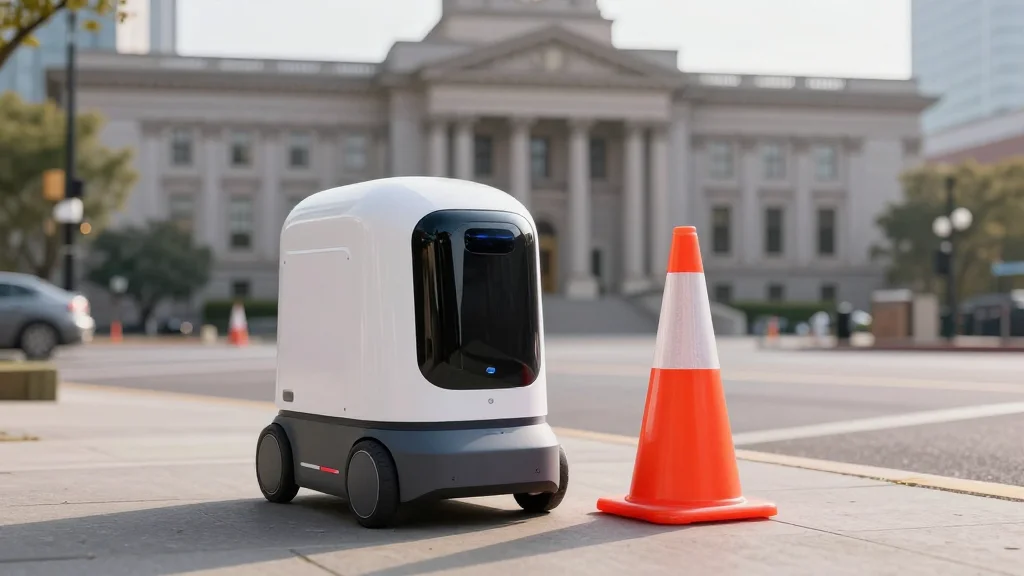
California City Presses Pause on Food Delivery Robots

Why It Matters
The decision highlights growing municipal scrutiny of autonomous delivery, signaling potential regulatory hurdles for scaling robot‑delivery services nationwide.
Key Takeaways
- •Glendale council votes 3-2 for robot delivery moratorium
- •No existing ordinance; city seeks regulatory framework
- •Concerns include sidewalk blockage, ADA violations, safety
- •Restaurants favor bots; potential licensing revenue noted
- •Industry faces scaling challenges amid local restrictions
Pulse Analysis
The Glendale moratorium reflects a broader tension between innovative logistics and local governance. As consumer demand for contactless delivery surges, companies like Serve Robotics have deployed fleets that navigate sidewalks and residential streets. Yet municipalities without clear statutes are forced to react, balancing public safety, accessibility compliance, and the desire to foster technological advancement. Glendale’s lack of a defined regulatory framework left officials uncertain about operator identity, fleet size, and liability, prompting a cautious pause while a comprehensive policy is drafted.
From an industry perspective, the pause underscores the importance of proactive engagement with city planners. Early collaboration can preempt conflicts over sidewalk usage, ADA access, and visual clutter, which have become flashpoints in cities such as Chicago and Washington, D.C. By establishing licensing fees, safety standards, and data‑sharing agreements, municipalities can turn potential nuisances into revenue streams and public‑service enhancements. Restaurants that have embraced robot delivery cite lower costs and reduced traffic congestion, suggesting that well‑crafted regulations could unlock economic benefits while safeguarding pedestrian spaces.
Looking ahead, the Glendale case may serve as a template for other jurisdictions grappling with autonomous delivery at scale. Companies will likely need to invest in geofencing technology, real‑time monitoring, and community outreach to demonstrate compliance and value. Simultaneously, policymakers must balance innovation incentives with public interest, ensuring that emerging mobility solutions complement, rather than compromise, urban infrastructure. The outcome will shape the trajectory of robot‑delivery adoption across the United States, influencing investment decisions, partnership models, and the future of last‑mile logistics.
California city presses pause on food delivery robots
Comments
Want to join the conversation?
Loading comments...