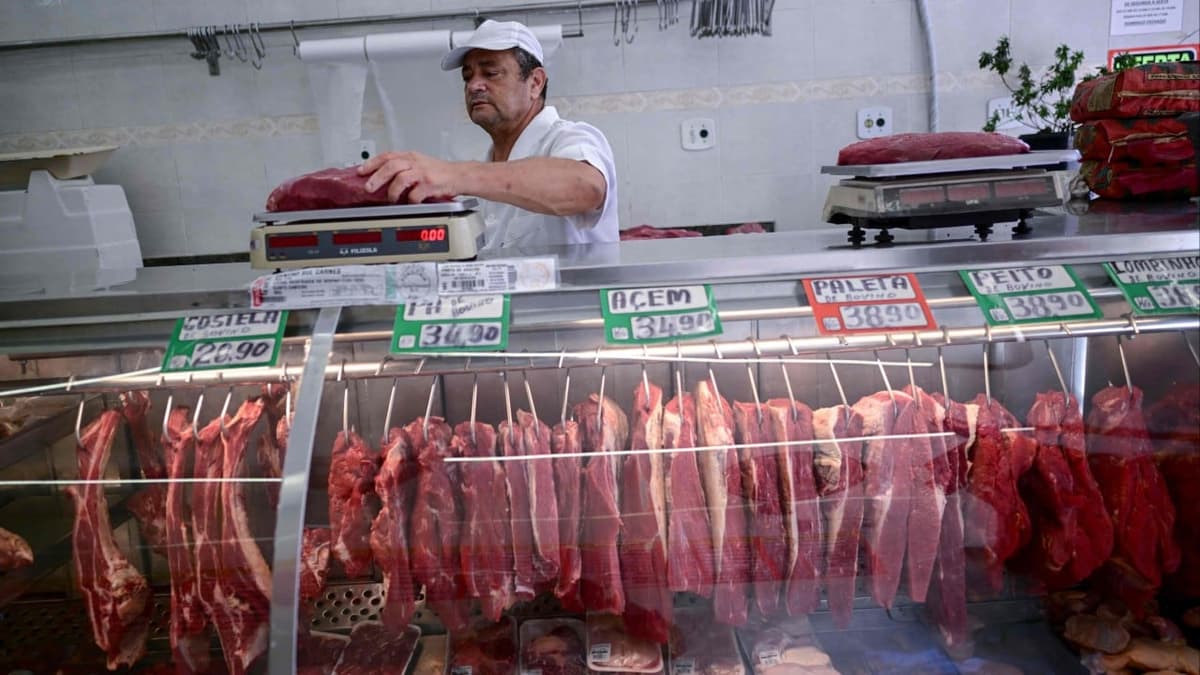
China Clears Brazilian Beef of Foot-and-Mouth Disease, but Quota Limits Profits
Why It Matters
By unlocking higher‑value product lines, Brazil can capture a larger share of China’s $50 billion meat market, but the quota and steep tariffs constrain revenue growth and reshape global beef trade dynamics, especially for U.S. exporters.
Key Takeaways
- •China declares all Brazil free of foot‑and‑mouth disease.
- •New quota caps Brazil at 1.1 million tonnes, 12% tariff.
- •Export volume limited to ~65% of 2025 levels, 10% drop expected.
- •Brazilian beef sales to China exceed $50 billion annually.
- •EU antimicrobial ban could cost Brazil $2 billion per year.
Pulse Analysis
The World Organisation for Animal Health’s certification that Brazil’s cattle herd is free of foot‑and‑mouth disease without vaccination marks a watershed for the South American exporter. China’s May 29 notice removes the regional restrictions that have lingered since the early 2000s, allowing all Brazilian states to ship products that require a disease‑free status, such as bone‑in beef, bovine off‑al and even gallstones used in pharmaceuticals. This broader access aligns with China’s strategy to secure reliable protein supplies and gives Brazil a competitive edge over other exporters still subject to disease‑related bans.
Yet the market opening is tempered by a three‑year safeguard that caps Brazilian beef shipments at 1.1 million tonnes, subject to a 12 percent tariff and a punitive 55 percent surtax on any volume above the limit. The quota translates to roughly 65 percent of Brazil’s 2025 export volume, prompting the Brazilian Association of Beef Exporting Industries to forecast a 10 percent dip in total beef sales to China. Meanwhile, Chinese purchases have surged 25 percent in the first four months of 2026, a growth rate that could push the cap to its limit well before the safeguard expires, squeezing margins for exporters already facing stiff competition from U.S. beef, whose shipments have fallen below $500 million.
Brazil’s trade outlook is further complicated by an impending European Union ban on its animal‑product exports over antimicrobial use, a measure projected to shave about $2 billion off annual revenues. The dual pressure of Chinese quota constraints and EU restrictions forces Brazilian agribusinesses to diversify markets and invest in compliance upgrades. If the Chinese quota is lifted or renegotiated, Brazil could solidify its position as the dominant supplier to the world’s largest beef consumer. Until then, the country must balance short‑term profit caps with long‑term strategic positioning in a volatile global protein landscape.
China clears Brazilian beef of foot-and-mouth disease, but quota limits profits
Comments
Want to join the conversation?
Loading comments...