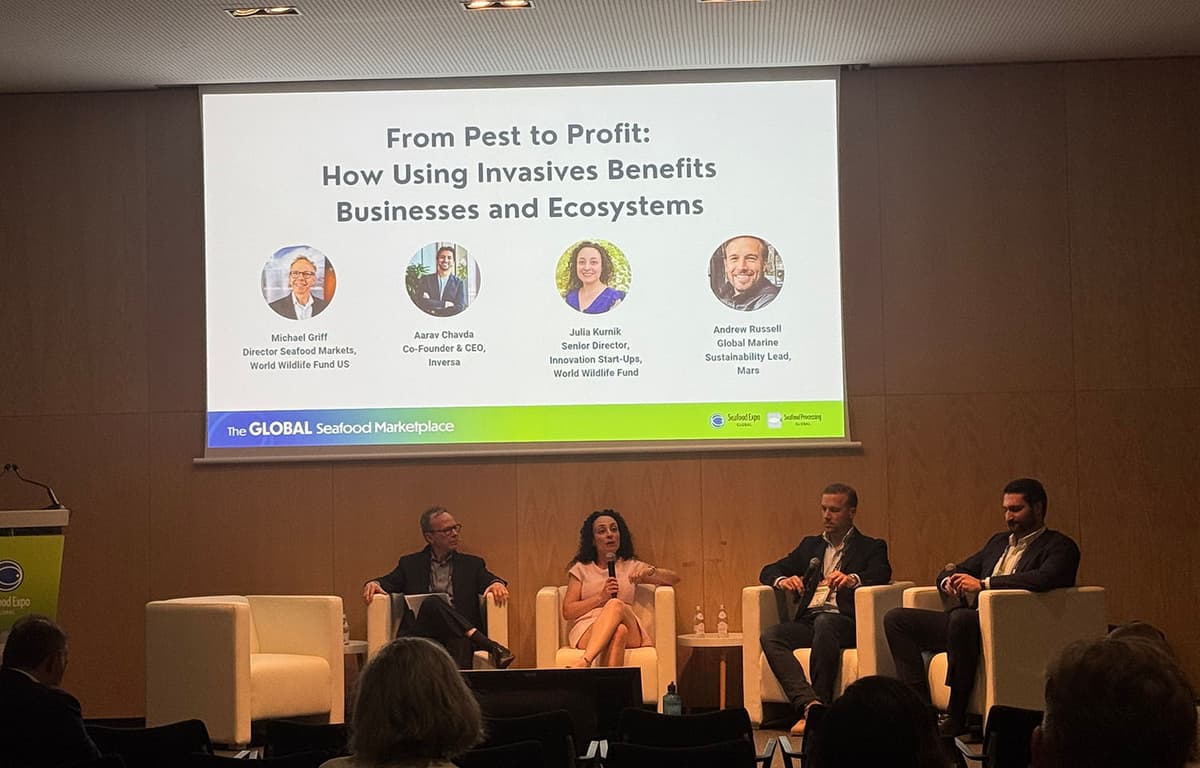
Companies Explore Turning Invasive Species Like Carp Into Profitable Products
Why It Matters
Commercializing invasive species creates a revenue‑generating lever to curb ecological damage while opening new sustainable product lines for food and apparel companies.
Key Takeaways
- •WWF partners with Mars and Inversa to commercialize invasive carp
- •Pet food market offers low entry point for using invasive fish
- •Supply chains must adapt as invasive species populations fluctuate
- •Marketing faces consumer 'ick factor' despite sustainability benefits
- •WWF's database aids companies in identifying viable invasive species
Pulse Analysis
The rise of invasive species—carp in U.S. waterways, Florida pythons in the Everglades—has forced conservationists to look beyond eradication. WWF’s new strategy treats these organisms as untapped resources, aligning ecological stewardship with market incentives. By cataloguing species density and distribution, the organization supplies data that private firms can translate into product pipelines, turning a biological threat into a circular‑economy input. This approach mirrors broader trends where sustainability is embedded in supply‑chain design rather than treated as a post‑hoc add‑on.
Mars’s entry into the pet‑food arena illustrates the practicalities of this model. Carp, once dismissed as a low‑value fish, offers high protein content and a steady supply that can be harvested without further destabilising ecosystems. The company leverages traceability technology to assure regulators and consumers of safety, while navigating the “ick factor” that many pet owners associate with the species. Inversa’s apparel line similarly showcases how invasive biomass can be up‑cycled into niche fashion, creating a proof‑of‑concept for broader adoption across consumer goods.
If successful, this partnership could reshape how industries address biodiversity loss. Turning invasive species into commodities provides a financial motive for removal, potentially funding restoration projects and supporting local fisheries. Moreover, the framework is portable: databases can be updated for other invasives, from Asian carp to lionfish, enabling rapid pivoting as ecological pressures shift. The collaboration signals a new era where NGOs, corporations, and regulators co‑create market‑driven solutions that align profit with planet, a blueprint that could be replicated globally.
Companies explore turning invasive species like carp into profitable products
Comments
Want to join the conversation?
Loading comments...