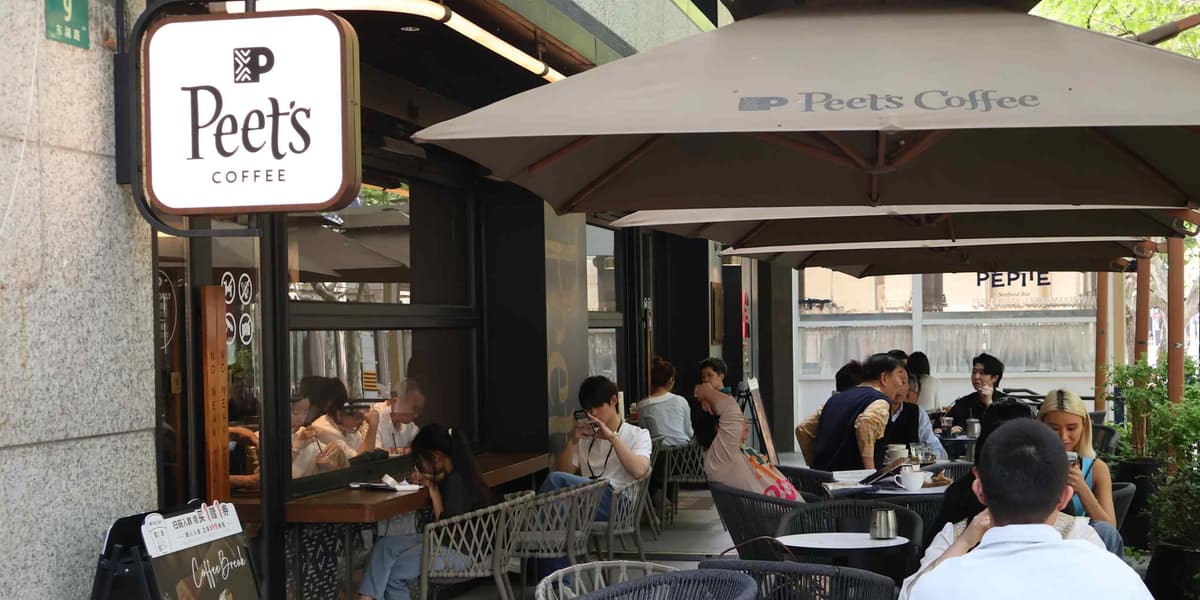
Foreign Coffee Chains Take Fresh Crack at China via New Cities, Formats
Why It Matters
By avoiding low‑price competition, foreign chains can protect margins and capture higher‑spending consumers, reshaping the premium coffee landscape in China’s emerging urban centers.
Key Takeaways
- •Peet's Coffee averages 50 yuan (~$7) spend per Chinese customer
- •Local cafés sell drinks for as low as 9.9 yuan (~$1.4)
- •Chains launch smaller “express” formats in tier‑2 and tier‑3 cities
- •New locations target affluent consumers outside major metros
- •Brands prioritize premium experience and digital ordering over price competition
Pulse Analysis
The Chinese coffee market, once dominated by a handful of multinational brands, has entered a crowded phase where domestic players compete fiercely on price. Local cafés often price a cup at 9.9 yuan (about $1.4), forcing foreign chains to rethink the traditional large‑footprint, premium‑pricing model that powered early growth. While overall coffee consumption continues to rise—driven by a growing middle class and an expanding office culture—profitability has become the new battleground, prompting brands to seek niches beyond the saturated first‑tier cities.
To sidestep the price race, chains such as Starbucks, Costa and California‑based Peet’s are rolling out compact “express” stores and hybrid concepts that blend quick service with premium beans. Peet’s, for example, reports an average spend of 50 yuan (roughly $7) per customer, a stark contrast to the low‑cost segment. The new formats occupy 30‑40 sqm, focus on digital ordering, and are being planted in tier‑2 and tier‑3 cities like Hangzhou, Chengdu and Nanjing, where disposable income is rising but competition is less intense.
These strategic shifts signal a maturation of the Chinese coffee sector, where scale is no longer the sole driver of success. Investors are watching the premium‑segment earnings closely, as higher ticket sizes can offset thinner margins caused by aggressive discounting. Moreover, the focus on smaller footprints and technology‑enabled service aligns with broader consumer trends toward convenience and contactless payment. If foreign chains can capture loyalty in emerging urban hubs, they stand to secure a sustainable growth trajectory that complements the already booming tea‑centric beverage market.
Foreign coffee chains take fresh crack at China via new cities, formats
Comments
Want to join the conversation?
Loading comments...