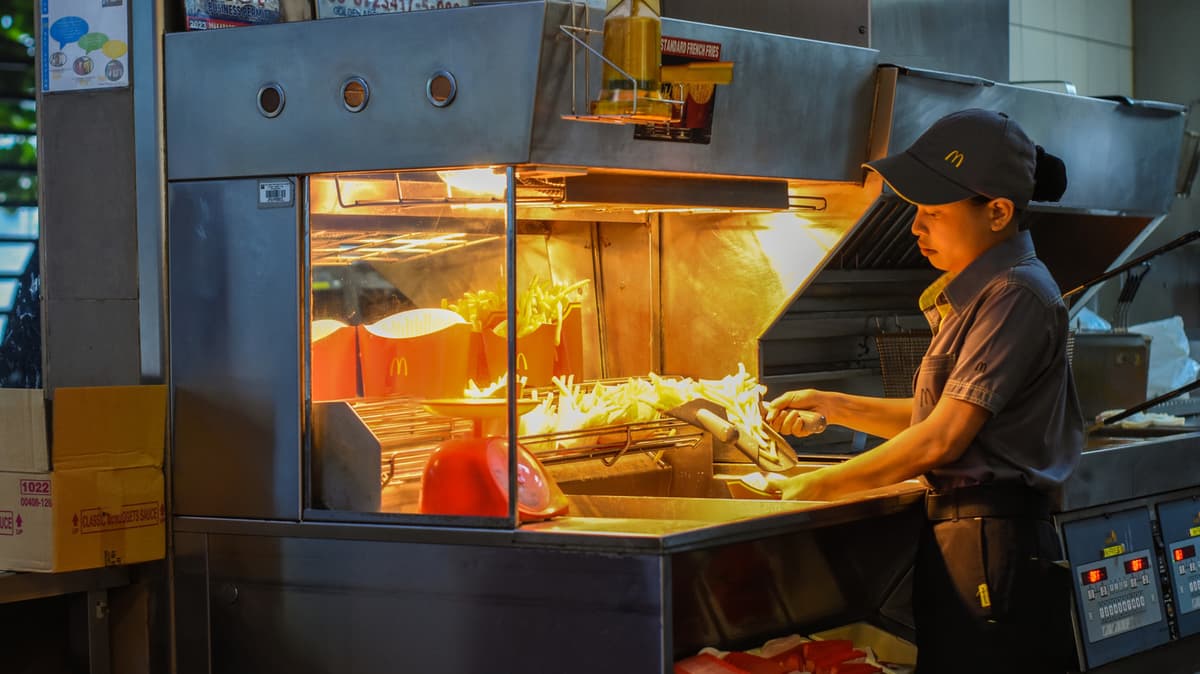
Here's How Often McDonald's Changes Its Frying Oil, According To Employees
Why It Matters
Frequent oil changes safeguard fry taste and health compliance, while recycling oil into biodiesel reduces waste and carbon footprint, reinforcing McDonald’s sustainability narrative.
Key Takeaways
- •McDonald’s typically changes fryer oil once a week per employee reports
- •Fryer alerts signal oil quality, prompting frequent changes during busy periods
- •Used oil is collected and converted into biodiesel, sometimes jet fuel
- •Digital fryers feature filtration and automatic oil top‑up for consistency
- •Weekly oil swaps help maintain fry taste and meet health standards
Pulse Analysis
The weekly oil‑change cadence at McDonald’s reflects a broader industry push for consistent product quality and compliance with health regulations. Fast‑food operators face scrutiny over kitchen hygiene, and the chain’s reliance on digital fryers—complete with real‑time alerts and continuous filtration—helps ensure that oil degradation is caught early. Employees report that the alert system can be noisy during rushes, but its presence guarantees that the oil never reaches the blackened state that could compromise flavor or safety.
Beyond the immediate culinary benefits, McDonald’s investment in advanced fryer technology underscores a commitment to operational efficiency. Automated oil top‑up and built‑in filtration reduce manual labor and minimize downtime, allowing restaurants to serve fries and nuggets at optimal crispness. This technological edge also aligns with consumer expectations for consistency across locations, reinforcing brand reliability in a highly competitive quick‑service market.
Perhaps the most compelling aspect of the oil‑change routine is its environmental payoff. Collected cooking oil is sent to facilities where it undergoes transesterification, producing biodiesel at a 1:1 weight ratio and, in some cases, jet fuel for aviation. Converting waste into renewable energy not only diverts billions of pounds of oil from landfills each year but also contributes to corporate sustainability goals. As more QSR chains adopt similar recycling programs, the cumulative impact could significantly lower the sector’s carbon emissions, positioning fast food as an unexpected player in the green energy transition.
Here's How Often McDonald's Changes Its Frying Oil, According To Employees
Comments
Want to join the conversation?
Loading comments...