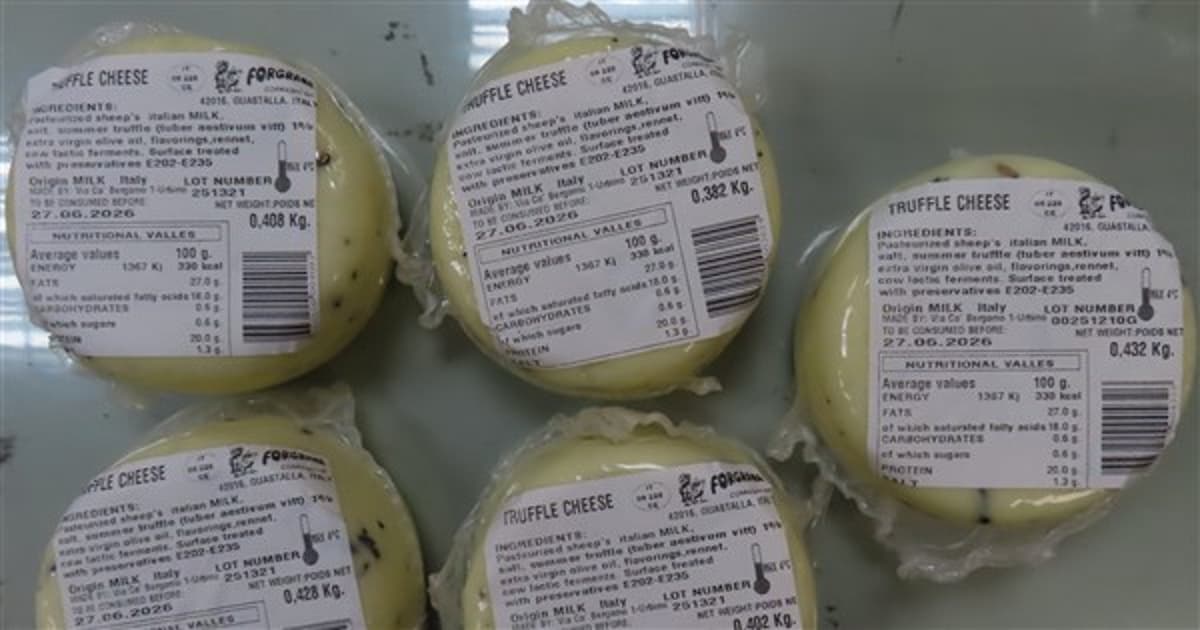
Italian Truffle Cheese Fails to Advance Past Taiwan Border over E. Coli
Why It Matters
The actions underscore Taiwan's tightening food‑safety regime, raising compliance costs for foreign suppliers and potentially reshaping specialty‑food supply chains in the region.
Key Takeaways
- •Taiwan blocked 2.87 kg Italian truffle cheese for high E. coli.
- •Importer faces 20‑50% higher inspection rates, possible destruction.
- •Thai asparagus exceeded pesticide limit, triggering 100% future inspections.
- •Six of 1,057 Thai asparagus batches failed pesticide standards.
- •TFDA cited seven other shipments for pesticide, sweetener, heavy‑metal violations.
Pulse Analysis
Taiwan’s Food and Drug Administration has long been a bellwether for Asian food‑safety standards, and its recent crackdown on a premium Italian truffle cheese highlights that reputation. By enforcing a maximum of two samples with 10‑100 MPN/g of E. coli and a hard cap of 100 MPN/g, the agency signals zero tolerance for bacterial contamination, even in niche, high‑value products. Importers now must factor in higher inspection fees and the risk of outright destruction, which could deter small‑batch artisanal exporters from targeting the Taiwanese market.
The pesticide findings in Thai asparagus illustrate a parallel concern for chemical residues in fresh produce. With two shipments exceeding the 0.01 ppm limit for propamocarb hydrochloride, TFDA imposed a blanket 100% inspection rate on the supplier’s future imports, a step that dramatically raises operational costs and delays. This move reflects broader regional scrutiny of agricultural imports, where even a fraction of non‑compliant batches—six out of 1,057 in this case—can trigger sweeping regulatory actions. Exporters from Thailand and other producing nations must therefore tighten residue monitoring and adopt more rigorous testing protocols to maintain market access.
For global food companies, the Taiwanese episode serves as a cautionary tale about the cascading effects of localized compliance failures. Companies are increasingly investing in end‑to‑end traceability, third‑party laboratory verification, and diversified sourcing to mitigate the risk of single‑point disruptions. As regulators worldwide adopt stricter microbial and chemical standards, firms that proactively align with the highest safety benchmarks will not only avoid costly penalties but also gain a competitive edge in markets that prize quality assurance. The TFDA’s decisive enforcement underscores the growing importance of regulatory foresight in international food trade.
Italian truffle cheese fails to advance past Taiwan border over E. coli
Comments
Want to join the conversation?
Loading comments...