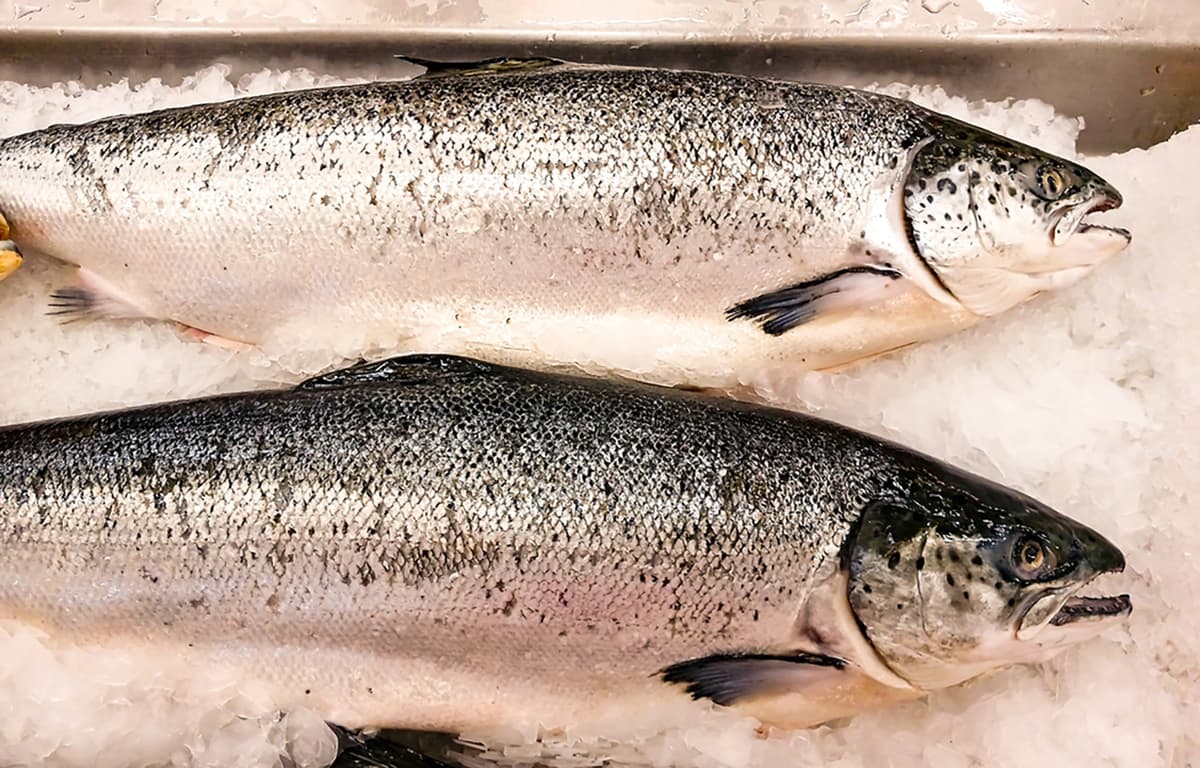
Kontali: Salmon Sector in Slowdown as Supply Tightens, Trade and Demand Dynamics Shift, and Tensions Rise in Middle East
Companies Mentioned
Why It Matters
Tightening supply and rising logistics costs could compress margins and reshape global salmon trade, while tariff reforms shift competition toward fundamentals rather than policy.
Key Takeaways
- •Harvest‑ready salmon biomass declines in Norway, Chile, Scotland
- •Europe’s salmon sales flat; 70% consumed at home
- •China remains primary growth market, boosted by lower U.S. tariffs
- •Jet fuel prices doubled, cutting freight capacity to Asia
- •New 10% U.S. levy simplifies tariffs, benefits shrimp more than salmon
Pulse Analysis
The Atlantic salmon sector, once defined by steady expansion, is now confronting a rare supply contraction. Analysts at Kontali note that harvest‑ready biomass in the industry’s three pillars—Norway, Chile and Scotland—has begun to shrink, signaling the first negative growth in years. This shift disrupts the traditional cost‑plus model that relied on abundant output, forcing producers to re‑evaluate capacity planning and pricing strategies. The emerging scarcity is already influencing farm investment decisions and may accelerate consolidation as firms seek scale to weather tighter margins.
Demand dynamics are equally complex. European consumers, who account for roughly 70% of regional salmon sales, exhibit strong price sensitivity, keeping volume growth stagnant despite a stable market base. In contrast, Asian markets, especially China, continue to drive growth, attracted by rising disposable incomes and a preference for premium protein. Recent U.S. tariff reforms—replacing a patchwork of duties with a uniform 10% levy—have eased trade friction, particularly for shrimp, while offering modest relief for salmon. The policy shift nudges the industry toward competition based on product quality and innovation rather than tariff arbitrage.
Geopolitical turbulence adds another layer of risk. The conflict in the Middle East has caused jet‑fuel prices to jump from about $99 to $209 per barrel within weeks, slashing available air‑freight capacity on key Europe‑to‑Asia routes. Higher logistics costs translate directly into higher landed prices, threatening demand in price‑sensitive markets. As freight bottlenecks persist, exporters must balance higher shipping rates against the need to keep salmon competitively priced. Stakeholders are therefore watching both policy developments and supply‑chain disruptions closely, as they will dictate the sector’s profitability and its ability to meet shifting global appetites.
Kontali: Salmon sector in slowdown as supply tightens, trade and demand dynamics shift, and tensions rise in Middle East
Comments
Want to join the conversation?
Loading comments...