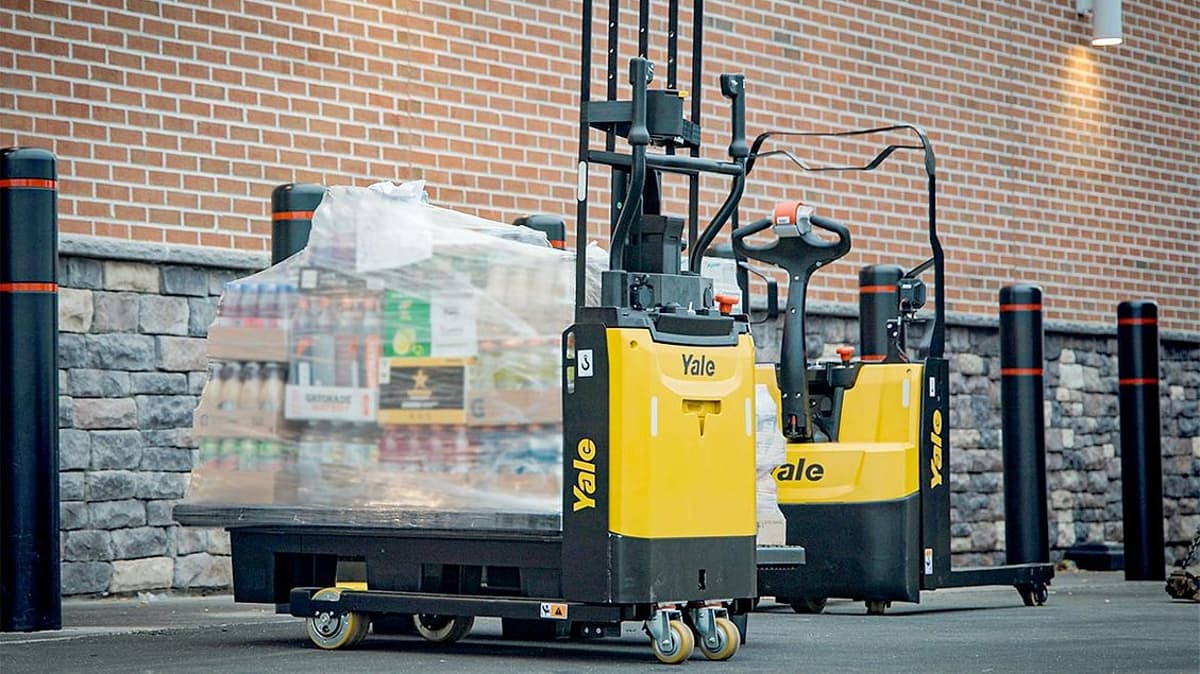
Lift Truck Solutions Help Beverage Operations Navigate Distribution Challenges
Why It Matters
By slashing handling time and physical strain, the Route Runner boosts delivery efficiency and helps beverage firms meet SKU‑driven demand despite labor scarcity and higher logistics expenses.
Key Takeaways
- •Yale Route Runner cuts 27,000 lb of lift weight per nine‑stop shift
- •Drivers save ~63 minutes per route, enabling an extra stop
- •Ergonomic sled reduces bending, lowering operator fatigue and injury risk
- •Lithium‑ion battery pallet trucks eliminate base‑return for recharging
- •One‑piece system prevents store‑floor damage while streamlining DSD
Pulse Analysis
The beverage sector faces a perfect storm: exploding SKU counts, tighter store footprints and a chronic driver shortage. Direct‑store‑delivery (DSD) remains the fastest way to keep shelves stocked, but traditional pallet trucks force operators to juggle multiple pieces of equipment across uneven parking lots, lift gates and cramped aisles. Each extra transfer adds time, fatigue and the risk of product damage, eroding margins already squeezed by rising labor costs—up about 1.5% in 2025—and higher warehouse rents. Companies therefore seek equipment that can consolidate tasks, improve ergonomics and sustain longer runtimes without frequent recharging.
Yale’s Route Runner answers that need with a modular design that nests a motorized sled inside a standard pallet jack. In a typical nine‑stop shift, the system eliminates 27,000 lb of lifted weight and trims roughly 2,000 steps, shaving 63 minutes off the route. The detachable sled slides into narrow store aisles, preserving floor integrity while its powered forks raise loads to an ergonomic height, reducing bending and repetitive motion. Powered by lithium‑ion batteries, the unit can be recharged in‑trailer between stops, sidestepping the downtime associated with lead‑acid swaps and supporting longer, more frequent deliveries.
Beyond immediate productivity gains, the Route Runner’s single‑piece approach reshapes DSD economics. By enabling an extra stop per route, distributors can increase SKU coverage without adding drivers, directly offsetting labor shortages and higher rent pressures. The ergonomic benefits also lower injury risk, potentially reducing workers’ compensation costs and turnover. As retailers continue to demand faster replenishment of diverse product assortments, lift‑truck innovators like Yale are poised to set new standards for efficiency, safety and cost‑effectiveness in beverage logistics.
Lift truck solutions help beverage operations navigate distribution challenges
Comments
Want to join the conversation?
Loading comments...