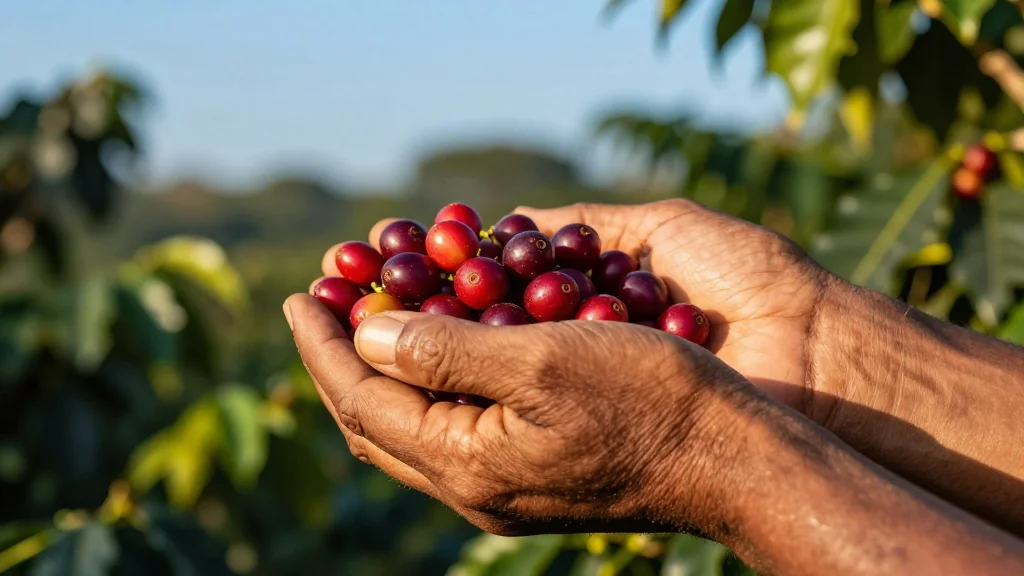
Nestlé Deepens Work on Climate-Resilient Coffee with High-Yielding Robusta Varieties
Companies Mentioned
Why It Matters
By boosting yields and improving taste, Nestlé’s robusta breakthrough helps safeguard farmer incomes and secures a stable coffee supply amid escalating climate threats.
Key Takeaways
- •Nestlé and CNRA released six climate‑resilient robusta varieties in Ivory Coast.
- •Mixed planting boosts yields up to 86% with unchanged inputs.
- •New robusta blend reduces bitterness, improving cup quality perception.
- •Varieties registered and will be distributed via Nescafé Plan cooperatives.
- •Robustas now account for 44% of global coffee production in 2023.
Pulse Analysis
Climate change is reshaping the coffee landscape. Arabica, the premium species, faces extinction pressures from rising temperatures and erratic rainfall, prompting the industry to pivot toward the hardier robusta. Robustas thrive at lower altitudes and tolerate heat, but have long been relegated to commodity markets due to perceived inferior flavor. As global temperatures climb, robusta’s share of coffee production has surged from 28% in the 1990s to 44% in 2023, positioning it as a critical pillar for future supply.
Nestlé’s latest effort, developed with Ivory Coast’s CNRA, introduces six high‑yielding, climate‑resilient robusta varieties. Field trials since 2018 show that a blended planting strategy can lift yields by as much as 86% while using the same agronomic inputs. Sensory testing also confirms a smoother cup profile with less bitterness, challenging the stigma around robusta taste. The varieties are now registered and will be disseminated through the Nescafé Plan, Nestlé’s sustainable sourcing program, giving smallholder cooperatives access to superior genetics and regenerative farming training. This not only boosts farmer profitability but also strengthens Nestlé’s supply chain resilience.
The move aligns with broader industry momentum. Competitors like Starbucks and startups such as Amatera are also investing in climate‑adapted coffee genetics, signaling a shift toward science‑driven sustainability. As heat‑related yield losses push coffee prices up 47% in the U.S. over five years, robusta innovations could stabilize markets and protect consumer access to affordable coffee. Nestlé’s robusta breakthrough thus represents a strategic hedge against climate risk, offering both economic and environmental dividends for growers and the global coffee economy.
Nestlé Deepens Work on Climate-Resilient Coffee with High-Yielding Robusta Varieties
Comments
Want to join the conversation?
Loading comments...