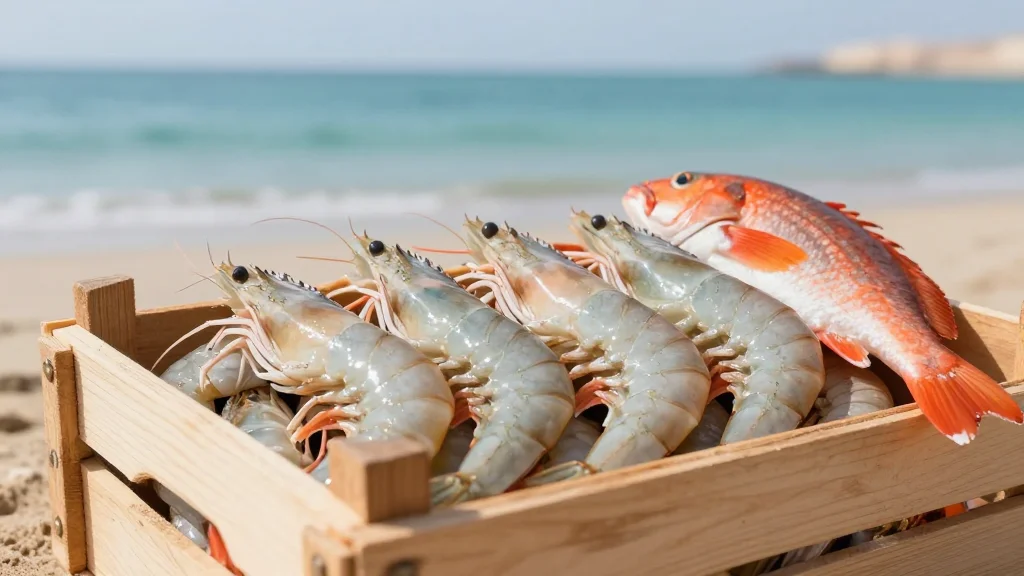
Omani Aquaculture Output Rose Nearly 70 Percent in 2025
Why It Matters
The rapid expansion diversifies Oman’s economy, bolsters food security, and positions the nation as a regional seafood supplier. It signals lucrative opportunities for private investors in sustainable aquaculture.
Key Takeaways
- •Farmed fish output hit 9,240 metric tons in 2025.
- •Production value rose 63.7% to OMR 20.3 million.
- •Whiteleg shrimp project cost OMR 23.5 million, 7,500 MT capacity.
- •Government targets OMR 351.6 million sector value by 2030.
- •Vision 2040 aims for 100,000 MT annual output.
Pulse Analysis
Oman's aquaculture sector has entered a rapid expansion phase, with 2025 output climbing to 9,240 metric tons—a 67.7% jump from the previous year. The surge reflects a deliberate policy shift by the Ministry of Agriculture, Fisheries and Water Resources, which is channeling billions of riyals into modern fish‑farming infrastructure. By boosting domestic protein supplies, the government aims to strengthen food security and reduce the economy's reliance on volatile oil revenues. This growth also positions Oman as an emerging supplier in the Gulf's seafood market. The rise also aligns with broader Gulf diversification agendas championed by Vision 2030.
Key investments include a OMR 23.5 million whiteleg shrimp farm spanning 15 hectares, capable of producing 7,500 MT annually. The facility complements existing operations for sea bream, tilapia, abalone and rock oysters, diversifying the product mix and enhancing export potential. International bodies such as the FAO have praised Oman’s shift toward integrated tilapia systems and environmentally‑responsible shrimp cultivation, underscoring the country’s commitment to sustainable aquaculture practices. The policy framework also encourages private‑sector participation, moving beyond the historic reliance on state funding. Such diversification reduces market volatility and opens avenues for value‑added processing.
Looking ahead, Oman's Fisheries and Aquaculture Vision 2040 projects a sector valuation of OMR 351.6 million by 2030 and a target of 100,000 MT of farmed fish annually by 2040. Achieving these milestones will require scaling up hatchery capacity, improving supply‑chain logistics, and attracting foreign investment. If realized, the expansion could reshape regional seafood dynamics, offering Gulf markets a reliable, locally sourced alternative to imports and creating new export corridors toward Asia and Europe.
Omani aquaculture output rose nearly 70 percent in 2025
Comments
Want to join the conversation?
Loading comments...