Organic Outpaces the Market: Global Sales Hit Record Highs as U.S. Crosses $76 Billion
Why It Matters
The surge signals that organic products have moved from niche to mainstream, reshaping retail strategies and investment priorities across the food sector. Companies that can navigate supply constraints will capture disproportionate market share as consumer demand accelerates.
Key Takeaways
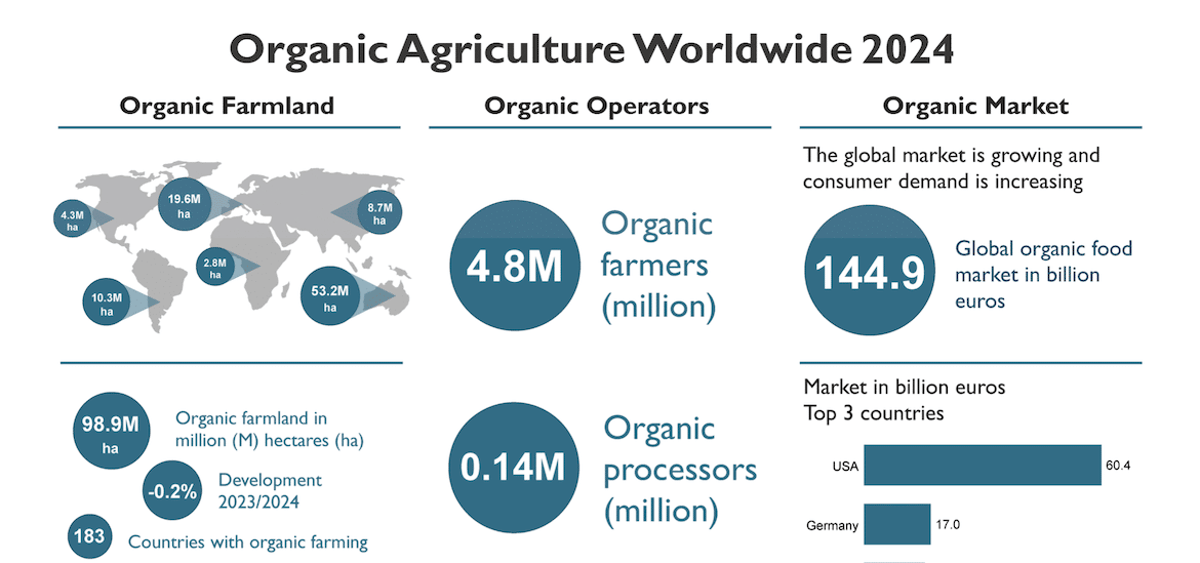
- •Global organic retail sales hit €145B ($156.9B) in 2024.
- •U.S. organic market leads with €60.4B ($65.4B) sales.
- •Europe shows highest per‑capita organic spend, Switzerland $521.
- •Organic growth outpaces conventional food, driven by health and sustainability.
- •Supply‑chain constraints urge producers to invest in scaling.
Pulse Analysis
The 2026 FiBL‑IFOAM report confirms that organic food has become a dominant force in the global grocery landscape, with sales climbing to €145 billion ($156.9 billion) in 2024. This growth outstrips the broader food sector, which is still wrestling with inflationary pressures and volatile climate impacts. The United States, accounting for roughly 40% of global organic revenue, pushed past the $65 billion mark, while Europe’s per‑capita spending topped $500 in Switzerland, underscoring regional variations in consumer willingness to pay premium prices for clean, sustainable products.
Drivers behind the surge are multifaceted. Health‑focused consumers increasingly view food as a preventive medicine, prompting a shift toward ingredients free from synthetic pesticides and GMOs. Sustainability concerns amplify this trend, as shoppers reward brands that demonstrate transparent sourcing and lower environmental footprints. The "food as medicine" narrative dovetails with rising disposable incomes in emerging markets like China, where organic sales now exceed $16 billion, expanding the total addressable market. Yet, the rapid demand escalation strains existing supply chains, from certified farm acreage to logistics networks, creating a gap between consumer expectations and product availability.
For executives, the implications are clear: scaling organic production is no longer optional but essential. Companies must invest in certified farming practices, secure long‑term contracts with growers, and upgrade distribution capabilities to meet the heightened demand. The supply‑chain bottlenecks also open opportunities for strategic acquisitions and partnerships that can accelerate capacity building. As organic solidifies its position as a primary economic driver, firms that align their portfolios with sustainability and health trends will likely outperform peers and attract capital seeking ESG‑aligned growth.
Organic Outpaces the Market: Global Sales Hit Record Highs as U.S. Crosses $76 Billion
Comments
Want to join the conversation?
Loading comments...